Crude Oil
July 03, 2026 · Updated July 06, 2026
Russia tanker operators step in as others in non-G7 fleet retreat amid flag clampdowns

By Max Lin
Editor:
HIGHLIGHTS
More shipments from home in recent months
Flag clampdowns curb peers in other non-Western countries
Greek operators also retain high share
Russian tanker operators have increased their crude shipments from home in recent months, as their peers based in some non-G7 countries retreated amid a clampdown from some flag registries.
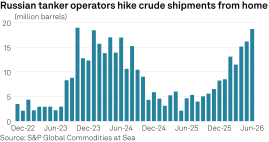
S&P Global Commodities at Sea and Maritime Intelligence Risk Suite data shows tankers operated by Russian companies lifted 18.7 million barrels from Russian ports in June, up from 16.1 million barrels in May, growing for three consecutive months and the highest since October 2023.
Shipments by Chinese companies fell to 20.2 million barrels last month from 24.7 million barrels in January, while those by UAE-based companies dropped to 11.6 million barrels from 18.6 million barrels.
Russia is turning to tanker companies at home, which generally operate Russia-flagged ships, as Botswana, Madagascar and some other flag states have removed dozens of tankers with a trading history in Russia from their registries.
On May 29, Cameroon told the International Maritime Organization that 39 ships were allegedly unlawfully flying the country's flag during their operation and should therefore be de-flagged, according to a letter posted on the IMO website.
These ships, generally operated by companies based in non-Western countries, were targeted as part of the UN agency's campaign against substandard shipping by vessels with falsified flag registration, or those that manipulated automatic identification system signals.
In recent years, Russia has relied on a large shadow tanker fleet to transport oil outside of Western sanctions regimes, and those ships tend to be old, lack proper insurance and often need to turn off their location transponders to hide cargo origin.
A tanker would become flagless when removed from a country's registry, and UK, EU and French navies have been intercepting such ships in recent months as part of their efforts to disrupt Russia's oil logistics.
Under the UN Convention on the Law of the Sea, national authorities can visit and investigate ships they suspect are flagless or falsely flagged, and charge and fine the ship operator if a violation is confirmed.
High Greek share
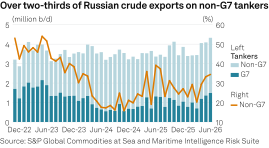
Overall, tankers not flagged, owned and operated by companies based in G7 countries and their allies, or insured by Western protection and indemnity clubs, transported 65.6% of Russia's crude exports of 4.3 million barrels/day last month, compared with 66.8% in May.
The overall export volume was even higher than 4.1 million b/d in May despite the flag state clampdowns. Tanker operators in Greece, EU's top shipowning nation, transported 24.9 million barrels in May and a similar amount last month, up from 20.6 million barrels in April.
"Russia was forced to export more crude due to lower refinery runs, but its shadow fleet was insufficient for the additional volume ... This pushed Russia toward greater use of Western maritime services," Ukraine-based KSE Institute said in a note.
As of June 22, Ukrainian drone strikes had taken offline 2.6 million b/d or 37% of refining capacity in Russia, the highest level on record, according to S&P Global Energy's CERA research. Crude runs in the country are expected to have plunged to an estimated 4.4 million b/d in June, the lowest level since April 2009, CERA said.
