Metals & Mining, Chemicals, Agriculture, Electric Power, Ferrous, Non-Ferrous, Olefins, Rice
May 26, 2026
COMMODITY TRACKER: 5 charts to watch this week

By Staff
Editor:
Gulf aluminum production hit decade lows as smelters struggled to secure raw materials, while India's power demand reached record highs during heatwaves. China's manufacturing steel consumption remained resilient amid export strength. US ethylene shipments and Thai rice prices are also in focus this week.
1. Gulf aluminum production falls to decade low
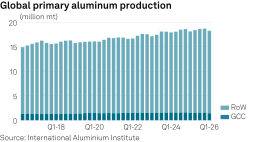
What's happening? Primary aluminum production by Gulf countries in April fell to 62% of its prewar daily rate, dropping to 10,989 metric tons per day, a 26.7% decline from 15,000 mt/day in March and down 38% from the pre-conflict baseline of 17,800 mt/day, the International Aluminium Institute said on May 20. IAI Secretary General Jonathan Grant said the region's smelters cannot replenish their raw material stocks through the Strait of Hormuz and are seeking alternative land routes to keep operating. Aluminium Bahrain reported a 14% year over year drop in first-quarter production, while sales volumes fell 17% over the same period. Saudi Arabia's Maaden reported a 4% quarter over quarter decline in aluminum production to 248,000 mt over January-March, with shipment volumes falling 8%.
What's next? AlphaMena expects Middle East aluminum production to remain constrained into the second quarter, with sales volumes likely to continue lagging production due to persistent logistics disruptions. Grant said April's numbers are likely not the floor, indicating further deterioration that brings Gulf output to levels not seen in over a decade. Global primary aluminum production over January-April increased only 0.04% year over year to 24.17 million mt, with no material compensating increases in other regions, the IAI said. The institute expects the structural supply deficit to widen. Aluminum prices and regional premiums could stay elevated through April-June, particularly in North America and Europe, where markets remain structurally short, according to Fadwa Aouini, metals and mining analyst at AlphaMena.
2. India's peak power demand hits record high amid heatwave
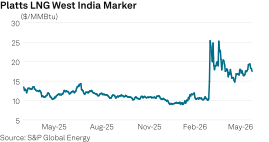
What's happening? India's peak power demand hit a record high of 270.82 gigawatts on May 21, marking the fourth consecutive daily record, as temperatures soared across the country, India's Ministry of Power said. The rise reflected the impact of severe heatwaves, with the ministry noting greater usage of cooling appliances due to prevailing weather conditions. The peak demand was met by thermal power (62.8%), solar (22.0%), wind (5.0%), hydro (5.8%), and other sources. The power sector has been consuming strong volumes due to the heat wave, with incremental gas consumption about 8 million cubic meters per day, an LNG importer source said. Platts, part of S&P Global Energy, assessed the LNG West India Marker for July at $17.514/MMBtu May 25 at a 47.5 cents/million British thermal units discount to the July JKM assessment.
What's next? The severe heat is expected to continue driving up gas demand, with a gas marketer noting that gas supply for power generation rises during evening and night to maintain the grid during peak hours. Since gas-based power consumption is not constant throughout the day, the figure could be about 20 million cubic meters per day, the marketer added. A Singapore-based trader highlighted the need for additional gas supplies amid expectations of soaring temperatures, noting that if consumption continues at the current pace for a week, India would need nearly 1.5 additional cargoes.
3. China's manufacturing steel demand remains resilient in April
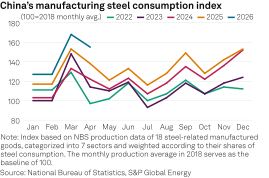
What's happening? China's manufacturing steel consumption sectors remained firm year over year in April, as higher exports helped offset persistent weakness in domestic demand, according to data from the National Bureau of Statistics and market participants. The manufacturing production index for steel consumption produced by Platts stood at 155 points in April, down 13 points from March due to seasonal factors, but still 17 points higher than a year ago. China's automobile production fell 2.6% year over year to 2.564 million units in April, while automobile exports jumped 51.4% to 939,000 units, according to China's customs data.
What's next? Market participants expect strong exports of manufactured goods to continue offsetting weak domestic demand in the near term. Steel mill sources indicated that demand for steel in shipbuilding remains the strongest among all manufacturing sectors, while demand from the machinery, automotive, and new energy sectors remains firm. However, both mill sources and traders noted that steel demand growth from manufacturing is insufficient to offset the decline caused by the property sector, keeping the domestic steel market relatively weak. Chinese automakers are actively expanding into overseas markets to drive demand growth, with one mill source reporting that orders for automotive sheets in April and May matched 2025 levels.
4. US ethylene exports to Europe rise amid Middle East conflict
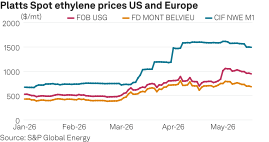
What's happening?US ethylene exports to Europe have increased significantly since the Middle East conflict began, rising from 60,000 metric tons in February to 155,000 mt in March, with the US share of global ethylene exports jumping from 42% to 89.8%, according to the latest full-month S&P Global Commodities at Sea data. The main recipients were Belgium, Italy, the Netherlands and Portugal. Exports remained elevated at 124,000 mt in April. The rise came as cracker outages in Europe kept ethylene supply tight, driving spot prices higher and boosting demand for imports. Terminal fees for spot cargoes reached 20-25 cents/pound in mid-April, up from 4-6 cents/lb previously. Platts assessed spot ethylene at 29.88 cents/lb Mont Belvieu pipeline and at 41.88 cents/lb FOB USGC on May 22, both down 0.625 cent day over day.
What's next? Following announcements that crackers in Europe are returning online earlier than anticipated, demand for US imports might be affected. A shipbroker said there is already less interest in US ethylene into Europe. Terminal fees on spot cargo exports have come down from their peaks but remained elevated at about 12 cents/pound, widening the spread between domestic and export ethylene prices while maintaining an open arbitrage to Europe. Market participants remained in a wait-and-see mode, with attention fixed on the possibility of a US-Iran agreement. However, confidence remained that market conditions would remain balanced.
5. Thai white rice prices hit 16-month high
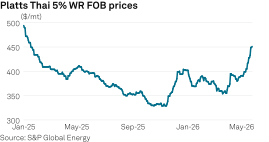
What's happening? Thai 5% white rice prices rose to $451/mt FOB May 25, 2026, up $2/mt from May 22, reaching their highest level since Jan. 16, 2025, when prices stood at $459/mt FOB. The price increase reflects tighter supplies as millers hold back volumes after the harvest ends, while exporters rush to cover short positions. In the domestic market, Thai 5% broken white rice prices increased by about $30.79/mt week over week, according to the Thai Rice Millers Association. Strong buying activity from exporters procuring volumes for June shipments has intensified amid limited selling interest from millers.
What's next? Market participants expect Thai rice prices to remain firm in the near term, supported by mounting concerns over El Niño's potential impact on the next crop. Exporters noted that millers remain reluctant to sell and are releasing only small volumes despite rising prices, with uncertainty surrounding the next crop supporting bullish sentiment. Further upward pressure could emerge if demand from key destinations, including potential purchases from Iraq, increases. Some exporters have refrained from making fresh offers due to heightened market volatility and rapidly rising domestic prices, with market watchers closely monitoring weather patterns and their potential impact on future harvests.
Reporting and analysis by Katya Bouckley, Suyash Pandey, Surabhi Sahu, Jing Zhang, Daniela Morales Pumarino, Ayushi Baloni and Tanya Rana.
