Refined Products, Crude Oil, LNG, Natural Gas, Agriculture, Gasoline, Jet Fuel, Diesel-Gasoil, Biofuels, Vegetable Oils, Livestock
August 18, 2026
COMMODITY TRACKER: 5 charts to watch this week

By Staff
Editor:
South Korean refiners are adjusting crude delivery routes amid Red Sea concerns, while LNG transits through the Panama Canal rose in July. EU gas storage crossed 60% and Asian edible oil processors remain focused on food markets over biofuels.
1. South Korea reroutes sour crude via longer routes
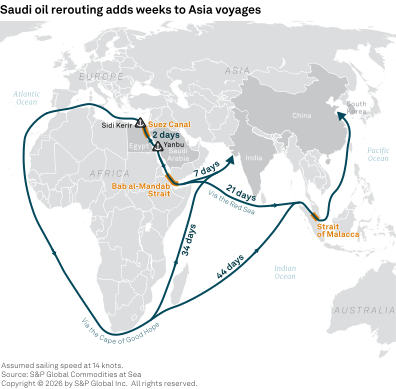
What's happening? South Korea is redirecting some of its term Arab Light crude imports through longer routes via the Suez Canal and around the Cape of Good Hope, prioritizing safety over speed amid increased ship attacks in the Red Sea's Bab al-Mandab Strait, according to the Trade Ministry, S&P Global Commodities at Sea (CAS) data, and industry sources over Aug. 10-13. Maritime traffic through Bab al-Mandab Strait has fallen by about 25% since Yemen-based Houthi militants started attacking ships in late July. CAS data showed one VLCC lifted Saudi oil from Sidi Kerir on Aug. 3 for South Korea, while five more were fixed for the same route with loading dates in late August and early September. Platts, part of S&P Global Energy, assessed the second-month Singapore gasoil swap crack against Dubai crude swaps averaged $57.1/b in Q3 so far.
What's next? The alternative shipping route will add three to four weeks in delivery time, but South Korean refiners are prioritizing safety over speed. One VLCC was chartered Aug. 5 for a voyage from Yanbu via Suez and Cape to South Korea at $20.2 million, or $74.8/metric ton, compared with the Platts-assessed Yanbu-Far East VLCC rate at $64/mt for the Bab al-Mandab Strait route on the same day. However, attractive Asian middle distillate crack spreads and Middle Eastern crude official selling prices are helping cover the shipping cost burden, according to feedstock managers at major South Korean refiners.
2. LNG tanker transits through Panama Canal hit three-year high
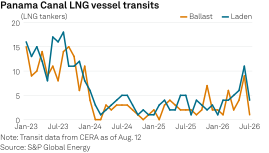
What's happening? Laden LNG tanker transits through the Panama Canal reached their highest level in nearly three years in July, with 11 vessels passing through the waterway, up from six in June, according to S&P Global Energy CERA data analyzed on Aug. 12. This marks the highest monthly total since November 2023, before drought-related restrictions caused traffic to decline sharply. The increase was driven by elevated Northeast Asian LNG prices and a shift in US LNG exports toward Asia, which improved the economics of shipping cargoes through the canal. On Aug. 12, Platts assessed the September JKM benchmark price for Northeast Asia at $21.253/MMBtu, at a $1.112/MMBtu premium to the DES Northwest Europe marker at $20.141/MMBtu.
What's next? Despite the recent increase in canal transits, most US Gulf Coast LNG cargoes bound for Northeast Asia continue to take the longer route around Africa's Cape of Good Hope. The Cape route offers traders greater commercial flexibility, allowing cargoes to be redirected to alternative markets in Europe, South America or South Asia if conditions shift during the voyage, according to CERA LNG analyst Andres Rojas.
3. EU natural gas storage surpasses 60% but lags recent years
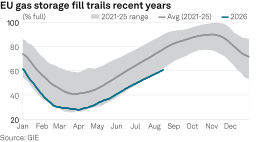
What's happening? Natural gas storage across the EU reached 60.8% full as of Aug. 15, surpassing the 60% threshold on Aug. 13, according to data from Gas Infrastructure Europe (GEI). However, this fill level is lower than any of the five prior years at this time, as the EU struggles with sustained supply disruptions and pricing headwinds from the ongoing war in the Middle East. EU LNG imports have fallen to approximately 63.6 million mt (about 87.7 billion cubic meters) since the start of the year, down about 4.1% compared with the same period in 2025, according to CERA data. On Aug.14, Platts assessed the month-ahead Dutch TTF gas benchmark at €60.68/megawatt-hour, a premium of €1.65/MWh against the Winter 2026 assessment.
What's next? Market analysts remain sceptical the EU will reach its reduced storage target of 80% by the end of the filling season. It would likely be difficult for storage to reach well above 70% by November, Andy Sommer, head of energy market analysis with Axpo, said on Aug. 10. European gas storage would reach 75% full by the end of October, CERA analysts projected Aug. 6. Germany, which holds about 22% of total EU gas storage capacity with facilities capable of storing roughly 246.5 TWh (about 23.3 billion cubic meters) according to GIE, remains a major focus as its sites stood just below 50% full. Persistently backwardated forward curves continue to reduce financial incentives for market players to buy gas during warmer months for winter sales.
4. Asian edible oil giants prioritize food over biofuels
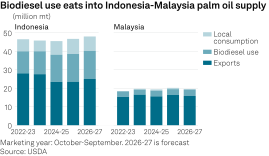
What's happening? Asia's largest edible oil processors, Wilmar International and Yihai Kerry Arawana Holdings, an indirect subsidiary of Wilmar, remain focused on food and feed markets despite growing regional demand for biodiesel and sustainable aviation fuel feedstocks. Recent disclosures from both Singapore-listed Wilmar and China's Yihai Kerry Arawana contained no new investments, targets or strategies for biofuels, renewable diesel or SAF. Wilmar's oil palm plantation revenue rose 3% year over year to $1.14 billion in the first half of 2026, driven by higher palm oil prices, even as fresh fruit bunch production fell 6% to 1.92 million mt. Platts assessed CPO CFR WC India at $1,240/mt on Aug. 14 for August loading.
What's next? The lack of biofuel strategies among the two major edible oil processors suggests transport fuel demand is not yet a major driver of their business, even as palm and other vegetable oils remain critical biodiesel and SAF feedstocks globally. Indonesia continues to expand its biodiesel program, while SAF mandates are emerging across aviation markets, including Singapore, Japan and South Korea. The disclosures suggest food, feed and commodity trading still drive edible oil economics rather than transport fuel demand, despite stronger biofuel policies in Asia and rising biodiesel mandates in Indonesia, Malaysia and other Asian countries.
5. Australian beef tallow prices hit seven-week low
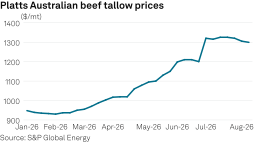
What's happening? Australian beef tallow prices fell to a seven-week low on Aug. 12 amid weak demand from key importing regions and as buyers covered near-term requirements and explored alternative feedstocks, several market participants based in Australia, Singapore and the US told Platts Aug. 14. Platts assessed weekly Australian beef tallow at $1,299/mt FOB East Coast on Aug. 12, down $6/mt week over week, marking the lowest level since June 24, when the price was assessed at $1,200/mt FOB East Coast. Tallow supply was also steady, supported by improved slaughter rates. Australia's cattle slaughter rose 4% week over week to 148,928 head in the week to Aug. 7, according to Meat and Livestock Australia's National Livestock Reporting Service data released Aug. 12.
What's next? Prices are unlikely to fall significantly as US buying interest is expected to remain focused on Australian supply due to Australia's tariff advantage, according to traders and producers. The US tariff on Australian exports stood at 12.5%, while Brazil faced a higher tariff of 37.5%. Platts Australian beef tallow prices are currently at a 9.2% premium to Brazilian tallow on an FOB basis, assessed at $1,190/mt FOB Santos on Aug. 13, but delivered prices for Australian tallow into the US market remain much lower due to the wide tariff gap. Sellers expect trading activity to recover, supported by sustained growth in the renewable diesel and sustainable aviation fuel sectors.
Reporting and analysis by Gawoon Philip Vahn, Max Lin, Corey Paul, Angeles Rodriguez, Samyak Pandey, Aditya Kondalamahanty, Matt Hoisch and Muskan Agarwal.
