Agriculture, Energy Transition, Biofuels, Vegetable Oils, Oilseeds, Sugar, Food, Livestock, Renewables
August 14, 2026
Asian edible oil majors focused on food markets; biofuel, SAF strategies absent
Editor:
HIGHLIGHTS
Palm oil giants focus on food markets
Wilmar revenue rises despite output drop
No biofuel strategies announced by firms
Recent disclosures from Singapore-listed Wilmar International and China's Yihai Kerry Arawana Holdings show Asia's largest edible oil processors remain focused on food and feed markets, even as regional demand grows for biodiesel and sustainable aviation fuel feedstocks.
Wilmar's first-half 2026 investor presentation from Aug. 12 focused on palm oil production, soybean crushing and sugar milling performance, while Yihai Kerry Arawana's June 30 sustainability disclosure centered on governance and financial reporting. Neither outlined new investments, targets or strategies for biofuels, renewable diesel or SAF.
The omission is notable as Asia becomes a larger supplier of vegetable oils for biodiesel, hydrotreated vegetable oil and SAF, with airlines and refiners seeking low-carbon feedstocks.
Palm prices offset weaker production
Wilmar said its oil palm plantation revenue rose 3% year over year to $1.14 billion in H1 despite a 6% decline in fresh fruit bunch production to 1.92 million metric tons.
Wilmar attributed the increase to higher palm oil prices. Crude palm oil production fell 4% year over year to 715,828 mt, while palm kernel output declined 5% to 166,847 mt as Indonesian plantation yields weakened.
The company's crude palm oil extraction rate was 19.8%, up from 19.4% a year earlier. Plantation revenue rose to $1.136 billion from $1.107 billion a year ago.
China feed demand supports crushing
Wlmar said China's feed and food markets remained strong, with soybean crushing benefiting from livestock demand. It did not disclose dedicated renewable fuel feedstock volumes or biodiesel demand growth.
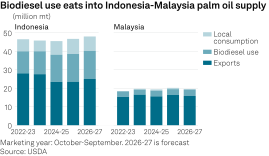
In contrast, rising biodiesel mandates in Indonesia, Malaysia and other Asian countries have increasingly linked vegetable oil prices to transport fuel demand.
Yihai Kerry's filing similarly contained no discussion of biodiesel or SAF opportunities despite a significant position in China's edible oils market.
Biofuel demand secondary
The disclosures suggest food, feed and commodity trading still drive edible oil economics rather than transport fuel demand, despite stronger biofuel policies in Asia.
Indonesia continues to expand its biodiesel program, while SAF mandates are emerging across aviation markets, including Singapore, Japan and South Korea.
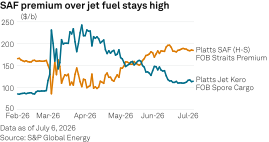
The lack of biofuel strategies among the two edible oil processors suggests fuel demand is not yet a major driver, even as palm and other vegetable oils remain critical biodiesel and SAF feedstocks globally.
Platts, part of S&P Global Energy, assessed CPO CFR WC India at $1,240/mt on Aug. 14 for August loading, up $2.50/mt from Aug. 13.
