Refined Products, Crude Oil
May 29, 2026
China may extend refining run cuts in June amid tight supply, low demand
Editor:
HIGHLIGHTS
China to cut refining runs below 13M b/d in June: analyst
Refiners trim crude buying for June, anticipating price fall
Weak demand, high inventory to cushion lowered throughput
Chinese refineries are likely to extend the downtrend in crude throughput in June due to reduced feedstock supply, low oil products demand and high domestic inventories, analysts and refinery sources told Platts, part of S&P Global Energy, May 29.
A Singapore-based analyst with an international oil company expected China's crude throughput to fall below 13 million barrels/day in June, continuing a decline from a 44-month low of 13.35 million b/d in April.
Platts data showed that 49 of China's state-owned refineries had an average run rate of 71.6% in May, a 74-month low since 70.4% in March 2020, when the country was hit by the coronavirus pandemic. The utilization was at a 43-month low of 75.6% in April.
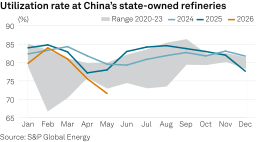
The four private mega-refining complexes' average run rate also fell by nine percentage points from April to 70% in May, according to Platts data.
Cuts in June
A South China-based source with a state-run refinery said they have "significantly" reduced crude buying or resold the cargoes for June delivery to avoid inventory devaluation on their interim financial results. The move is a hedge against the risk that prices could fall amid uncertainties surrounding the Middle East war, the source said.
The refinery will shut a 100,000 b/d plant in June to save feedstock consumption and run the other 200,000 b/d plant at 88% of capacity, according to the source.
China's lower imports will result in throughput reductions in June, a second refining source said, adding that his refinery will cut throughput to 164,000 b/d in June from about 203,000 b/d in May.
State-run refiners will draw on crude inventories built in previous months and their high product stocks are expected to sustain domestic demand, the second source said.
A Sinopec refinery in east China cut its May crude throughput to 267,000 b/d, 28,000 b/d below the initial plan, and will reduce runs further to about 244,000 b/d in June for partial maintenance. The refinery also cut its April throughput by 15,000 b/d from its plan, a source close to the refinery said.
China's onshore inventories were at 1.363 billion barrels as of May 21, having declined slightly from the historical high of 1.365 billion barrels in April, according to data from Ursa Space.
However, not all state-run refineries that rely on seaborne crude imports will cut throughput in June. Sources with three Sinopec plants said utilization levels in May are almost the lowest they can afford to operate at.
Private refineries are expected to continue cutting utilization rates until margins improve, sources from the independent refining sector said.
The refining losses for processing imported crudes at Shandong's small independent refineries widened to Yuan 1,397/metric ton ($28/b) in May from Yuan 401/mt in April, according to local information provider JLC.
Weak fuel demand
Despite year-over-year reductions in second-quarter throughput, China's gasoline and gasoil stocks stood at 85.95 million barrels and 99.76 million barrels, respectively, as of May 22, JLC data showed. The volumes were higher than 84.76 million barrels and 96.8 million barrels, respectively, on May 22, 2025, suggesting the country's energy resilience amid electrification.
The stocks were estimated to cover about 25 days of gasoline and gasoil demand, two market analysts said, as China restricts clean oil product exports.
Sales of gasoline and gasoil were down 10% year over year amid high penetration of substitutes and elevated oil prices, which curbed overall fuel demand, according to a senior researcher at PetroChina's research institute.
The high prices and fuel substitution are weakening end-user demand. China's oil demand is anticipated to show a 1.4 million b/d year-over-year decline in Q2. As NEVs and LNG heavy trucks gain traction, a significant portion of gasoline and gasoil demand is being displaced by the widening cost advantage of alternatives, S&P Global Energy CERA said in a report May 25.
China's key indicators of economic activity remain robust, CERA added. Domestic travel, freight logistics and port activity have largely maintained stability or shown steady growth, according to the report. The slowdown in oil industry activity is not primarily a symptom of widespread economic contraction but an adjustment within the supply chain, CERA said.
