Natural Gas, Electric Power, LNG, Refined Products, Crude Oil, Energy Transition, Metals & Mining, Diesel-Gasoil, Renewables, Emissions, Non-Ferrous
October 13, 2026
Oversight, utility bills loom large under a divided US government scenario
By Zack Hale and Maya Weber
Editor:
HIGHLIGHTS
Midterms could give Democrats oversight powers
Lawmakers expected to seek affordability solutions
The Trump administration's energy agenda could face aggressive congressional scrutiny if Democrats regain control of one or both chambers next year, even as lawmakers seek to pursue bipartisan options to address rising US utility bills.
With neither party expected to secure a filibuster-proof Senate majority in the November midterm elections, issues such as data-center power demand, ratepayer protections, and support for nuclear power and domestic manufacturing may offer some of the few viable paths for bipartisan legislation.
Regardless of the midterm elections outcome, lawmakers will likely feel intense pressure to show constituents that they are acting to address rising US electricity prices. Voters in many key battleground states across the nation have experienced sharp two-year average rate increases.
Policy veterans see a steep learning curve for what is projected to be a historic wave of newly elected members to Congress. Still, some view the prospect of divided government as a potentially productive period for federal energy legislation.
"Historically, divided government has actually been more productive on energy and environmental issues, not less productive," Scott Segal, head of Bracewell's Policy Resolution Group, said in an interview. Shared political leverage is often more conducive to bipartisan compromise, he said.
Hearings, subpoenas and probes
Hints of what is potentially in store appear in multiple oversight letters, reports and information requests from Democrats currently in office.
What Democrats are likely to focus on is allegations that corruption has increased prices for Americans, Tyson Slocum, director of Public Citizen's Energy Program, said in an interview.
Slocum said he sees "a ton" of potential targets, including the US Department of Energy emergency orders to run coal-fired generation; the administration's actions to stall solar and wind projects; settlements pushing gas development while quashing offshore wind projects; use of federal land for data centers; and use of tariffs as a negotiating tactic to spur commercial energy development.
Along with affordability, investigations into whether companies received preferential treatment are likely to be central, according to Rachel Cotton, partner at Arnold & Porter and former White House deputy counsel.
The administration's ties to fossil fuel companies are already under scrutiny. Senate Minority Leader Chuck Schumer and Senator Sheldon Whitehouse, ranking member of the Senate Environment and Public Works Committee, released a report Sept. 24 alleging that massive fossil fuel donations yielded energy policy payouts for the oil and gas industry and higher profits.
The White House did not immediately respond to a request for comment on the report.
"What happens when Democrats control Congress, though, is that they have subpoena power. They can request the documents," Michal Freedhoff, senior policy adviser at law firm Holland & Knight and a former Senate investigator, said. "If the executive branch doesn't provide them, they can nevertheless request them from private sector companies."
Kristina Moore, another former congressional investigator who is now a partner at law firm Womble Bond Dickinson, expects private companies to be on the receiving end of congressional probes because it may be difficult for investigators to obtain answers or documents they are seeking from the Trump administration. A memo issued by the US Department of Justice on Aug. 10 asserted that executive privilege may extend to presidential communications with private parties, potentially placing energy companies between a White House seeking confidentiality and a Congress seeking documents.
Where Democrats are already looking
Whitehouse and Senator Elizabeth Warren of Massachusetts have already queried seven top oil and gas companies about their profits and pricing decisions tied to the military conflict with Iran. House and Senate Democrats are also probing a series of offshore wind cancellation deals, including the administration's nearly $1 billion agreement with TotalEnergies SE to cancel offshore wind leases and redirect investment toward oil and gas facilities.
Democrats are separately seeking information on whether insider trading occurred in relation to global events that boosted energy prices.
Congressional investigations can unearth important facts during litigation challenging federal regulatory decisions, such as the Trump administration's repeal of the Environmental Protection Agency's 2009 endangerment finding for greenhouse gases, multiple attorneys said. That process can coincide with parallel state-level legal efforts, Moore added.
Potential Democratic energy oversight priorities |
|
| Commodity/theme | Areas of scrutiny |
| Electric power and grid reliability |
• DOE emergency orders delaying coal-plant retirements • FERC and independent-agency authority • Wholesale power market design, ratepayer impacts • Transmission costs and utility resource planning |
| Renewable energy and climate policy |
• Offshore wind lease buyouts and project cancellations • Delayed or blocked solar and wind permit approvals • Terminated Biden-era clean-energy grants • EPA repeal of 2009 endangerment finding |
| Oil and gas |
• US-Venezuela oil arrangements • LNG and diesel exports • Oil company profits and fuel prices during the Iran conflict • Alleged preferential treatment of oil and gas companies* |
| Data centers |
• Data center power demand and cost allocation • Federal land grants and financial support for data centers • Permitting exemptions or accelerated approvals |
| Markets, trade and corporate conduct |
• Alleged insider trading tied to presidential announcements** • Tariff policy and energy deals with US allies • Pricing decisions during geopolitical disruptions • Corporate communications with administration officials |
|
As of Oct. 9, 2026. Source: S&P Global Energy; congressional correspondence. |
|
|
* Sept. 24, 2026, report released by Senators Chuck Schumer and Sheldon Whitehouse alleging that fossil-fuel donations influenced Trump administration energy policy decisions and benefited oil and gas companies. ** April 10, 2026, letter from Senators Elizabeth Warren and Sheldon Whitehouse to Commodity Futures Trading Commission Chairman Michael Selig requesting an investigation into allegations of unusual oil-futures trading occurring before Trump administration announcements related to the Iran conflict. |
|
Opportunities for legislation
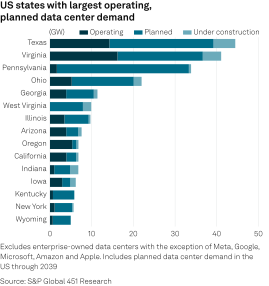
Even under divided government, policy veterans still see areas where bipartisan energy legislation could advance. Potential openings include efforts to shield regular ratepayers from data center-related costs, as well as broader affordability-focused measures, Bracewell's Segal said.
"We're not going to solve affordability between now and the midterms, so affordability issues will definitely be live," he said.
Segal pointed to disclosure, transparency and cost-allocation requirements for large data centers as realistic possibilities, compared with the less likely prospect of federal guardrails on AI-related data center growth. More generation-related measures, such as domestic nuclear fuel supply initiatives, could also win bipartisan support, he said.
US clean energy industry trade groups are also expected to push for an extension and expansion of domestic manufacturing tax credits.
The 45X credit, created under the Inflation Reduction Act of 2022, was one of the law's few federal tax incentives to largely survive intact under Republicans' subsequent July 2025 budget reconciliation bill. The credit is designed to spur US manufacturing by providing per-unit tax incentives tied to the domestic production of eligible energy technologies, components and materials.
The 45X credit will begin to phase down in 2030 and is set to fully expire in 2032, although groups like the American Clean Power Association see a strong bipartisan case for its extension. A recent Rhodium Group analysis found that the enactment of 45X coincided with roughly $131 billion in new US clean energy manufacturing investment through the first quarter of 2026, a roughly 400% increase compared to the comparable period before 45X existed.
"We're seeing these facilities crop up in basically every state across the US," John Hensley, senior vice president of markets and policy for the American Clean Power Association, said in an interview. "They're spanning both Republican-held and Democrat-held congressional districts, as well, so you're seeing the benefits accrue to a good bipartisan swath of the country."
Rhodium estimated that expanding 45X eligibility to include nuclear fusion technology, electric transformers and advanced conductors — and extending the credit through 2036 — could catalyze another $19 billion-$84 billion in new private investment.
The push to expand 45X extends beyond renewable energy manufacturers. Mining and manufacturing groups have also backed legislation that would add additional critical minerals, such as copper and uranium, to the credit while expanding support for domestic mineral extraction and processing.
"45X gives a great framework for incentivizing other parts of the economy's supply chain," Hensley said. "It has also created this nice framework for advancing other strategically important supply chain activities in the US."
Susan Dlin contributed to this article.
