Agriculture, Grains
July 17, 2026
Canadian wheat prices hit two-year high on futures rally
By Paola Caballeros and Maham Quadri
Editor:
HIGHLIGHTS
Minneapolis futures rise on Black Sea tensions
Farmers hold stock amid new-crop quality fears
Canada Western Red Spring wheat flat prices hit an over-two-year high in the week ended July 17, supported by a rally in Minneapolis Spring wheat futures driven by escalating tensions in the Black Sea, although cash basis values remained largely unchanged as market participants waited to assess the impact of higher futures.
Platts, part of S&P Global Energy, assessed Canadian wheat prices at $307.46/metric ton on July 17, up $15.99/mt, or 5.5%, week over week. The price was last higher on May 29, 2024, at $310.12/mt.
The assessment was also 15.3% higher on the year, assessed by Platts at $266.76/mt on July 17, 2025.
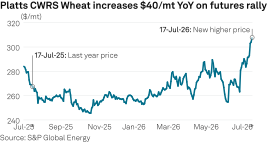
Market players largely attributed the increases to strength in the December Minneapolis Hard Red Spring wheat futures contract, which rose to 425 cents/bushel on July 17, rising 6.3% from July 13, according to the MIAX exchange.
The rally followed disruptions in the Black Sea, which supported global grain markets and raised concerns over export logistics and global grain supply.
Despite the futures rally, participants said the Canadian cash market reacted only modestly.
One Canada-based trader said there were no big changes on the cash basis after futures spiked, but noted that "cash values [felt] under some pressure, as the crop outlook remains overall promising."
Another trader in Canada, as well as a third market player, expected basis to eventual decline if futures remain elevated.
"Today's rally [is] hitting some producer targets and seeing some selling, so basis should soften a bit, but it's still too early to evaluate today's impact," the third market player said.
Farmer selling remained restrained for much of the week despite higher futures. Many participants said that producers continued to hold old-crop inventories due to concerns about new-crop quality following excessive rainfall across parts of Alberta and Saskatchewan. Risk of fusarium, a type of fungus that causes plant diseases, in the new crop also remained a concern, as farmers were unable to spray the crop with pesticide due to the rain.
A third trader in Canada said they were not hearing much inquiry for August.
"[I] think everyone is more focused [on] end of September or October/November," the trader said.
Additionally, producers have little old crop remaining and were reluctant to sell, because the remaining wheat has very good protein that could later be blended with lower-quality new crop if needed, the third trader added.
Those concerns also supported nearby old-crop premiums.
A fourth trader said the market continued to treat September as an old-crop position because harvest development was delayed, adding that originators may retain old-crop stocks to blend with new-crop wheat if protein levels disappoint.
While nearby demand remained subdued, market participants expected stronger futures to gradually encourage additional farmer selling, increasing the likelihood of softer basis levels in the weeks ahead if futures remain elevated.
