Fertilizers, Chemicals, Energy Transition, Renewables
May 20, 2026
Strait of Hormuz closure may trigger ‘severe’ food price crisis: FAO
By Sampad Nandy and Samyak Pandey
Editor:
HIGHLIGHTS
FAO Food Price Index up 1.6% MOM in April
Avoid export restrictions on energy, fertilizers: FAO
Onset of El Niño may further worsen the crisis: FAO
The Strait of Hormuz closure could trigger a "severe" global food price crisis in the next six to 12 months, the UN Food and Agriculture Organization said in a statement May 20.
The Strait of Hormuz, a critical artery for global energy and fertilizer trade, handles about 30% of global urea exports and significant volumes of ammonia and phosphates, making it a key chokepoint for agricultural inputs, according to the FAO.
Decisions taken now by farmers and governments on fertilizer use, imports, financing and crop choices will determine food prices over the next six to 12 months, the FAO said.
The FAO suggested policies to tackle the potential food price crisis. It recommended to look for alternative corridors to bypass the strait and urged countries to avoid imposing export limits on energy, fertilizers and inputs as near-term measures.
It also suggested limiting biofuel consumption to ensure stable food supply in the medium term and building stable regional reserves to absorb food supply shortages in the long term, the FAO said in its statement.
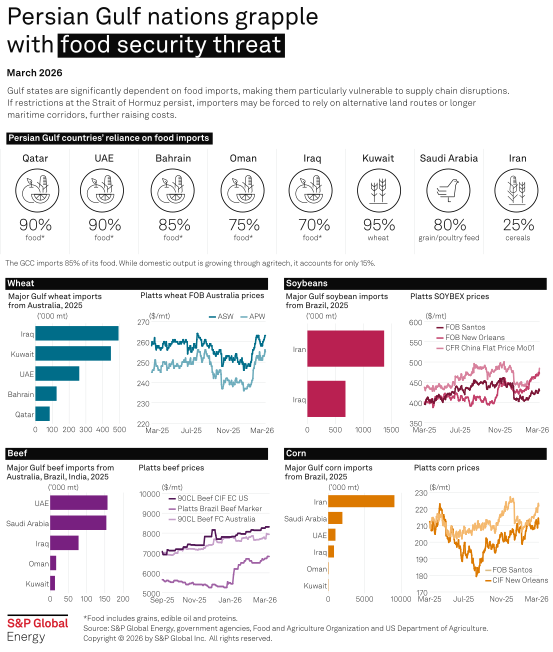
"Start seriously thinking about how to increase the absorption capacity of countries, how to increase their resilience to this choke, so that we start to minimize the potential impacts," FAO Chief Economist Maximo Torero said May 20.
The latest FAO Food Price Index rose for the third consecutive month in April, averaging 130.7 points, up 1.6% from its revised level in March and 2% higher year over year.
The food supply situation could worsen with the onset of El Niño, which is expected to bring droughts and disrupt rainfall and temperature patterns across several regions, the FAO said.
FAO projections show that global fertilizer prices could rise 15%-20% in the first half of 2026 if the crisis persists.
S&P Global Energy CERA forecasts that the Middle East will export 10 million mt of nitrogen in 2026, accounting for 23.4% of global outflows. CERA projects that the Middle East will export 23 million mt of urea this year, accounting for 38.5% of global outflows.
Platts, part of S&P Global Energy, assessed chicken breast CIF Middle East at $2,950/mt on May 20, down $15/mt day over day.
