Agriculture, Fertilizers, Maritime & Shipping, Chemicals, Grains, Oilseeds, Vegetable Oils
April 06, 2026
Hormuz energy shock threatens food security, affordability gap for import-dependent countries

Editor:
HIGHLIGHTS
Conflict drives unequal food price shocks
Poor countries spend 50% of income on food
Export bans, fuel costs amplify crisis
Rising energy and fertilizer costs linked to shipping disruptions through the Strait of Hormuz are amplifying risks to global food systems, with low-income, import-dependent countries facing the brunt, according to recent analyses by the UN and Purdue University.
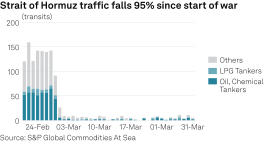
Shipping through the critical trade corridor has effectively stalled, with transits down by more than 95% since late February. The resulting disruption to oil, gas and fertilizer flows has triggered a cascade of cost pressures across agricultural supply chains, the UN Trade and Development said in a March 30 study.
The impact is increasingly feeding into food systems through higher input, transportation and trade costs, while a separate March 31 analysis by Purdue University highlighted how the same disruption is structurally widening the gap between food-secure and food-insecure economies, said Ken Foster, professor of Agricultural Economics and director, Purdue Farm Policy Study Group, and Bernhard Dalheimer, assistant professor of Macroeconomics and Trade.
Energy-fertilizer-food link
Unlike demand-driven commodity cycles, the current shock is rooted in supply disruptions to oil markets, with direct implications for food systems.
In low- and middle-income countries, where transport costs account for a larger share of final food prices, higher fuel prices translate more sharply into retail inflation. Weak infrastructure, longer supply chains and limited cold storage further amplify these effects.
The Strait of Hormuz handles roughly a quarter of global seaborne oil flows and a significant share of fertilizer trade, making it a key chokepoint for agricultural inputs. As natural gas prices double in parts of Asia and rise sharply in Europe, fertilizer production costs have followed.
Shipping through Hormuz has collapsed, with transits down by over 95%, disrupting energy and fertilizer flows as daily transits dropped from an average of 103 ships in the last week of February to single digits within weeks, effectively bringing flows close to a standstill, the UNCTAD report said
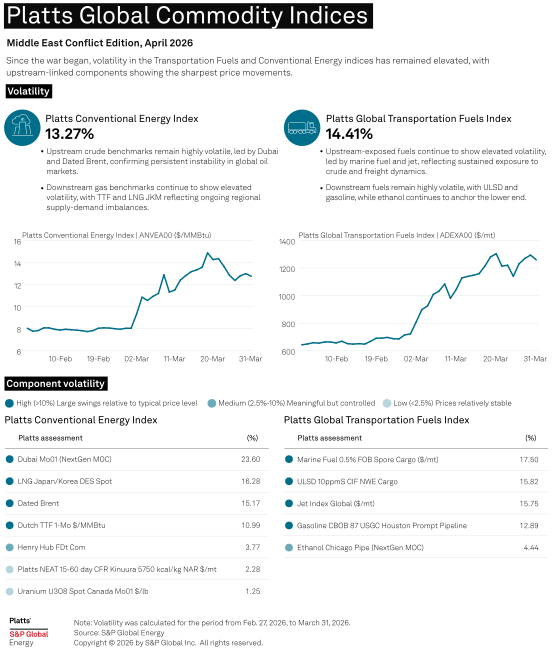
Nitrogen-based fertilizers, such as urea and ammonia, are particularly exposed, given their reliance on gas feedstocks. Prices for these products have already risen markedly, with further increases expected if disruptions persist.
Tanker rates are also up more than 90% since late February, bunker fuel prices have nearly doubled, and war-risk insurance premiums have spiked, in some cases leading insurers to withdraw coverage for Persian Gulf routes, according to the UNCTAD.
These pressures are feeding directly into farm-level economics, influencing planting decisions, input use and ultimately crop yields.
Food affordability gap widens
The disparity is most visible at the household level.
Low-income country households spend roughly half of their income on food, compared with about 10% in high-income economies. This means a 10% rise in food prices effectively translates into a 5% income shock for poorer consumers -- five times the relative impact seen in wealthier countries, said the Purdue analysis.
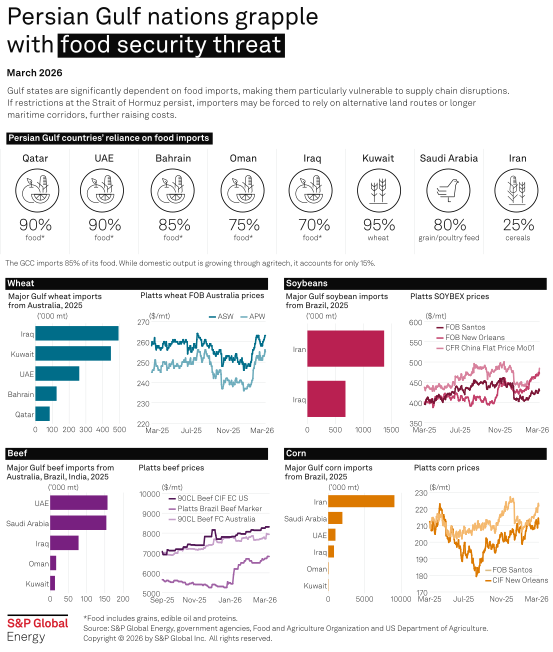
The UNCTAD estimates that about one-third of global seaborne fertilizer volumes transit through the Persian Gulf, with countries like Sudan, Tanzania and Somalia sourcing up to 30%-50% of their imports from the region.
Thin global markets amplify volatility
The structure of global agricultural trade further intensifies price swings.
Only a limited share of key staples is traded internationally -- about a quarter of wheat and even smaller shares for corn and rice -- meaning small disruptions can trigger outsized price movements.
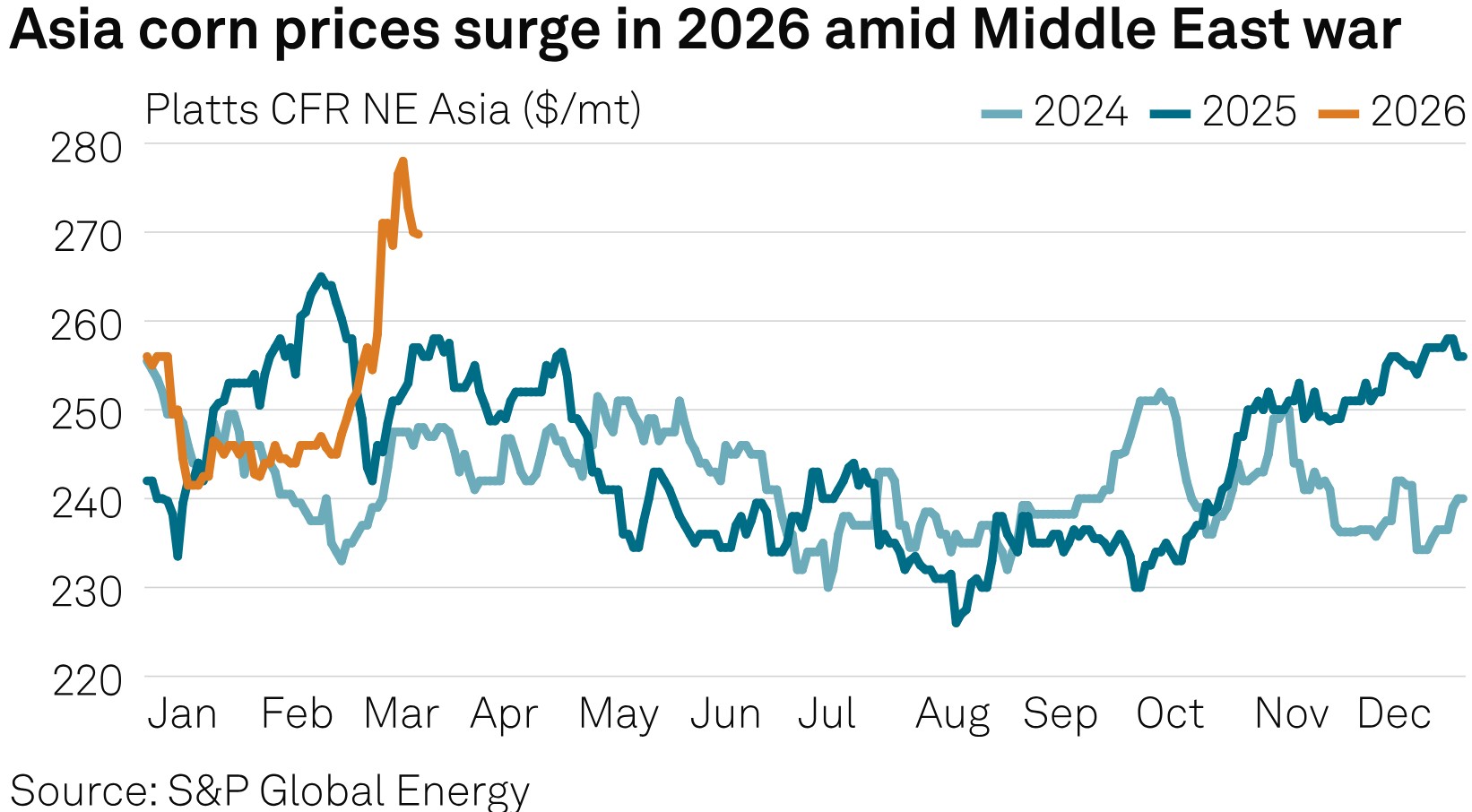
For import-dependent countries, particularly across Africa and parts of Asia, this creates heightened exposure to global price spikes, with limited domestic buffers.
Global food prices rose for the second consecutive month in March, with energy-driven cost pressures linked to the Middle East conflict feeding through into vegetable oil and sugar markets, according to the Food and Agriculture Organization April 3.
The FAO Food Price Index averaged 128.5 points in March, up 2.4% month over month, as all major commodity groups, including cereals, meat, dairy, vegetable oils and sugar, marked the highest levels since December.
Currency, commodity shocks combine
The crisis is also creating a "double impact" for many developing economies.
As global commodity prices rise in US dollar terms, the war is simultaneously strengthening the dollar, aggravating the local currency costs of imports.
This has eroded the purchasing power, particularly in countries already facing external imbalances.
Policy exacerbates shock
Historical patterns suggest governments may respond to rising domestic prices with export restrictions on key food commodities.
While aimed at protecting domestic consumers, such measures reduce the available supply on global markets, intensifying price volatility and disproportionately affecting import-dependent countries.
Similar policy responses during past crises, including 2007-08 and 2022, contributed to sharper and more prolonged food price spikes, according to the analysis.
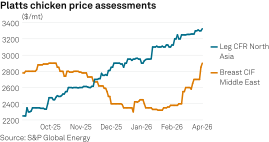
During the 2007-08 food crisis, over 30 countries imposed export restrictions on staple foods. India restricted rice exports. Argentina taxed soy and wheat. Smaller producers from Vietnam to Kazakhstan followed suit on their key commodities.
The UNCTAD estimates that in 2020, during the COVID-19 period of supply chain anxiety, about 25 countries imposed some form of food export restriction. During the 2022 Ukraine crisis, similar restrictions proliferated.
According to FAO Chief Economist Maximo Torero, the conflict represents a "systemic shock" affecting not just energy markets but the entire agrifood system, particularly through fertilizer supply disruptions and higher transport costs.
Humanitarian system under strain
Rising commodity and fuel costs are also weakening the effectiveness of global food aid systems.
Higher prices reduce the volume of food that humanitarian agencies can procure for a given budget, while logistics costs increase due to longer and more complex shipping routes.
Duration of disruption key
Both analyses emphasize that the duration of the disruption will determine the scale of the impact.
Short-term disruptions may be absorbed by existing inventories and supply adjustments.
However, a prolonged shock through key planting and harvesting cycles could trigger broader structural impacts, including reduced crop yields, increased competition from biofuels, and sustained food price inflation.
In that scenario, the current energy shock risks evolving into a broader food security crisis, with the heaviest burden falling on countries least equipped to absorb it.
