Crude Oil, Refined Products, Gasoline
November 28, 2025
Hungary's Orban to meet Russia's Putin to discuss energy ties
By Kelly Norways and Balazs Szladek
HIGHLIGHTS
Hungarian prime minister seeks to secure energy access
MOL's Hungarian, Slovakian refineries still using Russian oil
Orban pledges to extend Russian oil access into Serbia
Hungary's Prime Minister Viktor Orban is set to meet Russian President Vladimir Putin to discuss the country's oil and gas supplies after securing exemptions from US sanctions, he announced Nov. 28.
Orban will meet his Russian counterpart in Moscow to secure affordable energy prices through the winter months, he said in a video posted on his official Facebook channel. "From a Hungarian perspective, the goal of the negotiations is to continue to ensure Hungary's energy supply, which means gas and oil," he said.
"We've obtained an exemption from the American sanctions, and we're working to ensure that Russian oil and gas keep arriving," he said in a separate post on X.
EU sanctions have left Hungary and Slovakia as some of the last countries in the bloc to still rely on Russian oil, benefiting from carveouts on wider import bans for supplies delivered by pipeline.
A Facebook post from Hungary's foreign minister Peter Szijjarto said the country has so far imported 8.5 million metric tons of crude oil from Russia in 2025, and more than 7 billion cu m of natural gas.
A US sanctions clampdown on Russian oil majors Lukoil and Rosneft threatened to hit crude supplies delivered through the Druzhba pipeline system. However, Orban secured an exemption that has allowed oil to continue flowing into Hungary and neighboring Slovakia.
Hungarian energy company MOL is the only oil refiner active in the two countries and heavily relies on Russian pipeline deliveries for the majority of its crude.
In Hungary, it operates the 165,000 b/d Danube refinery, while its Bratislava refinery in Slovakia has the capacity to process 122,000 b/d, according to the company.
Both facilities are connected to the Croatian coastline through the alternative Adria pipeline, but MOL's existing contracts with the operator cover less than 15% of its inland capacity. Janaf, which manages the Adria connection, said that actual deliveries have been "significantly lower" than arranged, and challenges that it could supply all of MOL's crude needs with non-Russian supplies.
Serbian links
After extensive talks with Serbia's president in Szabadka on Nov. 27, Hungary hopes to extend access to Russian oil within the region. "If we have it, Serbia will have it too. Whatever we have, we will share," Orban said in his post on X.
Discussions with the Serbian leader, Aleksandar Vucic, involved Hungary reiterating its commitment to expedite the construction of a new crude oil pipeline to its Pancevo refinery, which currently faces shutdown after its Russian-owned operator NIS was sanctioned. The new connection, which is yet to move into its construction phase, is now targeted for completion by 2027.
MOL is in talks for acquiring a stake in NIS, Orban's chief of staff said Nov. 27, in a move that could provide a lifeline for the sanctioned refining site. The company has also vowed to increase its crude and fuel exports to Serbia by 150% between November and December, Hungary's Szijjarto said in a Facebook post, without providing specific volumes.
For Russia, fortified oil ties with Central Europe could take on new prominence as Western oil sanctions have mounted pressure on its major consumers in other geographies. After US sanctions were enforced on Nov. 21, deliveries of Russian oil into foreign ports fell 23% during the week to Nov. 25, led largely by a slump in imports from India's Reliance.
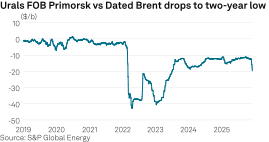
Platts, part of S&P Global Energy, assessed Urals FOB Primorsk at a $19.65/b discount to Dated Brent on Nov. 27, its lowest level since July 2023.

Editor: