Natural Gas, LNG
July 13, 2026
EU task force sees no immediate gas supply concern as winter prep continues

By Matt Hoisch
Editor:
HIGHLIGHTS
EC says ‘storage filling targets remain achievable’
Highlights support from LNG infrastructure to meet winter needs
Analysts warn growing risk of sustained Hormuz issues
A European Union energy task force remains confident in the EU's winter natural gas supply preparations, the European Commission said July 13.
"There is no immediate security of supply concern for winter 2026-2027 as storage filling targets remain achievable ahead of the start of the winter season, ensuring an adequate level of preparedness," the EC said in the July 13 statement summarizing the findings of a July 10 meeting of the EU's Energy Union Task Force.
The EC has pushed for member states to take advantage of flexibilities in the EU's latest gas storage regulation to lower their stocking target from 90% to 80%, to be reached between Oct.1 and Dec. 1.
The task force is an informal group for cooperation formed in 2025. It includes high-level representation from the EC and member states.
The EU's extensive LNG infrastructure is also set to offer an added tailwind toward its winter preparations, the EC said in the July 13 statement.
"The EU's substantial LNG spare import capacity is expected to provide further flexibility to meet winter demand and support the optimal use of storage," it said.
In June, the EU used about 44% of its LNG regasification capacity, according to EC data.
The task force's relatively unperturbed assessment came as EU gas storage remains lower than the same time in recent years. EU-wide stocks were filled to about 51.8% as of July 11, the latest data compiled by Gas Infrastructure Europe showed. At the same time in 2025 and 2024, stores were filled to 62.2% and 80.3%, respectively.
LNG lag
Lagging LNG imports have contributed to the lagging storage fill amid the sustained loss of volumes from the Persian Gulf, home to about 20% of the world's LNG production capacity.
June saw the third consecutive year-over-year drop in EU monthly imports of the super-chilled fuel, according to figures from S&P Global Energy CERA, with trade down 18% compared with June 2025.
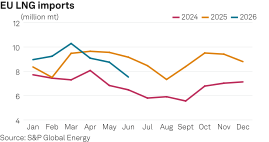
The recent resurgence in hostilities between the US and Iran has further dimmed the prospects of a robust ramp-up in LNG output from Gulf producers and a full return to normal maritime traffic through the Strait of Hormuz in the near term.
Some market watchers have pared back forecasts for Europe's gas stocking.
Analysts with HSBC said in a note July 10 that they now expect European gas stores to fill "just" 72% by Nov. 1, down from a previous figure of 82%. Unfavorable forward-curve dynamics have stifled stocking, with near-term prices outpacing those further out, they explained. The team also ascribed the LNG dip to fiercer competition with Asian buyers for scarcer cargoes.
"Through the next few months, it will be critical for Europe to outbid Asian buyers for marginal LNG cargoes to support inventory refills, which will put upward pressure on gas prices," the HSBC team said. They added that the prospect of an extended LNG shortfall from disruptions around Hormuz "has become a much larger risk in recent days."
CERA analysts, meanwhile, remained more optimistic for the fill in a July 9 note that pegged their European stocking projection around 80% by the end of October. However, they also flagged continued Hormuz disruptions as "a key downside risk" that "appears increasingly plausible."
Platts, part of S&P Global Energy, assessed the month-ahead Dutch TTF gas benchmark at Eur48.465/megawatt-hour on July 10. Exchanges of fire between the US and Iran in the days since have added upward pressure, with the August TTF contract trading intraday slightly below Eur51/MWh as of 1056 GMT July 13, data from the Intercontinental Exchange showed.
