LNG, Energy Transition, Natural Gas, Emissions
October 29, 2026
EC holds to Russian gas ban as prices soar

By Matt Hoisch
Editor:
HIGHLIGHTS
‘We do not want to start buying Russian gas again’: Jorgensen
Russia has supplied about 15.3% of EU LNG imports YTD: CERA
Commissioner still endorses one-year methane delay
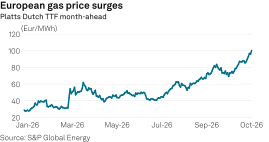
The European Commission remains committed to implementing its planned ban on Russian natural gas imports, set to fully phase in over 2027, Energy Commissioner Dan Jorgensen said Oct. 29, even as European gas prices surge to multiyear highs amid falling temperatures and the war in the Middle East persists into its ninth month.
"That ban stands," Jorgensen told reporters following a meeting of EU energy ministers. "We do not want to start buying Russian gas again."
Under a landmark law passed earlier this year, the EU is set to end its remaining imports of Russian LNG from Jan. 1, 2027, and the remaining imports of pipeline gas from its once-dominant supplier the following fall.
The Commissioner's comments are in line with the stance repeatedly voiced in recent months by EU officials, who have stood by the phaseout despite growing anxieties over what many expect to be a difficult winter.
Jorgensen was resolute that a return to Russian gas would run against the EU's longer-term interests by providing funding for Moscow in its war against Ukraine and deepening the continent's ties to a supplier that has weaponized energy dependencies before.
"If we repeated the mistakes of our past [by returning to Russian gas], then we would again be in the pocket of an enemy," Jorgensen said.
The Commissioner said EU leaders do not expect energy shortages this winter, but he acknowledged gas and oil product prices would be "very high."
Platts, part of S&P Global Energy, last assessed the month-ahead Dutch TTF gas benchmark at €100.27/megawatt-hour on Oct. 28. The index is at its highest point since December 2022.
So far this year, the EU has imported some 12.7 million metric tons of LNG from Russia (equal to about 17.5 billion cubic meters of gas), accounting for roughly 15.3% of its overall imports of the super-chilled fuel, according to data from S&P Global Energy CERA. This is up in both absolute and relative terms compared to the same span last year, when the bloc brought in about 11.8 million mt of Russian LNG accounting for some 13.6% of total imports, according to CERA.
Methane regulation
One of the measures the EC has taken to try to ease the strains on the continent's energy system is proposing a one-year delay to importer requirements under the EU's methane emissions regulation. The EU Parliament last week pushed for an even longer, three-year delay.
Jorgensen said Oct. 29 he stood by the one-year proposal, arguing it is "adequate" to help weather the coming winter while sustaining the law's environmental aims.
"I would very much still argue that one year is the right balance," Jorgensen said.
Once the EU Council adopts a position, it will enter negotiations with the Parliament to reach a final agreement on any delay to the methane law obligations, which are set to start Jan. 1, 2027, under the existing regulation.
EU member state ambassadors are due to continue discussing the delay proposal on Nov. 4, an EU Council spokesperson told Platts on Oct. 28.
