Natural Gas, LNG
July 10, 2026
Panama Canal LNG traffic hits 29-month high in June amid new water restrictions

Editor:
HIGHLIGHTS
Five of six laden transits destined for Asia
Draft restrictions loom amid El Niño concerns
Laden LNG transits through the Panama Canal reached an over-two-year high in June, supported by open arbitrage economics to Asia, even as canal authorities announced water-saving measures that could affect future transits.
In June, the number of laden, southbound transits to the Pacific totaled six, up from five in May and marking the highest volume since December 2023, data from S&P Global Energy CERA and S&P Global Commodities at Sea showed July 10.
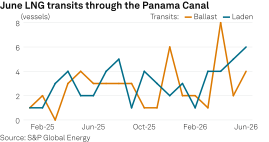
Five of the six laden transits were bound for Asia, including Maran Gas Alexandria, Marvel Dove, LNG Enterprise, BW Brussels and Marvel Eagle, which transited June 5, June 10, June 19, June 22 and June 24, respectively. The first two LNG carriers had already delivered cargoes to Japan and South Korea by July 10, while the remaining cargoes were still en route at the time of publication.
The last laden transit was completed by the Energy Endurance on June 21. The carrier loaded cargo from New Fortress' Altamira FLNG facility in Mexico's Gulf Coast and transited the canal on its way to delivery at the La Paz import terminal on Mexico's Pacific coast, also owned by New Fortress.
By comparison, of the 54 LNG cargoes exported from US facilities to Asia-Pacific destinations, 50 chose the longer route via the Cape of Good Hope, CERA data showed.
Meanwhile, there were four unladen transits through the canal in June, up from two in May, with three of the LNG carriers returning from deliveries in Japan and one returning from South Korea.
Overall, the combined number of transits through the canal totaled 10 in June, down from 12 in April, which had been the highest number since December 2023.
LNG traffic through the canal fell sharply in 2024 after the Panama Canal Authority, or ACP, introduced water-saving measures, including draft restrictions, following severe drought conditions. Unfavorable arbitrage economics to Asia and historically low shipping rates continued to weigh on LNG volumes through 2025 and into early 2026.
Platts, part of S&P Global Energy, assessed the arbitrage for US cargoes delivered to North Asia via the Panama Canal against Atlantic deliveries at 21 cents/million British thermal units on July 10, while the arbitrage for US cargoes via the Cape of Good Hope was assessed at minus $1.079/MMBtu on the same date.
The arbitrage for the US-North Asia route via Panama averaged 55 cents/MMBtu in June, according to Platts data. This suggests shipments through the Panama route were more economically attractive for Northeast Asia than the Cape of Good Hope option.
However, shippers have still tended to choose the longer route, multiple sources previously said. Market participants have previously said that canal transit and auction fees can make the Panama route impractical for most spot LNG cargoes.
Future uncertainty
Meanwhile, the weather outlook for the remainder of the year points to elevated climate risks as El Niño conditions develop in the equatorial Pacific, which could affect canal transits.
The ACP said in a July 1 statement that it would reduce the maximum authorized draft for ships transiting the Neopanamax locks from 15.24 meters to 14.94 meters, effective July 24, and further to 14.78 meters from Aug. 15.
The ACP said the changes form part of its water management strategy "to ensure the safe, reliable and sustainable operation of the canal under current hydrological conditions and considering the potential development of an El Niño phenomenon over the watershed in the upcoming months."
It added that it will continue monitoring levels at the Gatun Lake, which feeds the canal, as well as hydrological projections, to determine whether additional operational adjustments are needed.
LNG carriers typically transit through the Neopanamax locks. The reported draft of ships that recently transited the canal did not exceed 12.52 meters, based on CAS data.
