Agriculture, Energy Transition, Refined Products, Biofuels, Renewables, Jet Fuel
July 10, 2026
UK reviews SAF mandate targets amid non-HEFA supply concerns
By Daniel Workman and Layla Cosgrave
Editor:
HIGHLIGHTS
Non-HEFA production lags UK mandate requirements for 2027
Suppliers seek clarity before September airline tenders begin
Buy-out option gains appeal over physical SAF
The UK government is reviewing whether to adjust targets for non-HEFA sustainable aviation fuel under its SAF mandate, while industry participants are cautious that current requirements may outpace available supply ahead of a January 2027 deadline.
The Department for Transport launched a call for evidence on June 16, seeking feedback on a range of issues, including the consequences of maintaining the current trajectory, expected availability of non-HEFA SAF through 2040, the impact on investment, and whether adjustments to PtL targets are necessary.
Several industry players have argued that the mandates non-HEFA targets are 'overly ambitious' given the limited availability of alcohol-to-jet and power-to-liquid production.
"I understand why they [included non-HEFA targets so soon], to try and drive investment, but nobody saw the circular argument coming," one aviation fuel supply manager said July 9.
"Developers won't take FID without offtake, and offtakes won't sign a blank check. That's the bit that was missed, and it's what they're trying to address now."
The same source said there is currently insufficient non-HEFA production capacity to meet UK demand, although many fuel suppliers remain hopeful Lanzajet will be able to supply a significant share of the required volumes from next year.
However, another domestic fuel supply manager said July 9 that they have yet to hear that Lanzajet had begun commercial production, raising concerns given that less than six months remain before the introduction of the HEFA cap in January 2027.
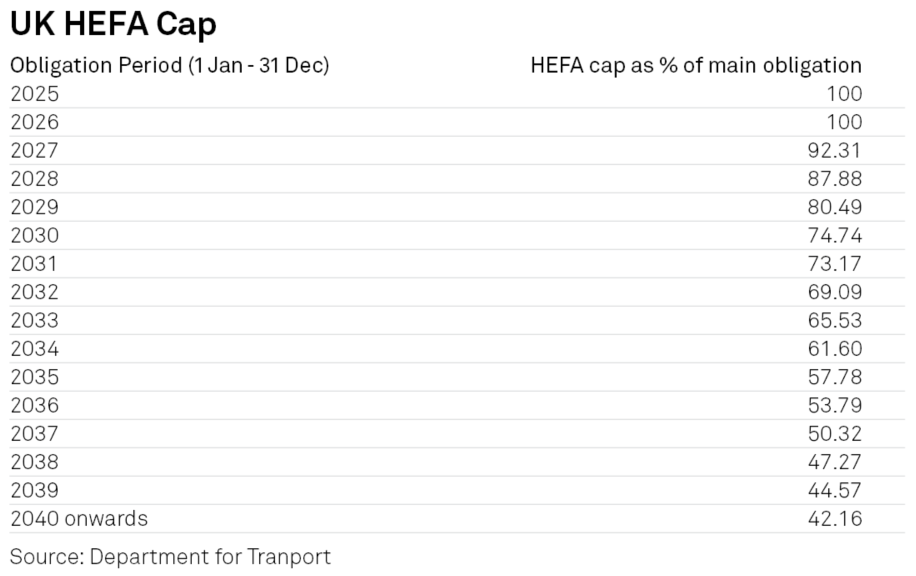
Buyout gains traction
The mandate's buyout mechanism is becoming an increasingly attractive compliance option for obligated suppliers, as offers for physical non-HEFA SAF have been priced only marginally below the buyout level, according to several fuel suppliers.
The buy-out mechanism allows suppliers to fulfill their mandate obligation in a scenario where they are unable to do so through the supply of SAF or the purchase of certificates.
Under the mandate, the buy-out price for the main obligation (which applies to non-HEFA and advanced fuels) is set at GBP4.70 per liter. For Power-to-Liquid (PtL) sub-mandated fuels, the buy-out price is GBP5.00 per liter.
Opting for the buy-out also eliminates the operational risks and blending costs associated with procuring physical volumes. However, market participants noted that the buyout mechanism has its drawbacks.
"Airlines don't want buy-out to be an option because of the cost, and because they don't get any sustainability benefit from it, so it's a lose-lose from their point of view," the first fuel supplier said.
The supplier added that obligated parties are scheduled to meet with the DfT next week to provide feedback on potential changes to the mandate.
"The question I expect them to get to is how much buy-out is acceptable as a proportion of UK demand," the supplier said. "If 90% of the non-HEFA volume for next year is buy-out, that's probably a failure, but what about 80%, 60%, 40%?"
Market participants expressed concerns over the timing of any potential policy changes, citing the additional administrative burden created by concurrent consultations, including the Revenue Certainty Mechanism levy design.
"It will have to be quick because a huge number of airline contracts will be tendered in September-October," the supplier said.
"Those contracts typically run on a 12-month basis, so the fourth month of that contract will be January 2027. Suppliers need to know whether they are pricing buy-out costs into contracts, or whether they'll have access to physical molecules."
The source also questioned whether the breadth of the DfT's consultation could slow the process, noting that the department has sought responses from a wide range of stakeholders, including some with limited direct involvement in the physical SAF market.
Despite concerns that changes to the SAF mandate could undermine market confidence, the DfT said it "will not propose any changes unless there is a strong rationale."
According to sources, the DfT is expected to publish the outcome of the call for evidence in September. Should it decide that changes to the mandate are warranted, the department would likely launch a further consultation on proposed amendments.
Platts assessed UK HEFA SAF Certificate (2026) at 82 pence/certificate July 9, up 11 pence/certificate since the assessments began April 27.
