Electric Power
July 10, 2026
PJM Interconnection sets new all-time peakload record of 168.158 GW in heat wave

By Kassia Micek
Editor:
HIGHLIGHTS
Peakload estimate subject to confirmation in 60 days
PJM West Hub on-peak day-ahead soared to $479.27/MWh
The PJM Interconnection reached an all-time peakload record estimated at 168.158 gigawatts on July 2 during a heat wave that swept across most of the country, breaking a 20-year record.
The estimated peakload record was reached between 5 pm and 6 pm, according to preliminary figures that factor in demand response programs that serve to suppress electricity demand, the grid operator said in a July 10 statement that recapped grid response during the heat wave.
The previous peakload record was 165.563 GW, set on Aug. 2, 2006.
"The preliminary unrestricted peak figure is an estimate that adds in demand response to the measured load and is subject to confirmation in 60 days, which is how long it takes to measure the DR performance," PJM spokesperson Dan Lockwood said July 10. "So, we are estimating that it's a new peak, but that needs to be verified so we have not confirmed it at this point."
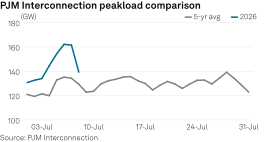
PJM issued a hot weather alert for its western region for June 29 and a hot weather alert for the entire region the grid operator serves for June 30 to July 3 ahead of an expected prolonged period of temperatures in the 90s F or higher.
The grid also faced forced generation outages that ranged between 18.1 GW and 19.4 GW July 2–4, which were higher than the 12.8 GW that represent the average outage rate of the top 10 summer peak days from the last three years, PJM said in the statement.
PJM peakload averaged 145.754 GW for July 1-7, 22% higher than the June average and 9% higher than the same period a year ago.
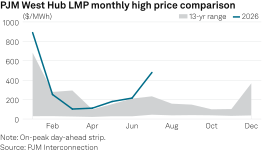
As demand soared, the PJM West Hub on-peak day-ahead locational price climbed to $479.27/megawatt-hour for July 2, the highest price on record for the month of July and the summer season. For comparison, the trading hub reached an all-time record high of $890.01/MWh on Jan. 17, 2026, during a winter storm.
Demand response
"The hottest weather arrived on the afternoon of July 2, and as energy use approached its peak around 5 pm some generators tripped offline, requiring PJM to execute emergency procedures to maximize supply and manage demand," the grid operator said in the statement. "This included calling on emergency demand response."
Demand response customers are paid in advance for a commitment to reduce their electricity use during system emergencies, according to the grid operator. PJM estimated preliminary demand response performance of about 6.113 GW on July 2 and 5.037 GW on July 3.
"The estimated peak load recorded July 2 reflects the true demand that the PJM system would have needed to serve absent curtailment actions such as demand response," the grid operator said in the statement.
The record load approached PJM's 90/10 seasonal forecast of 169.128 GW, Paul Dajewski, PJM senior manager of dispatch, said in a July 9 presentation to the Operating Committee. This represents a one-in-10 likelihood of happening and is accounted for in PJM's summer planning. This system's successful performance does not discount the reality that PJM system conditions are growing tighter over time as new power supplies fail to keep up with system demand, according to Dajewski.
"Our capacity position continues to be an area of concern," Dajewski said during the Operating Committee presentation, adding that PJM used every single generator available on July 2 to get through conditions that also set a PJM record for average combined heat and humidity.
DOE orders
PJM requested and received approval for two Department of Energy 202c emergency orders. Both 202c orders were effective July 1 and extended through July 6.
One order was for temporary relief from environmental permit restrictions for generating units. In all, PJM estimates usage of approximately 3.25 GW worth of generation from units operating beyond their environmental permit limitations, according to the grid operator. The other order was to direct transmission owners, if required as a last resort to avoid outages for residential and other customers, to curtail data centers and other large loads equipped with backup generation.
On the evening of July 2, PJM issued an emergency use of backup generator warning as transmission constraints and generation outages posed challenges in the BGE, PEPCO and Dominion transmission zones, PGE said in the statement. This warning notifies large load customers of a potential emergency use of backup generator action that would require them to be prepared to switch to their backup generation source within 15 minutes. The latter action was not needed and was never issued.
