Crude Oil, Refined Products, Electric Power, Natural Gas, LNG, Coal, Gasoline, Diesel-Gasoil
October 16, 2026
Trump likely to waive new Russian oil sanctions due next week: analysts

By Kate Winston
Editor:
HIGHLIGHTS
Diesel waiver contradicts sanctions regime
India, China top Russian crude import list
US President Donald Trump's administration is likely to defer implementation or issue waivers of new sanctions and tariffs on buyers of Russian oil that are legally due Oct. 18, in part because the administration has already waived sanctions on Russian diesel, energy analysts say.
"It is extremely unlikely that President Trump will impose sanctions on other countries for buying Russian diesel when he is granting a waiver to encourage them to do so," David Goldwyn, chair of the Atlantic Council Global Energy Center's Energy Advisory Group, said.
"That would only drive diesel prices even higher, which would be the opposite of what he is trying to accomplish," Goldwyn told Platts, part of S&P Global Energy. While Trump signed the new sanctions law, he never indicated that he intended to use those sanctions, he said.
Trump, on Sept. 18, signed comprehensive sanctions legislation targeting major purchasers of Russian oil and gas. The law gives the administration 30 days — until Oct. 18 — to impose the new sanctions. The measure also allows the president to waive the sanctions.
The legislation allows the president to impose tariffs of up to 100% on goods imported from the five largest importers of Russian crude oil or natural gas by total volume over the year before enactment, and from the top five countries aiding Russian energy sanctions evasion.
The US Treasury Department on Oct. 9 issued a sanctions waiver allowing the sale, delivery, and importation of Russian diesel fuel to the global market, including the US, until April 7, 2027. At that time, Trump also announced that Russia would be supplying additional diesel to the market.
Top Russian crude importers
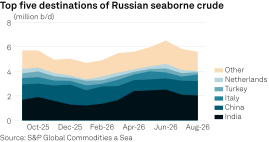
The five largest importers of Russian seaborne crude for the 12 months ending in August 2026 were India, China, Italy, Turkey and the Netherlands, according to data from S&P Global Commodities at Sea.
India imported an average of 1.8 million b/d, China imported an average of 1.2 million b/d, Italy imported an average of 445,000 b/d, Turkey imported an average of 302,000 b/d, and the Netherlands imported an average of 249,000 b/d, CAS data shows.
Hungary and Slovakia combined received about 142,000 b/d of crude through the southern Druzhba pipeline in August, according to S&P Global Energy CERA's October Europe Refined Product Short-Term outlook.
Masha Kotkin, a fellow at the Center for Strategic and International Studies, expects the Trump administration will impose sanctions but will issue waivers. "I suspect that India will seek a waiver as they are fairly exposed," she said.
The market impact of the sanctions depends on whether the US grants waivers for the most affected countries, Kotkin said. While the sanctions regime is at odds with the diesel waiver, the administration may still use some of the law's authorities, she said.
"I think there will be announcements about imposing tariffs before the election," Kotkin said. "The implementation may take time and is unlikely to be as public."
Shadow fleet
The new sanctions law also includes sanctions for vessels used to evade sanctions on Russian crude oil, uranium, natural gas, LNG, petroleum products or coal.
The administration is considering easing sanctions on the shadow fleet used to carry Venezuelan, Iranian and Russian oil as a way to help lower freight rates that have soared amid Strait of Hormuz constraints, Transversal Consulting President Ellen Wald said.
Such measures will likely have a limited impact, Wald said. "It is unlikely that imposing new sanctions or reducing sanctions on the dark fleet will make much of a difference to oil prices," she said.
However, it is possible that diesel prices will come down when Russia releases more diesel fuel to the global market, even if none of the diesel reaches the US, because other countries will purchase that fuel and relieve pressure on US supplies, Wald said.
