Crude Oil, Refined Products, Natural Gas, Electric Power, LNG, Coal, Gasoline, Diesel-Gasoil
September 17, 2026
Congress passes sanctions, tariff bill targeting buyers of Russian energy

By Kate Winston
Editor:
HIGHLIGHTS
Legislation targets top five Russian oil buyers
India imports 1.6 mil b/d, leads crude purchases
Trump administration can waive new sanctions
The US House of Representatives on Sept. 16 passed comprehensive sanctions legislation targeting major purchasers of Russian oil and gas, clearing the way for the law to go to US President Donald Trump for his signature.
The bill, which passed the House 262-159, allows the US president to impose tariffs of up to 100% on goods imported from the five largest importers of Russian crude oil or gas by volume, and includes sanctions for shadow fleet vessels used to evade sanctions. The measure allows the president to waive the sanctions if doing so is in the national interest.
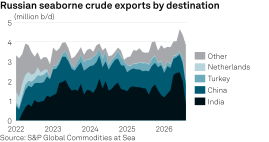
The largest importers of Russian crude in August were India at 1.6 million b/d, China at 1.1 million b/d, Italy at 540,000 b/d, Turkey at 191,000 b/d and the Netherlands at 109,000 b/d, according to data from S&P Global Commodities at Sea.
The measure, called the Lindsey O. Graham Sanctioning Russia and Iran Act of 2026, passed the Senate 86-11 on Aug. 7. Trump plans to sign the bill, according to a White House official.
The impact of the legislation will depend on the Trump administration's appetite for implementing and enforcing the law, energy analysts say.
If the legislation is fully implemented, it could significantly elevate crude prices due to the volume of Russia's crude exports, said David Goldwyn, chair of the Atlantic Council Global Energy Center's Energy Advisory Group.
But even before the passage of the new measure, the Trump administration already had ample authority to impose sanctions on importers of Russian crude and declined to use it in part to avoid elevating crude prices, Goldwyn said.
"I would expect they would issue waivers for those exports, perhaps linked to commitments to reduce imports of Russian crude over time to allow importers to access other crude streams and avoid pushing crude prices up another $10-$15," Goldwyn said.
Ellen Wald, president of Transversal Consulting, said she can see Trump utilizing the bill's provision to put tariffs on countries that purchase large amounts of Russian oil and gas, such as India and China.
Now is probably not the best time to pressure these countries over Russian oil and gas purchases, since further pressure there could raise gasoline and diesel prices in the US, Wald said. "However, if the tight oil market eases, President Trump is very likely to implement these provisions."
Rachel Ziemba, a senior advisor with Horizon Engage, said the bill is unlikely to have a major effect on the oil market in the near term because the Trump administration has so far imposed few new sanctions on Russia.
"My sense is that there is still more bark than bite here and the bigger impacts are in limiting sanctions easing in the future," Ziemba said.
The administration remains much more willing to impose measures on Iran than Russia, Ziemba said. But the measures in the bill that apply to Iran will have little incremental impact because oil flows from Tehran are already limited by the blockade, she said.
The legislation allows the president to impose tariffs of up to 100% on goods imported from the five largest importers of Russian crude oil or natural gas by total volume, and from the top five countries aiding Russian energy sanction evasion.
An exception would apply for countries whose natural gas imports from Russia represented less than 15% of total Russian natural gas exports and have taken significant steps to reduce such imports, according to the bill.
The measure includes sanctions for vessels used to evade sanctions on Russian crude oil, uranium, natural gas, LNG, petroleum products or coal. The legislation also includes provisions to extend the Iran Sanctions Act of 1996, which restricts funding for Iran's energy and weapons sectors.
