Maritime & Shipping, Crude Oil, Refined Products, NGLs, LNG, Wet Freight, Diesel-Gasoil, Jet Fuel
August 28, 2026
US-Iran war six months on: Tanker rates, fuel prices surge amid disruptions
Editor:
HIGHLIGHTS
Ship crossings via Hormuz fall over 80%
Tanker rates at record high levels
Full Qatar LNG repairs to take years
Six months into the Middle East conflict, disruption around the Strait of Hormuz is driving tanker freight rates to record highs and tightening refined products markets as Qatar faces a prolonged loss of LNG export capacity.
S&P Global Commodities at Sea data shows ship crossings via the key waterway, which handles 20% of global seaborne oil and LNG flows in normal times, have fallen by over 80% since the US-Iran war broke out on Feb. 28.
Persian Gulf energy producers have faced lower ship viability for their seaborne trades while developing alternative, longer routes to maintain their exports, resulting in more tonnage requirements.
"The restricted Hormuz trading and different owners' risk levels have resulted in poorer fleet employment efficiency," CAS analysts said in a report Aug. 25.
Earnings for clean and dirty tankers have surged to historically high levels during the conflict. The benchmark Middle East Gulf-Japan Long Range 2 tanker route hit an all-time high of $107.72/mt on Aug. 27 and stayed at that level Aug. 28, according to data from Platts, part of S&P Global Energy.
Southeast Asia's refined product shortfall has compounded the squeeze, with August distillate imports into the region running roughly 20% below prewar levels, forcing buyers to compete harder for alternative barrels and extending charters for vessels still able to access Middle East Gulf and regional export programs, CAS analysts said.
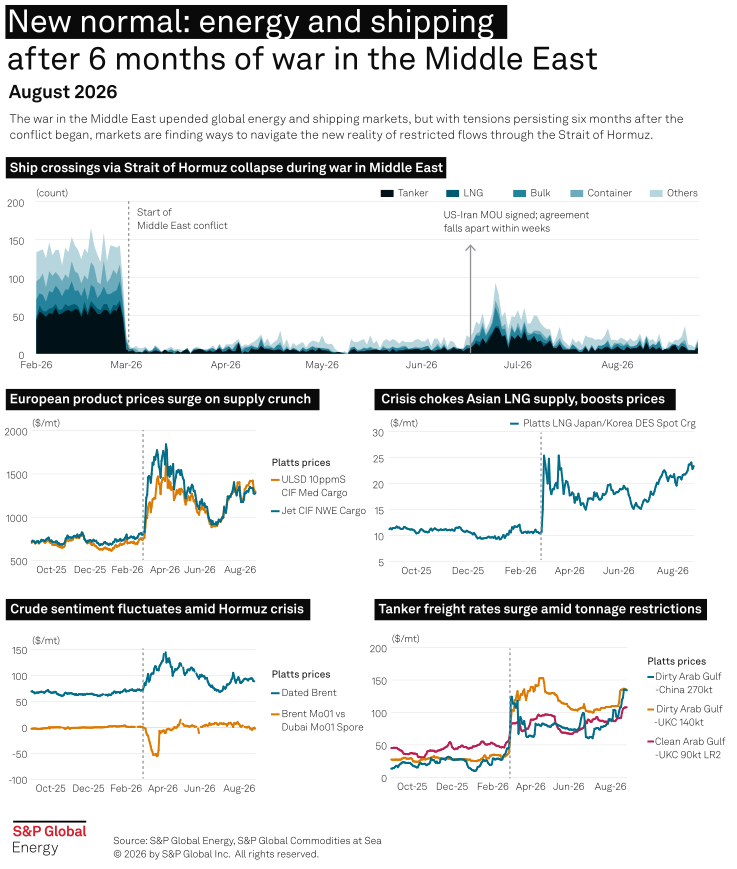
Products tighten, crude supported
Europe is feeling the crunch too. Platts assessed ultra-low sulfur diesel cargoes on a CIF Mediterranean basis at $1,295.75/mt on Aug. 26, up from $762.75/mt on Feb. 27, before the war started, and above a five-year average of $853/mt.
European diesel refining margins have climbed to their highest levels in at least 15 years as the Middle East conflict, Russian export restrictions and looming US refinery maintenance squeeze an already tight global market, analysts and traders said.
Among other middle distillates, Platts assessed Northwest European jet fuel cargoes on a CIF basis at $1,271.25/mt on Aug. 27, up from $831.25/mt on Feb. 27 and above a five-year average of $896/mt.
Crude markets have remained supported as disrupted flows through the Strait of Hormuz tightened regional supply and boosted demand for Middle Eastern medium sour grades. Platts assessed Dubai crude at $71.23/b FOB on Feb. 27, before the war began. The benchmark reached a wartime peak of $169.75/b on March 23 amid a near-halt in Hormuz traffic and US threats against Iranian infrastructure before easing to $90.40/b on Aug. 27.
Morgan Stanley now forecasts a more prolonged supply recovery than previously expected, leaving the market in deficit through the fourth quarter and first quarter of 2027.
"With that, we revise our Brent forecasts higher, peaking at $100/b in 4Q," the bank said Aug. 23.
As the conflict passes the six-month mark, the likelihood of a near-term resolution is diminishing, Morgan Stanley said, citing historical data on interstate conflicts.
LNG damage
The LNG disruption may prove the most durable supply shock. QatarEnergy said in March that damage from Iranian missile strikes on its Ras Laffan Industrial City LNG facilities would take three to five years to repair, forcing the company to declare force majeure on some long-term contracts. About 17% of Qatar's export capacity was taken offline in the attacks, QatarEnergy CEO Saad al-Kaabi said in a March 19 statement.
Shell's Pearl gas-to-liquids facility in Ras Laffan, also damaged in the March strikes, faces a long recovery. Repairs on the plant's second train should be complete and the facility "ready to go" by the end of the first quarter of 2027, Shell CEO Wael Sawan said July 30 on an earnings call.
