Crude Oil
July 09, 2026
Iranian oil flows may limit price impact of renewed conflict with the US: experts

By Kate Winston
Editor:
HIGHLIGHTS
Hormuz ship traffic drops 15% after strikes
Iranian crude exports expected to continue
A renewed US blockade would tighten market
The end of the US-Iran memorandum of understanding and the resumption of strikes by both sides have had a limited impact on oil prices so far because Iran is likely to continue exporting its oil, and the release of trapped vessels under the MOU provided a brief boost to supplies, experts said.
Most of the oil that flowed through the Strait of Hormuz during the MOU was from Iran or from countries that made private arrangements with Tehran, David Goldwyn, chair of the Atlantic Council Global Energy Center's Energy Advisory Group, said.
Those flows are likely to continue even after the end of the MOU, Goldwyn told Platts, part of S&P Global Energy. "For these reasons, the market impacts of this escalation in hostilities are modest."
"For now, the market likely expects that the US and Iran will fight and talk, that Iranian shipments and those it is willing to tolerate will continue and that we will not reach pre-war levels for the foreseeable future," Goldwyn said.
But if the US reimposes the blockade, the market will factor in the reduction in Iranian shipments, which are likely between 1.5 million and 2 million b/d, Goldwyn said.
US President Donald Trump on July 8 threatened to resume the blockade. "We may put back the blockade, and it'll only be a blockade for Iran," Trump said during a meeting at the NATO summit.
"We have an oil glut right now, because we got all those boats out of the strait," Trump said at the summit. "Anything that happens is going to be over very quickly."
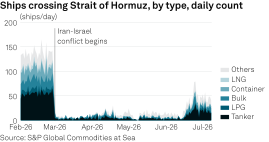
Ship transits through the Strait of Hormuz fell 15% July 8 as US airstrikes on Iran prompted caution among ship operators, S&P Global Commodities at Sea said in a July 9 report.
Fuel lifeline
The fuel that exited the strait during the MOU and just prior is a lifeline for the global oil markets and buys time to avoid further reserve drawdowns, but it's far from sufficient for a lengthy time, Rachel Ziemba, a senior adviser with Horizon Engage, told Platts.
"In practice, much of the supplies which exited involved the trapped vessels, reducing that remaining stockpile, with flows from storage and new production less extensive," Ziemba said.
The market is in a better place than before the ceasefire, in part because of the trapped vessels that were released, but it is in a worse place than if the MOU had held, Ziemba said. There will likely be a return to an MOU, but moving to a broader deal will remain tough, she said.
"A return to the ceasefire and sanctions waivers will be viewed even more cautiously by buyers of Iranian crude, and US hardliners may force revenues to go into blocked accounts, which would make Iran even less willing to trade," Ziemba said.
Ellen Wald, president of Transversal Consulting, said there is no indication that non-Iranian ships will be able to leave or enter the Persian Gulf in the near term. About 200 million barrels of oil got out of the strait before the recent flare-up, but that is equivalent to about 2 days of global demand, she said. "I do not understand why Brent is not over $80 today."
The escalation will likely be brief, but what happens in the aftermath will determine what happens with the oil market, Wald said. "It is possible that the oil market looks better supplied than it is because outages in Russian refineries mean that Russia is exporting more oil, but that doesn't change the amount of oil; it just redistributes it."
Reinstatement of US sanctions on Iranian petroleum and petrochemicals seems likely to shift future deliveries to buyers with higher risk tolerance without necessarily curtailing exports, ClearView Energy said in a July 8 note.
"However, if Iranian retaliatory strikes against Gulf producers delay the recovery of production — or disable it anew — global markets could tighten," ClearView said.
