Crude Oil
June 15, 2026
Trump says oil tankers pass Hormuz after deal, but visible traffic still limited
Editor:
HIGHLIGHTS
Laden oil tankers exit Hormuz: Trump
Ship-tracking shows limited traffic
Normal traffic not expected in some time
Oil-laden ships have started to exit the Strait of Hormuz after Washington and Tehran agreed on a framework to end their conflict, US President Donald Trump said June 15, even as ship-tracking data shows tanker traffic through the choke point remains limited.
"Ships are starting to move, many loaded up with Oil, out of the Strait of Hormuz," Trump said in a post on his social media platform Truth Social.
"They are going along the Southern 'Highway,' which is totally safe, secure, and pristine. There are other areas of travel, also!!!"
The US Central Command has been advising ships sailing close to the Omani shore during the passage of Hormuz since mid-May, and those transits could not be immediately detected at times, as those vessels often turn off their location transponders for safety reasons.
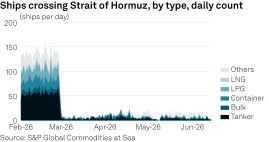
S&P Global Commodities at Sea data shows six general cargo ships, one LNG tanker and one bitumen carrier but no other oil tankers transited Hormuz as of 1620 GMT on June 15. The total number of transits in the week ended June 14 was 61, down from 91 in the prior week.
The visible transits on June 14 reached four, including the Aframax Kos that exited Hormuz carrying Saudi fuel oil and is sailing to Singapore, according to CAS. This compared with two on June 13 and five on June 12.
Observed maritime traffic has remained far below the usual level despite Trump's announcement late June 14 that he had approved removing the US naval blockade on Iranian ports and that the strait would reopen "toll-free."
Around 135 ships a day, including 46-47 tankers, used the Hormuz waterway in February before the Iran war began, according to CAS data.
After the US and Israel launched airstrikes Feb. 28, Iran seized control of Hormuz and only allowed access to its own tankers and a small number of Asian vessels, hitting export flows which normally amount to one-fifth of the world's crude oil supplies.
"Expectations of a Strait of Hormuz reopening under the memorandum of understanding are bearish for future oil prices and risk premiums, yet normalization will take time, leaving physical crude markets tight through summer," oil analysts from S&P Global Energy said in a June 15 note.
Slow recovery
Trump announced the deal late June 14 on Truth Social, adding "Ships of the World, start your engines. Let the oil flow!"
The US has provided little detail about the deal. Iran has not refuted Trump's statements via state-linked media and said the Hormuz passage would be free of charge for 60 days. Both sides are expected to sign the deal June 19.
A joint statement from the leaders of the UK, France, Germany and Italy said it is vital that "detailed negotiations are concluded and this agreement is implemented rapidly and comprehensively."
"The urgent re-opening of the Strait of Hormuz with unconditional and unrestricted freedom of navigation is essential," the countries said in a statement.
Most market watchers expect a return to normal shipping through the choke point to take months after a formal peace deal has been signed.
"If the Strait of Hormuz remains restricted through July before gradually reopening, futures should firm but remain well below physical levels. In either case, recovery after reopening will be slow as commercial and [strategic petroleum reserve] refill competes with demand, while strong margins lift refinery runs to rebuild product supply," S&P Global Energy analysts said in a note.
