Refined Products, Diesel-Gasoil, Jet Fuel, Gasoline
May 18, 2026
Kenya hit by protests over rising fuel prices

Editor:
HIGHLIGHTS
Transport workers protest over rising costs
Regulator lifts prices for second month in a row
Ugandan fuel supply chains at risk from disruption
Kenya's public transport system was left paralyzed in key cities amid protests and police clashes over rising fuel prices linked to the conflict in the Middle East, national media reported May 18.
Roads leading into the capital city in Nairobi were blocked by striking transport operators, leaving commuters that rely on public bus services either stranded or forced to walk to work. Disruption was also reported in other parts of the country, including the port city of Mombasa as well as Nakuru, Eldoret and Nyeri.
Kenya imports almost all of its fuel via government-to-government agreements with countries in the Middle East Gulf, and has clamped down on companies attempting to procure fuel outside the state contracts, leaving it highly exposed to the ongoing disruptions in the Strait of Hormuz.
On May 14, Kenya's Energy and Petroleum Regulatory Authority, the national regulator, announced it would introduce a second price hike to reflect rising costs in the global market, and increased retail prices by up to 23.5%.
The price hikes took diesel costs to the equivalent of roughly $1.80/liter and gasoline to $1.65/l, triggering a mass outcry and calls for fuel tax cuts. The government has already cut VAT by 16% for gasoline and 13% for gasoil, and continues to subsidize both diesel and kerosene.
Police were reported to have used tear gas to disperse protesters who were blockading roads around Nairobi. "The use of force is a last resort after reports that demonstrators are stopping and harassing some motorists," said police spokesperson Muchiri Nyaga.
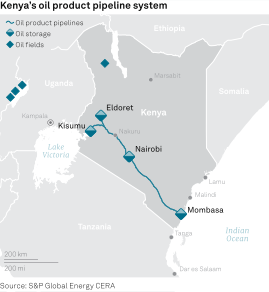
Congestion has also stalled fuel trucks that typically move diesel and gasoline to the country's rural areas and into Uganda, leaving several stuck at the Malaba border point on their way to collect their cargo.
In a statement to the Kenya Broadcasting Corporation, finance minister John Mbadi called on the protesters to end the strikes and allow the government to manage the situation, warning the disruption could hurt the economy as much as the high fuel costs.
The country acts as one of the main access points for the East African hinterland to import its fuel, due to its port and pipeline infrastructure that cuts transit costs. In the absence of an operating refining sector, East Africa has typically imported roughly 80% of its gasoil and jet fuel from the Gulf states, making it one of the worst-hit regions in the first months of the conflict.
According to S&P Global Commodities at Sea data, some 200,000 b/d of refined products landed in Mombasa in April, down by 18,000 b/d month-over-month but higher than the previous year. Product from the UAE's port of Ruwais, typically Kenya's main supplier, fell to zero, but were offset by new arrivals from other countries including India, Malaysia and Indonesia.
