Agriculture, Refined Products, Biofuels, Jet Fuel
October 07, 2026
Hong Kong urged to adopt flexible SAF mechanism, protect hub competitiveness

Editor:
HIGHLIGHTS
Coalition proposes demand flexibility for SAF
Mainland China capacity hits 3.6M mt by 2030
Levy on passengers and cargo under review
Hong Kong should adopt a flexible demand mechanism for sustainable aviation fuel, preserve open access to fuel infrastructure and establish streamlined supply links with mainland China to meet its 2030 target without undermining its aviation-hub competitiveness, according to a new industry whitepaper on Oct. 6.
The Hong Kong Sustainable Aviation Fuel Coalition in its whitepaper said Hong Kong planned 1%-3% SAF consumption ratio for flights departing Hong Kong International Airport by 2030, which should serve as an initial step toward a longer-term trajectory extending to 2035.
The target is included in Hong Kong's First Five-Year Plan, while the government is studying a mandatory consumption-ratio mechanism, with completion expected by 2028.
Plans also include a SAF production base in Dongguan and Hong Kong's first local blending facility, with EcoCeres expected to produce approximately 450,000 metric tons/year of SAF and hydrotreated vegetable oil.
However, the absence of a post-2030 target creates uncertainty for producers, infrastructure developers and investors requiring longer-term demand visibility, the whitepaper said.
The paper recommended that the government assess a passenger-and-cargo levy, an obligation on airlines and a supplier mandate before selecting a mechanism.
It proposed excluding transit and transfer passengers and transshipment cargo to reduce the risk of traffic shifting to competing hubs.
It also called for flexible compliance through multiyear averaging or a rolling 24-month window, potentially allowing market participants to defer part of their annual obligation during periods of constrained supply or elevated prices.
Regional supply opportunity
Hong Kong could use its proximity to expanding mainland Chinese production to become an international SAF offtake, trading and certification hub, the report said.
Mainland SAF production capacity could reach 3.6 million mt/year by 2030, but domestic demand remains constrained by SAF prices that are two to three times those of conventional jet fuel, according to the paper.
In the absence of stronger Asian demand, producers have prioritized exports to compliance markets, including Europe.
Hong Kong's 1%-3% target would represent approximately 60,000-180,000 mt of SAF, based on its 2025 jet fuel demand, the report said.
Those volumes could initially be supplied through shipments of pre-blended fuel and may not independently justify immediate investment in dedicated blending infrastructure.
The planned facility should therefore permit both pre-blended imports and local blending of neat SAF, but its commissioning should be aligned with actual supply and airline demand to avoid creating a stranded asset, the coalition said.
The paper also recommended an interdepartmental Greater Bay Area task force to establish "green lanes" for mainland SAF, simplify customs procedures and address local testing and classification processes that it said have historically taken as long as six months.
Hong Kong should integrate its planned green-energy certification system with internationally recognized Book-and-Claim registries rather than developing a separate local platform, the paper added. This would support corporate purchases of SAF environmental attributes while reducing the risk of double-counting.
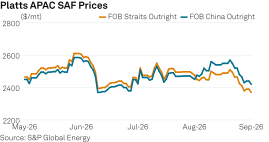
Platts, part of S&P Global Energy, assessed Sustainable Aviation Fuel HEFA-SPK FOB Straits, reflecting CORSIA-certified cargoes, at $2,375/metric ton Oct. 7, down $15/mt from Oct. 6,
