Agriculture, Biofuels, Grains, Vegetable Oils, Oilseeds
September 02, 2026
Supply risks, biofuel buzz redraw 2027 grain, oilseed complex outlook
Editor:
HIGHLIGHTS
Biofuel mandates boost soybean oil prices
Fertiliser costs threaten corn production
China demand shapes US soybean exports
Global corn and soybean markets could enter a stronger pricing cycle in 2027 as declining grain inventories, elevated fertilizer costs and expanding biofuel demand increase competition for agricultural supplies.
US soybean futures climbed to their highest level in nearly three years on Sept. 1, with the November contract settling above $13/bushel. Corn and wheat also advanced, strengthening expectations that the lows recorded during 2024-26 may have established a foundation for higher prices.
The rally followed a US Environmental Protection Agency decision on small refinery exemptions under the Renewable Fuel Standard.
The EPA granted 18 full and 11 partial exemptions for the 2025 compliance year but said the difference between projected and actual exempted volumes would be reallocated to the 2026 and 2027 Renewable Volume Obligations.
While the exemptions reduce immediate blending requirements for affected refiners, the reallocation shifts the corresponding renewable fuel demand into future compliance years rather than removing it entirely. That outcome was interpreted as supportive for soybean oil, a key feedstock for biodiesel and renewable diesel production.
Soybean complex strengthens
Soybean oil futures soared even more following the announcement, while the broader soybean complex moved higher. The reaction illustrated how closely soybean prices are becoming linked with US energy and environmental policy.
Chicago Board of Trade soybean oil futures rose 7.22% over three trading sessions through Sept. 1.The most-liquid CBOT December soybean oil contract settled at 72.63 cents/lb Sept. 1, up from 67.74 cents/lb Aug. 26, an increase of 4.89 cents/lb, or 7.22%.
Platts, part of S&P Global Energy, assessed Argentine soybean oil FOB Up River for October loading at $1,211.44/mt Sept. 1, up $15.87/mt, or 1.33%, from $1,195.57/mt Aug. 26.
Brazilian soybean oil FOB Paranaguá for October loading increased $20.28/mt, or 1.69%, to $1,218.05/mt Sept. 1 from $1,197.77/mt Aug. 26.
The forward outlook will further depend on whether stronger mandated volumes translate into sustained physical demand from renewable fuel producers. Market participants will consequently monitor soybean crushing rates, vegetable oil inventories and renewable fuel credit values for evidence of tightening feedstock balances.
Global supply buffer narrows
The biofuel outlook is emerging against a backdrop of tightening agricultural supplies.
Global stockpiles of corn, soybeans and wheat have been trending lower since May, leaving markets more sensitive to weather disruptions, lower acreage or interruptions to major export corridors.
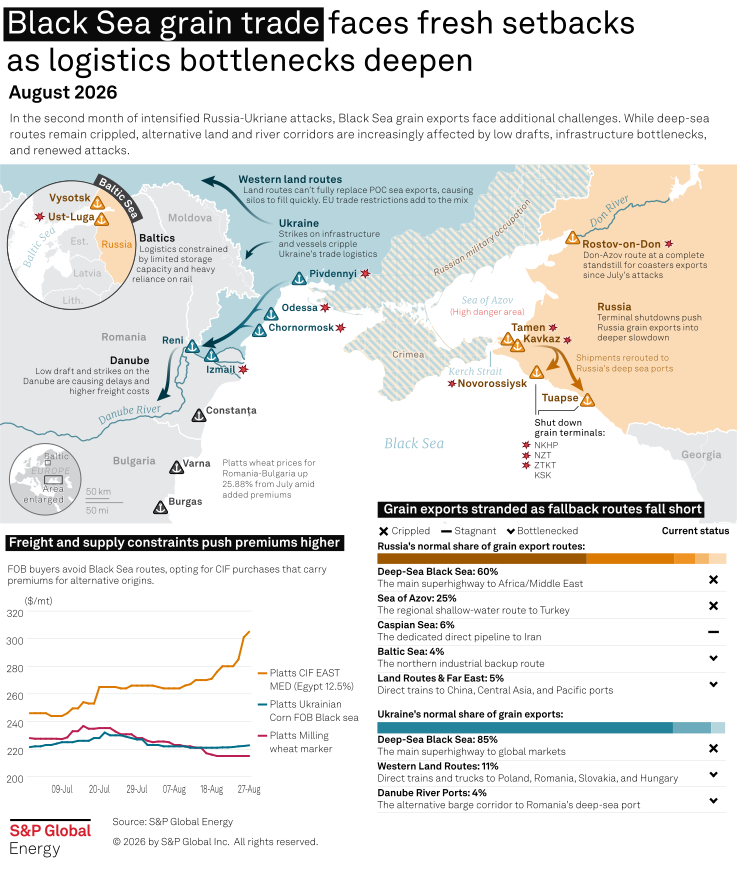
Black Sea volatility are further adding to that sensitivity.
Russia and Ukraine are major suppliers of wheat, corn and sunflower oil, meaning disruptions to regional logistics can influence markets well beyond wheat. Reduced availability of sunflower oil, for example, could increase demand for competing vegetable oils, including soybean oil.
The declining supply buffer does not guarantee a sustained rally.
However, it means that production losses in the US, Brazil or Argentina could have a larger price effect than during periods of abundant inventories.
Fertilizer costs threaten corn acreage
Elevated fertilizer and energy costs represent another potential constraint on 2027 production.
Corn is particularly vulnerable because of its heavy nitrogen requirements. Persistently high input costs could encourage growers to reduce fertiliser applications or shift land towards crops requiring fewer inputs.
The pressure may be significant in Brazil, a key supplier where producers also face currency-related costs when purchasing imported fertiliser. Reduced corn planting or lower application rates could constrain Brazil's exportable supplies, particularly if weather conditions also limit yields.
In the US, high fertilizer costs could reduce corn acreage in favor of soybeans. Fewer planted acres, combined with any decline in national yields, would tighten supplies during the next marketing year.
The western Corn Belt could see an especially pronounced impact.
Corn from the region supplies domestic consumers and is transported by unit train to Mexico and Pacific Northwest export terminals. If China returns as a substantial buyer of US corn, competition for rail capacity could strengthen levels by summer 2027.
China and weather shape soybean outlook
China remains the central variable for US soybean exports.
Fresh purchases for delivery during the MY 2026-27 have supported sentiment, although continued buying will be needed as the US harvest accelerates.
US soybean crop conditions have also weakened.
USDA rated 58% of the crop good or excellent in the week ended Aug. 30, down 2 percentage points from the previous week. Some 95% of the crop had set pods, while 13% was dropping leaves, increasing the importance of temperatures and rainfall during the closing stages of the growing season, signaling late-season crop stress..
Attention toward South America
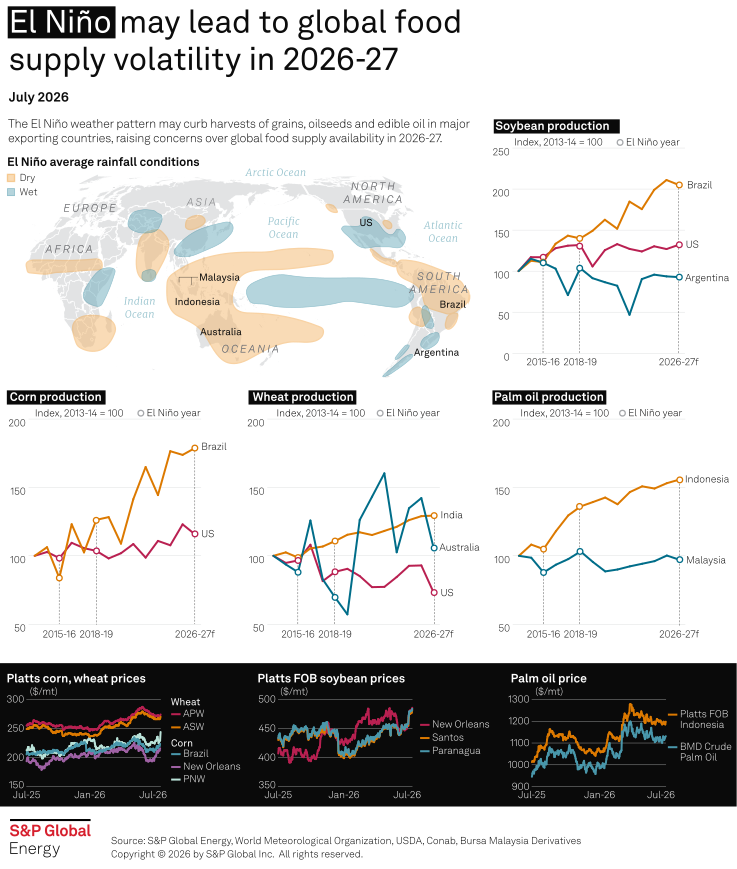
A projected El Niño weather pattern can bring wetter conditions to Argentina and southern Brazil while increasing the risk of heat and dryness in central and northern Brazil. Any significant reduction in South American corn or soybean production would tighten global balances further and potentially extend the rally into mid-2027.
For producers, however, higher prices may not automatically deliver wider margins. Rising fuel, transportation and fertilizer expenses could offset part of the improvement in crop values.
The developing 2027 outlook is therefore not simply a bullish story.
It is a contest between stronger demand, shrinking supply buffers and increasingly expensive production. If biofuel consumption and Chinese imports remain firm while global output dwindles, corn and soybean markets could move decisively higher. But with harvest pressure, trade flows and weather still uncertain, volatility is likely to remain the defining feature of the year ahead.
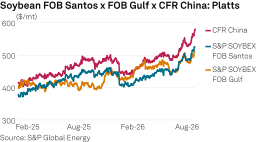
Platt, part of S&P Global Energy, assessed the SOYBEX FOB Santos soybean contract for October loading at $538.96/metric ton on Sept. 1, up $6.89/mt from the previous assessment.
