Agriculture, Meat
July 02, 2026
North Asia pork belly prices hit record low on weak demand, lower Spanish offers

Editor:
HIGHLIGHTS
High inventories pressure market
Bearish outlook persists amid Spanish imports
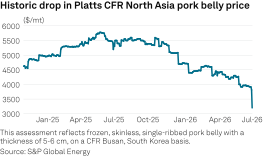
North Asian pork belly prices extended their monthly decline and hit a record low July 1, pressured by weak demand and highly competitive Spanish pork belly offers.
Platts, part of S&P Global Energy, assessed the CFR North Asia pork belly price at a record low of $3,200/metric ton for August-September loading to Busan on July 1, marking declines of 18.4% month over month and 39.6% year over year.
Weak demand, high inventories pressure market
Market participants across North Asia have shown little buying interest for weeks, citing high inventory levels and large inflows of Spanish pork bellies.
Until last month, shipments to South Korea faced delays due to issues with cargoes entering China, according to a local importer.
However, since Japan stepped back from purchases following the blanket ban on Spanish pork due to African swine flu, products are now moving to South Korea more quickly, leading to lower offer prices, South Korean importers said.
"They're dumping them all to [South] Korea," a local buyer said.
"Recently, the [South] Korean meat market has been really weak and not many importers are interested in making new contracts," a local importer added. "Maybe that's why prices are being lowered even more."
Bearish outlook persists
Despite low Spanish pork offer prices, buying interest is likely to remain subdued, importers said. While falling prices would usually prompt regular buyers to purchase, current market conditions and high inventories mean buyers are unlikely to step forward simply because prices have dropped, another importer said.
South Korean importers expect bearish sentiment to persist in the coming months, as ample belly stocks continue to pressure domestic spot prices.
