Agriculture, Grains
July 01, 2026
Wheat drops to 5-month low; harvest supply meets weak Egypt demand

Editor:
HIGHLIGHTS
Wheat prices fall to a five-month low
Egypt's wheat imports expected to drop
Private importers gain a larger market share
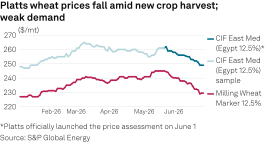
Wheat prices fell to a five-month low June 30, pressured by weak demand from major importing countries including Egypt and Turkey, while fresh supply from the new-crop Black Sea harvest weighed on sentiment.
The decline comes as Egypt, the world's largest wheat importer, undergoes significant changes to its wheat import system. Private companies are taking a larger share of the market, local production is higher, and the government is considering changes to its subsidized bread program.
Platts wheat benchmark, the Milling Wheat Marker, was assessed at $229/metric ton June 30, its lowest level since Jan. 30. The CIF market moved similarly, with Platts CIF East Mediterranean basis Egypt 12.5% assessed at $249/mt on June 30.
Egypt's import demand slows
Egypt concluded the June-to-July wheat marketing year with its largest-ever annual wheat purchases, totaling more than 14 million mt.
However, demand has slowed as importers point to high volumes in bonded warehouses, estimated at around 1.4 million mt. Some importers have paused new purchases, while others are focusing on covering demand for the second half of July and August.
Local prices could fall further as storage conditions become more difficult during the summer months, market participants said. Higher temperatures increase the risk of pest infestation, while ventilation and sealing costs also rise. "Storing wheat will be hard," one buyer said, adding that some holders may lower prices to sell off stocks. "The local situation is terrible," a second importer said.
Ex-warehouse 12.5% wheat prices are at EGP 13,000/mt ($265/mt), down from EGP 14,200/mt a month earlier, according to market participants. Traders are also monitoring the appreciation of the Egyptian pound against the US dollar, at EGP 49/$1, compared with a peak near EGP 55/$1 in April.
Private importers take larger share
Egypt's wheat import structure has shifted, moving away from traditional state tenders toward greater participation by private importers.
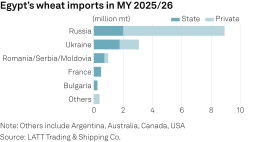
Government imports accounted for 37.3% of Egypt's total wheat imports in the MY 2025-26, while private companies accounted for 62.7%, different from the usual 50:50 split in previous years, data from local agency LATT Shipping and Trading Co. showed. Egypt's strategic wheat reserves remain at six months.
"The state will still import to cover demand, but private participation is expected to grow over time," a third importer said.
The state has also increased purchases from local farmers, buying 4.7 million mt of domestic wheat, and is aiming to reach 5 million mt before the supply season ends in mid-August. That would be well above last year's total of 3.9 million mt, multiple importers said.
The increase follows a higher government procurement price of EGP 2,500 per ardeb, introduced to encourage farmers to sell more wheat to the state.
With strong domestic output, importers expect Egypt's wheat imports for MY 2026-27 to ease to 12 million-13 million mt in the coming year. "We will keep importing, just a bit less," a fourth buyer said.
Subsidized bread reform mulled
The government is also considering changes to Egypt's subsidized bread system, including a proposed cash-transfer model, multiple importers said.
Under the proposal, subsidized bread could be priced at EGP 1.5 per loaf, while eligible citizens could receive a monthly cash subsidy of about EGP 325 per person. Market participants said any rollout would likely begin in selected provinces before expanding more broadly.
The proposal follows a major change in 2024, when Egypt raised the price of subsidized bread to EGP 0.20 per loaf from EGP 0.05, the first increase in decades. Previously, eligible citizens used smart cards to buy up to five loaves per day at subsidized prices, creating a fiscal burden for the government.
Importers said the proposed changes were likely aimed at improving the efficiency of state support programs and better targeting eligible beneficiaries. "This is cheaper for the government when food subsidy [budget] is EGP 140 billion per year," a fifth importer said.
Other importers said unsubsidized standard bread is already priced at EGP 1.5-2 per loaf in the market.
The combination of weaker near-term import demand, large local procurement, rising private-sector participation and potential subsidy reform is reshaping Egypt's wheat market at a time when global prices are already under pressure from new-crop Black Sea supply.
