June 18, 2026
El Niño to drive volatility in bearish Ecuador shrimp market

Editor:
HIGHLIGHTS
Logistics disruptions may cause volatility
Weak demand caps upside
An expected El Niño weather event in late 2026 may introduce fresh volatility into the global shrimp market, with the phenomenon likely to alter Ecuador's availability across sizes and disrupt logistics, creating uneven price movements amid oversupply, participants said.
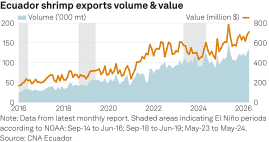
In the near term, Ecuadorean shrimp prices remain under pressure from high availability and low demand. Platts, part of S&P Global Energy, assessed head-on, shell-on 30-40 count shrimp at $4,300/metric ton free carrier at Guayaquil June 12, before rebounding to $4,450/mt June 15.
That uptick, however, reflected reduced availability in specific size segments rather than a broader market recovery, participants said. They cited limited availability of larger shrimp as seasonal conditions and below-normal rainfall constrain growth into higher counts. This has supported prices for larger sizes even as overall supply remains high.
"Prices are rising due to low availability of larger sizes, mainly 20-30," an Ecuadorean producer said.
This pattern is not isolated. Similar constraints have been observed in other main origins, like India, where weather conditions and harvesting dynamics have reduced the share of larger shrimp in the market.
"Normally, the farmers tend to grow for bigger sizes, but this time, due to excess heat, mortality has been a serious problem," said an Indian producer.
El Niño shifts supply mix
At present, prices of larger shrimp sizes are supported by limited availability. The climate event forecast for 2026 is expected to alter this dynamic.
Warmer water temperatures associated with El Niño typically accelerate shrimp growth rates and improve survival in certain production zones of Ecuador, leading to a higher share of larger size categories in the harvest.
"Rain is good for shrimp ... it grows faster, and there will be availability of larger sizes in months when there usually aren't," the Ecuadorean producer said.
However, the same conditions that support faster growth also introduce asymmetrical risks that cap any bullish interpretation.
El Niño is unlikely to tighten supply in aggregate. Instead, it is expected to shift the composition and timing of availability, a distinction that is critical for price formation in a highly segmented market. A higher share of larger shrimp sizes would directly pressure levels in the 20-30 and 30-40 count segments, redistributing value along the size curve rather than lifting the market as a whole, according to market participants.
The price support is not demand-driven, but structural, tied to temporary scarcity in specific sizes. As that scarcity eases, the support underpinning recent price gains weakens.
Disruption risks rise
The probability of El Niño occurring is unusually high, even if its intensity remains uncertain. NOAA projects an 82% chance of development by mid-2026 and a 96% probability of persistence into the 2026-27 winter, while the IRI places the likelihood even higher. Yet no intensity scenario dominates forecasts, meaning the market faces high certainty of disruption, but low clarity on magnitude.
Ecuador's shrimp sector is structurally exposed to climate variability. Historically, El Niño brings above-average rainfall, flooding and infrastructure damage along the coast. In practical terms, this shifts the risk from production to logistics.
"If roads and access routes are not improved, flooding will create serious supply chain problems," another producer said.
Shipment delays can tighten prompt availability in destination markets, supporting prices temporarily even in the presence of ample supply.
Costs add another layer of constraint. El Niño typically disrupts anchoveta fisheries in Peru, one of the world's main sources of fishmeal used in aquaculture feed, tightening global supply and raising feed costs. In a market already characterized by weak demand and compressed margins, higher input costs may limit producers' willingness to fully capitalize on improved growing conditions.
Demand caps upside
Global shrimp markets face structural oversupply and cautious buying behavior. There has been resistance from importers even amid tighter raw material availability in key origins, underscoring limited demand elasticity. Without a recovery in consumption, any supply-side tightening, whether from logistics or costs, is unlikely to translate into sustained price gains, the participants added.
For buyers and sellers, the implication is a shift in risk management rather than outright positioning.
