Agriculture, Refined Products, Diesel-Gasoil, Oilseeds
June 15, 2026
Indian shrimp feed prices rise as input costs surge

By Elvis John
Editor:
HIGHLIGHTS
Feed manufacturers raise prices amid input cost surge
Producers face lower margins as shrimp prices weaken
Feed input costs jump 25% since year's start: manufacturer
Indian shrimp feed manufacturers have raised feed prices despite producer pushback. The move comes amid rising production costs, global oversupply, and weak global price sentiment.
According to market sources, feed manufacturers increased the price of Vannamei shrimp feed by Rupees 10/kilogram and Black tiger shrimp feed by Rupees 12/kg on June 12.
The Shrimp Feed Manufacturers Association had earlier deferred the decision to raise feed prices following a backlash from producers on May 13. Feed manufacturers then proposed a price increase of Rupees 12/kg for Vannamei and Rupees 14/kg for black tiger shrimp feed.
Lower producer margins
A Bhimavaram-based producer said that shrimp feed manufacturers had to backtrack on their plan to raise feed prices in May only after the government intervened.
Producer associations have claimed that exporters, packers, and feed manufacturers are trying to squeeze producers' margins by raising feed prices on one end and lowering the farmgate price of raw material on the other.
Raw material prices fell to record lows by May-end, and have since recovered following farmer protests and threats of a crop holiday.
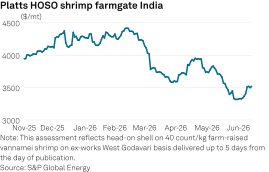
Farmgate prices stabilized in the week ended June 12 as producers resisted selling at lower prices. A West Godavari-based trader said June 15 that the raw material availability was minimal, and processors had to purchase at higher prices, especially 40-70 count/kg shrimp.
Platts, part of S&P Global Energy, assessed the head-on, shell-on shrimp farmgate India price at $3,518/mt June 12, up $203/mt from May 29.
Shrimp prices remain depressed across all major origins globally due to ample supply and sluggish demand. Demand from major markets such as the US and Europe slowed due to high inventory levels.
Producers fear that the feed price hike amid a weak global price sentiment could erode their margins in the second half of the year.
Higher input costs
Feed manufacturers have attributed the price hike to higher input costs. A Visakhapatnam-headquartered feed manufacturer called the price hike an "imperative" and said they had no choice. The source said input costs have risen by 25% since the beginning of the year due to higher prices for fuel, fish meal and soybean-based ingredients.
The current price revision was intended only to offset input cost pressures and maintain supply continuity, a Chennai-based feed manufacturer said. The source said that over January to April, fish meal prices rose from Rupees 155,000/mt to Rupees 240,000/mt, while soya lecithin rose from Rupees 68,000/mt to Rupees 110,000/mt.
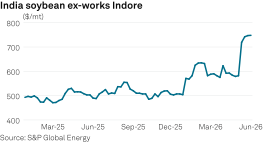
Indian soybean prices rallied in May due to limited supply and reached $748/mt ex-works Indore June 5, up 29% month over month, according to data from S&P Global Energy sourced via Solvent Extractors' Association of India.
Fuel prices have also increased in the aftermath of the Iran conflict, pushing up logistics and other allied costs. India's state-owned fuel retailers increased diesel prices by Rupees 2.71 on May 25 -- the fourth hike in May -- to offset losses driven by higher crude costs.
