Agriculture, Meat, Livestock, Oilseeds
June 01, 2026
INFOGRAPHIC: China's pivotal role in global protein trade
Editor:
HIGHLIGHTS
China's soybean imports grow 7% in 2025
Beijing sets beef quotas for top exporters
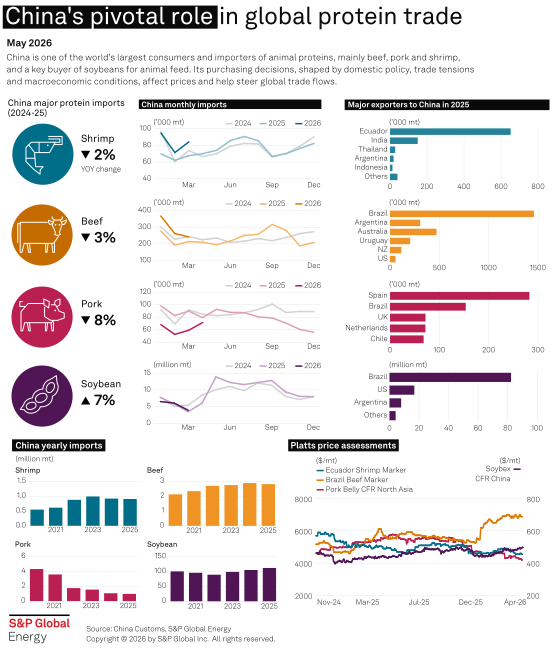
China plays a pivotal role in the global proteins trade, with its import patterns continuing to shape global trade flows.
In 2025, despite a slight dip in animal protein imports, soybean imports grew 7% year over year, driven by strong demand for animal feed. Over the past six years, China's protein imports have shown steady demand, though pork imports declined amid tariff challenges and trade tensions. This shift is supported by robust domestic production and diversified sourcing.
Brazil and Australia lead in beef exports, while pork imports are anchored by Spain and Brazil. Meanwhile, Ecuador and India remained the major shrimp suppliers.
However, the scenario is now changing with China pushing for food self-sufficiency.
China is now tightening its beef safeguard measures and has set import quotas for Brazil at 1.1 million metric tons, Australia at 205,000 mt, and the US at 164,000 mt in 2026. The country is also pushing for increased domestic production of other animal proteins, such as pork and shrimp.
The changing Chinese demand patterns could lead to a shift in global trade flows and more volatility in the animal protein pricing.
Platts, part of S&P Global Energy, has launched weekly price assessments for Front Forequarter Eight cuts (FFQ 8) Beef CFR China and head-on, shell-on (HOSO) Shrimp CFR China, effective June 1, 2026.