Agriculture, Oilseeds
February 23, 2026
US-China soybean trade unlikely to see much change after tariff ruling
By Sayona anna John and Sampad Nandy
HIGHLIGHTS
US soybean share in China’s import down to 15% in 2025
China levies 13% import duty on US-origin soybean
Trump imposes 15% global tariffs after tariff decision
Soybean trade flows between the US and China are unlikely to shift materially following the US Supreme Court's ruling against President Donald Trump's country-specific tariffs, market sources based in the US and China said.
According to market participants, the recent changes to the tariff structure in the US are unlikely to impact the soybean trade flow between the US and China, as US-origin soybeans will remain subject to a 13% import duty in China.
The Supreme Court, in a 6-3 decision, restricted executive authority under the 1977 International Emergency Economic Powers Act, or IEEPA, on Feb. 20.
Following the court ruling, Trump imposed a temporary 15% global tariff under Section 122 of the Trade Act of 1974, a separate statute that allows the executive branch to impose duties for up to 150 days to address trade imbalances.
China levies a 13% import duty on US-origin soybeans, including a 10% retaliatory tariff and a 3% most-favored-nation rate. China retained the 10% levy that was introduced in response to Trump's tariff duties in April 2025.
China is the world's largest soybean importer, with Brazil and the US its primary suppliers.
"However, with the US imposing a temporary duty of 15% for at least 150 days, China will not see any incentive in reducing the tariff on US soybeans," a trader with a multinational grains trading company said.

China's Ministry of Commerce said on Feb. 23 that it is assessing the impact of the US Supreme Court's recent ruling on tariffs. Responding to reporters, a ministry spokesperson reiterated China's opposition to unilateral tariffs, including reciprocal and fentanyl-related duties, saying they violate international trade rules.
"The economics have not supported any Chinese purchases of US soybeans this season, and they have been entirely geopolitics-driven. The key signpost will be the rhetoric that follows the Trump-Xi meeting in Beijing in early April," said Vladimir Zinkovski, senior principal analyst and head of Asia-Pacific crops at S&P Global Energy CERA.
In 2025, the US saw a significant drop in soybean shipments to China due to tariff-related impacts. Imports of US-origin soybeans totaled 16.8 million mt, down 24.1% from the previous year, according to China customs data. The US market share dropped from 21% in 2024 to 15% in 2025.
So far in marketing year 2025-26 (September-August), China has committed to purchase 10.59 million mt soybean from the US, down 49% on year, according to the US Department of Agriculture data published Feb. 20.
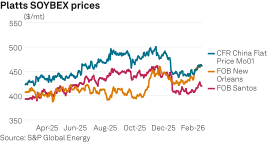
With Brazilian soybeans currently more competitive, trade sources said any shift in Chinese demand toward US cargoes would require clear political signaling.
Currently, China has little reason to pay higher prices to secure US soybeans compared to cheaper Brazilian crops, a Brazil-based trade source said.
In 2025, China sourced 73.6% of its annual soybean imports from Brazil, compared with 71% in 2024, according to China customs data. China's imports from Brazil rose by 10.3% year over year to 82.33 million mt, according to the data.

Editor: