LNG, Maritime & Shipping, Chemicals, Metals & Mining, Containers, Non-Ferrous
June 23, 2026
COMMODITY TRACKER: 4 charts to watch this week

By Staff
Editor:
Container freight rates from Southeast Asia to North America are rising on early peak season demand and supply constraints. China's LNG imports rebounded in May despite elevated prices, while copper prices gained as LME inventories tightened. India's methanol prices dropped to three-month lows following diplomatic progress between the US and Iran.
1. Container freight rates to North America climb on early peak season
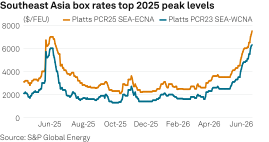
What's happening? Spot container freight rates from Southeast Asia to North America have risen amid an early start to the peak season. Platts, part of S&P Global Energy, assessed PCR 23, Southeast Asia to West Coast North America, at $6,300/FEU on June 19, up $3,300/FEU year over year. PCR 25, Southeast Asia to East Coast North America, stood at $7,500/FEU, up $2,000/FEU over the same period. Carriers introduced multiple blank sailings in April and May, tightening supply in June. Market participants also pointed to increased cargo demand ahead of higher July bunker prices and the expiration of Section 122 global tariffs.
What's next? Market sources remain uncertain whether additional carrier loadings announced for the coming weeks will ease spot rates. A Canada-based forwarder said extra loaders may only help clear rolled-over cargo, not bring spot freight levels down. Carriers have announced additional surcharges for July 1 and July 15, with market sources expecting continued space shortages through the end of July. A Southeast Asia-based forwarder said the market could improve by late July if August bunker costs ease and demand drops.
2. China's LNG imports rise for first time in four months
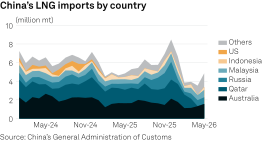
What's happening? China's LNG imports increased 1.6% year over year and 37.5% month over month to 4.86 million metric tons in May, marking the first annual increase after three consecutive months of decline, according to General Administration of Customs data released June 20. The rise reflected Chinese buyers' willingness to secure supply despite elevated prices as physical supply risks intensified. Malaysia became the second-largest supplier at 799,000 mt, up 68.3% year over year, while Australia remained top at 1.57 million mt. The average import price reached $11.83/MMBtu in May, the highest since January 2024.
What's next? Market participants attributed the import surge to earlier domestic gas supply tightness, prompting Chinese buyers to secure more LNG ahead of peak summer power demand. The tightness stemmed from reduced Middle Eastern LNG availability and stronger power-sector gas demand, with hot-weather expectations adding procurement urgency.
3. LME copper prices rise as inventories decline
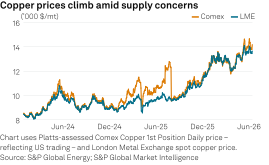
What's happening? London Metal Exchange copper cash settlement prices increased to $13,612/mt on June 18, up $192/mt from $13,420/mt on June 11, the latest LME data showed. Total LME copper stocks fell to 355,725 metric tons on June 18, down 11,575 mt week over week from 367,300 mt on June 11. Month over month, copper cash prices rose $184/mt from $13,428/mt on May 18, while inventories declined 37,675 mt from 393,400 mt. Platts assessed clean copper concentrate CIF China at $3,756/mt on June 22, up $16/mt from June 19.
What's next? The LME three-month copper price stood at $13,685/mt on June 18, trading at a $73/mt premium to cash and indicating a contango market structure, according to LME data. Current copper inventories remained 46,900 mt below the year-to-date high of 402,625 mt reached on April 15. The cash settlement price has recovered $1,786/mt from 2026 low of $11,826/mt recorded on March 19.
Further reading: METALS MONITOR: Zambia, US realign grant for Lobito; Singapore Exchange eyes coal, steel contracts
4. India's methanol prices fall to three-month low
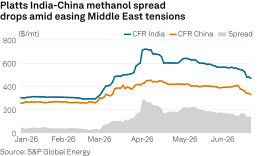
What's happening? India's methanol prices fell to a three-month low as diplomatic progress between the US and Iran prompted traders to lower risk premiums. Platts assessed CFR India methanol at $470/mt June 22, the lowest level since March 13, when it was at $483.75/mt. The drop followed easing supply concerns after the US and Iran signed a memorandum of understanding on June 18 aimed at reopening the Strait of Hormuz. More than 300 ships were seen in and about the strait on June 22 as producers rushed to take advantage of the 60-day ceasefire, according to S&P Global Commodities at Sea data.
What's next? Traders said the market remains sensitive to any setback in diplomatic efforts and is subject to the reopening of the Strait of Hormuz. At least five to six methanol-loaded vessels have been stuck in the strait since March and are likely to arrive in India, according to market sources. Buyers remained hesitant to purchase in a sharply declining market, hoping that prices would return to prewar levels. Traders said if the US-Iran diplomatic process continues to progress, further downside pressure on India methanol prices could emerge as supply concerns dissipate and normal trade flows resume from Middle Eastern producers. The restart of Iran's MEKPCO plant at full capacity and offers from SECO Trading added to bearish sentiment.
Reporting and analysis by Tanya Kalra, Ying Ting Lew, Shivam Prakash and Kamna Kapoor.
