Energy Transition, LNG, Maritime & Shipping, Metals & Mining Theme, Agriculture, Emissions, Non-Ferrous, Biofuel
February 10, 2026
COMMODITY TRACKER: 5 charts to watch this week

By Staff
Turkey leads among US LNG export destinations for January. Supply shortages impact China's copper reserves and Brazil faces biodiesel certification challenges.
1. Turkey leads US LNG exports in January
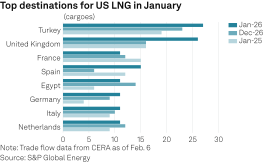
What's happening? According to S&P Global Energy CERA data, Turkey emerged as the top destination for US LNG cargoes in January, with approximately 75% of 176 exported cargoes landing in Europe. The country received 27 US LNG cargoes, followed by the UK with 26 and Spain with 15. Europe continues to seek alternative gas supplies to replace Russian pipeline gas, with Turkey remaining the sole conduit for Russian pipeline gas entering Europe via the TurkStream pipeline.
What's next? US LNG exports are expected to continue flowing to Europe amid low storage inventories. EU gas storage was 38% full as of Feb. 5, down from 51% a year earlier, according to data from Gas Infrastructure Europe. Spot prices for Southern European delivery are trading above $11/MMBtu. US LNG feedgas demand is hovering around 20 Bcf/d, following a recovery from January's winter storm disruptions.
2. China considers strategic copper reserves amid supply shortages
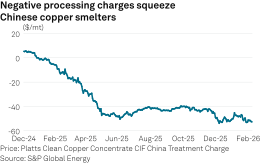
What's happening? China is exploring an expansion of strategic copper reserves to enhance supply chain security, according to Antaike, China's state-owned metals research and consulting agency. Domestic smelters are struggling with declining copper concentrate availability. The potential plan includes piloting commercial stockpiling, potentially backed by fiscal support such as interest subsidies for state-owned enterprises. The push comes as copper supply tightness intensifies, weighing on Chinese smelters' profit margins. Platts, part of S&P Global Energy, assessed clean copper concentrate CIF China treatment and refining charges at -$52.7/metric ton and -5.27 cents/lb Feb. 9.
What's next? Authorities and industry stakeholders are conducting preliminary research on designing commercial reserve mechanisms, with Antaike noting that further in-depth study is needed to evaluate whether copper concentrate should be included in the strategic reserve system. As the China Nonferrous Metals Industry Association suggested, concentrate availability remains constrained and processing charges stay negative, keeping smelter procurement competition intense. The market will closely monitor policy signals regarding potential stockpile expansion.
Related content: METALS MONITOR: Zijin eyes top copper, lithium producer status; China's steel output falls
3. North Asia chicken leg prices rise on supply constraints

What's happening? Chicken leg prices in North Asia have continued their rally in early February, supported by persistently low Brazilian exports to Japan and firm Japanese demand ahead of the spring season, which has tightened stocks in Japan. Platts assessed the CFR North Asia chicken leg price at $3,100/mt on Feb. 10. A source at the Japan Meat Traders Association said that with Brazilian prices high and supply limited, some Japanese importers have turned to Thai chicken to fill the supply gap, but challenges persist amid capacity constraints in Thailand.
What's next? Japan's boneless chicken leg stocks are expected to remain tight and prices elevated through early spring, with inventories unlikely to recover until late April. Overall, Brazilian supply constraints and robust Japanese demand are expected to support higher prices across North Asia in the short term.
4. Brazil finds soy biodiesel certification gaps
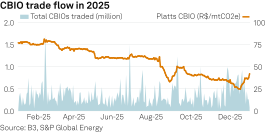
What's happening? A Brazilian federal audit office report published Jan. 28 reveals that 60% of soybeans used in biodiesel production have irregularities in their anti-deforestation certification under the RenovaBio national biofuels policy. The analysis indicates that only 40% of biodiesel produced by soybean plants certified under the CBIO decarbonization credits market can be verified as sourced without deforestation. The audit highlights significant compliance challenges in the country's biofuels certification process.
What's next? The TCU audit recommended systematic monitoring by the Ministry of Mines and Energy and the oil and gas regulator ANP. The Brazilian Association of Vegetable Oil Industries is tracking the audit developments while maintaining that RenovaBio already applies strict sustainability criteria. Abiove emphasized that preserving legal certainty and regulatory predictability is crucial for meeting the goals of the Paris Agreement.
5. Bunker fuel demand stable at Sri Lankan ports in January

What's happening? Bunker fuel demand remained stable at Sri Lankan ports in January, with Colombo, Hambantota and Trincomalee seeing around 83,000-85,000 mt of volumes and Trincomalee experiencing rising demand from bulk carriers, a Colombo-based trader told Platts. S&P Global Commodities at Sea data showed total bunkering and ship-to-ship calls in Sri Lanka increased 5.40% month over month to 273 in January, with Trincomalee seeing the largest rise in bunkering calls.
What's next? Market sources anticipate continued steady demand, with Trincomalee showing potential for growth due to increased bulk carrier movements. A Sri Lanka-based supplier noted consistent average volumes of around 12,000 mt over the past six months, with potential for further expansion. High sulfur fuel oil demand is strengthening, particularly as Kochi experiences tight availability, which could create additional opportunities for Sri Lankan ports. However, the Lunar New Year could put downward pressure on demand as the reduced vessel calls will impact the inquiry volumes.
Reporting and analysis by Corey Paul, Lucy Tang, Yuxi Du, Rubashiny Veeramohan, Gabriela Brumatti, Monique Murer, Somesh Jain, and Sai Deepak Tarlada.
