Agriculture, Meat, Grains, Oilseeds
February 06, 2026
MONTHLY ASIA CHICKEN WRAP: Japanese chicken supply crunch lifts North Asia chicken leg prices in Jan

HIGHLIGHTS
Japan faces chicken supply crunch, lifting prices
South Korea market weak amid ample stocks
China imports collapse as domestic output expands
North Asia chicken leg prices rose 2% in January, underpinned by persistently low Brazilian export volumes and firm Japanese demand, which tightened supply in Japan.
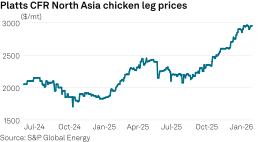
Japan's supply tightens, prices surge
Japan's poultry market tightened further in January, as importers struggled to secure shipments of Brazilian boneless chicken legs. Brazilian packers prioritized bone-in leg production, targeting better margins in domestic and alternative export markets, Japanese importers said.
"The boneless leg market in Japan is in a challenging situation now," a source at the Japan Meat Traders Association (JMTA) said, citing insufficient inventories and robust import demand.
Domestic spot market prices for unsized boneless legs (200 g and above) soared close to Yen 700/kg ($4.48/kg), with another local exporter saying, "The Japanese market remained firm, with inventories expected to stay tight until April."
With Brazilian prices elevated and supply thin, some Japanese importers turned to Thai chicken. However, volumes remained limited due to regional disruptions. "Japanese importers can't import more chicken meat, although they want to now," the JMTA source added.
South Korea market weak amid ample stocks
South Korea's chicken meat market was subdued in January amid seasonally weak winter demand and ample stocks.
Domestic spot prices hovered at Won 4,450/kg ($3.11/kg) at the end of January, with some suppliers discounting further to address cash flow needs. "Some of them need cash right now, [thus they are] making quick sales with cheap spot prices," a South Korean importer said.
Brazilian boneless leg prices remained high, buoyed by Japanese demand, according to two South Korean importers.
"Although chicken prices in Brazil declined over the past couple of months, offer prices remain high," one importer said, adding that price pressures may ease after Japanese buyers complete spring procurement.
China imports collapse as domestic output expands
China's poultry imports fell sharply below 30,000 mt/month from September to November, down from 80,000 mt/month a year earlier, according to data from Platts.
The drop was attributed to a 7.2% rise in domestic production and bird flu-related import bans on Brazilian poultry from May to November, CERA analysts said.
US imports dropped 13% year over year, while Russia emerged as the leading supplier. Thai imports also plunged 55% due to compliance suspensions.
As China's broiler industry expanded, the country increased exports of skinless, boneless breast meat to the Middle East at competitive prices, contributing to oversupply and weak demand, Platts reported.
This put downward pressure on Brazilian export prices and led to a historic price inversion between Brazilian boneless chicken legs and skinless, boneless breast.
"China didn't export much breast meat before, but they do now. That is what changed the balance," an exporter said.
Thai exporters grapple with capacity constraints
Thai chicken exporters faced labor issues following the Cambodia-Thailand conflict, resulting in longer shipment lead times and delayed deliveries, several Asia-based importers said.
"Some Thai packers continued to face labor issues after the Cambodia-Thailand conflict, a Japan-based importer said, adding that replacements from Myanmar and Laos have not yet reached equivalent skill levels, resulting in lower productivity.
Thai chicken production is forecast to decline 1% in 2026, but exports are expected to rise 2.8%, albeit at a slower pace due to global headwinds, including a recovery in Brazil's poultry sector after the May 2025 bird flu resolution and reduced Chinese import demand, according to S&P Global Energy CERA analysts.
Japanese buyers increasingly turned to Thai packers as Brazilian prices rose, but Thai prices also edged higher, according to Japan-based importers.
Outlook
Japan's boneless chicken leg supply is expected to remain tight and prices are elevated through early spring, with inventories unlikely to recover until late April. South Korea's demand is forecast to gradually pick up from March, while China's poultry imports are set to stay low amid strong domestic production.
Overall, supply constraints and robust Japanese demand are expected to support higher prices across North Asia in the short term.

Editor: