Fertilizers, Chemicals, Energy Transition, Electric Power, Agriculture, Renewables, Meat, Oilseeds
February 17, 2026
COMMODITY TRACKER: 5 charts to watch this week

By Staff
European wind power output rises in February, while UK ammonia imports hit record levels. Brazil's soybean meal exports rise with the EU as the top consumer and the US Department of Agriculture raises beef import forecasts amid low US cattle numbers.
1. European wind power output increases in February
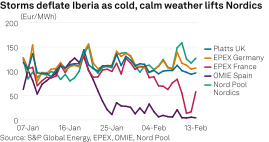
What's happening? European wind power output is set for a significant year over year gain in February, with Spain set for a record, according to system data analyzed by Platts. Spanish day-ahead power prices plunged to their lowest in almost two years, deflating capture prices for wind and solar ahead of the bearish spring season. Platts, part of S&P Global Energy, last assessed Spain's wind capture price at Eur2.90/MWh on Feb. 15, with 10 of the 15 days so far this month in single figures.
What's next? Spanish wind is forecast to ease towards the end of February, but German wind could rise sharply, potentially reaching 50 GW, forecasts show. UK wind is on track for another record month, adding pressure on prices after a bullish January. Platts assessed UK offshore wind capture prices at GBP88.48/MWh in January, up 27% year over year, while German onshore wind averaged Eur96.49/MWh, up 11% year over year, according to Platts pricing data. Elsewhere, a very cold, calm and dry start to 2026 sharply lifted Nordic power prices, which could have implications for power flows this spring.
Related Infographic: INFOGRAPHIC: Europe's renewable PPA volumes set to rebound as prices adjust to market realities
2. UK shifts to ammonia imports as domestic production ends
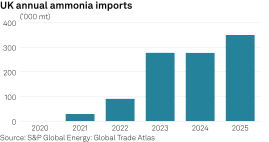
What's happening? The UK imported a record 350,000 metric ton of ammonia in 2025, a 26% increase from 2024, according to S&P Global Energy's Global Trade Atlas published Feb. 16. The biggest share was from the US, which provided 35% of the total at 122,000 mt, more than doubling the previous year's share of 52,000 mt. The UK has become import-dependent since 2020, following the closure of domestic production plants, including CF Fertilisers' Ince and Billingham sites and Yara's Hull site, which was mothballed in February 2025, according to industry sources. As of Feb. 16, Platts assessed NW Europe CFR ammonia at $690/mt duty paid/duty free, CBAM exclusive.
What's next? The UK is positioned to benefit from European market uncertainties, with its Carbon Border Adjustment Mechanism not starting until 2027, according to government trade policy documents. Two new US Gulf plants, Gulf Coast Ammonia and Woodside Beaumont, are expected to provide additional supply. Platts has tracked two ammonia cargoes arriving in the UK in 2026, one from Algeria and another from the US.
3. California REC market faces regulatory headwinds
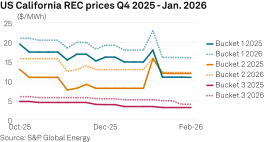
What's happening? California renewable energy certificate prices continued to experience downward pressure in January 2026, with thin liquidity and limited buying interest across all Product Content Category (PCC) buckets, according to Platts reporting. PCC is a classification system for renewable energy certificates in California, with different categories based on the type and origin of renewable energy. Platts assessments on Feb. 5 showed PCC3 2025 at $3.20/MWh, PCC3 2026 at $4.05/MWh and PCC1 2026 at $10.95/MWh. Market participants attributed the price softness to seasonal effects and oversupply.
What's next? Senate Bill 868, the "Plug and Play Solar Act," emerges as a potential market influencer, aiming to expand behind-the-meter clean energy access. The bill could reshape the REC narrative by summer 2026, potentially linking electricity affordability with clean energy goals. Without increased bid activity, the market is expected to remain soft, with continued offer pressure and thin bidding, particularly in the PCC3 segment.
4. Brazil soybean meal exports hit record high
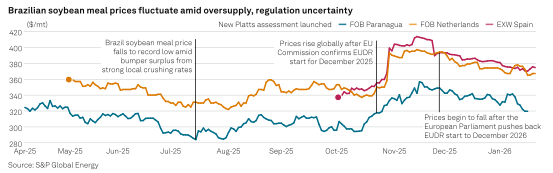
What's next? A forecast 2026 bumper soybean crop in Brazil, partnered with a projected high crushing rate, is poised to pressure already-low South American soybean meal prices this year and keep the EU as a top consumer. S&P Global Energy CERA estimates that Brazil's soybean meal exports, which have surged by 70% over the last decade, will grow to a new record of 24.5 million mt in 2026, a 5.2% increase year over year.
Related infographic: INFOGRAPHIC: Brazil soybean meal exports reach record in 2025 amid growing EU demand, low prices
5. USDA raises marketing year 2026 beef import forecast
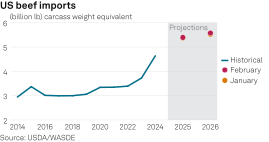
What's next? The market's trajectory depends on the potential impact of the new US-Argentina trade agreement on beef imports. According to multiple sources, China's import quotas could shift Australian and Brazilian beef to the US. However, with US cattle numbers at a record low and no clear signs of herd rebuilding, imports are likely to rise, supporting prices. Experts warn that while ground beef may remain accessible thanks to imports, prices for premium cuts could become unaffordable for many consumers.
Reporting and analysis by Andreas Franke, Mollie Gorman, Jose Del Angel, Jose Roberto Gomes, Nanditha Kinavoor Madathil, Sergio Alvarado.
