Agriculture, Meat
June 08, 2026
INSIGHT CONVERSATION: Alberto Herranz, INTERPORC

Editor:
In this Insight Conversation series on global protein markets, leaders from the shrimp, pork and beef sectors examine the forces reshaping international trade. This is the last of five in-depth interviews where industry executives share their insights on how tariffs, disease outbreaks, regional conflicts and cost inflation are redirecting protein trade flows and challenging established market dynamics.
Spain is one of the world's leading pork producers. Yet, the industry faces simultaneous headwinds in 2026: Chinese antidumping duties on EU pork, African swine fever-related import access restrictions, a growing competitive challenge from Brazil and persistent cost inflation across feed, energy and logistics. S&P Global Energy Platts Senior Editor Samyak Pandey speaks with Alberto Herranz, CEO of INTERPORC, to explore how Spain is navigating this period of structural disruption while defending its position as a reliable, science-based trade partner.
Herranz addresses Spain's China strategy, the tools behind its biosecurity model, the cost pressures reshaping margins, and the role of sustainability and digitalization in securing future market access.
How would you describe Spain's current position in global pork trade, and what is the strategic rationale for maintaining China as a core market despite antidumping pressures?
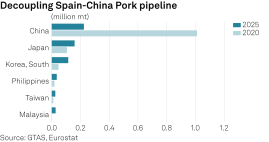
Spain's position in China is not the result of a short-term relationship; it is the outcome of many years of consistency, transparency and reliability. In 2025, China remained the leading destination for Spanish pork exports, with more than 503,000 metric tons and a value of nearly Eur1 billion. Spain also remained China's leading pork supplier.
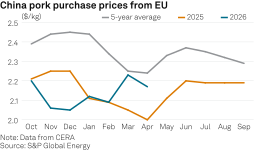
The lower antidumping duty applied to many Spanish companies reflects how Spain approached the investigation -- with full technical cooperation, rigorous information-sharing and constant dialogue with both Spanish and Chinese authorities. Cooperating companies, including Spanish ones, ended up with a 9.8% duty, significantly below the provisional level and lower than the highest final rates applied to non-cooperating operators.
But maintaining this position requires humility and continuity. We do not take China's trust for granted.
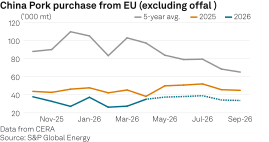
Looking toward 2026, our strategy is to maintain our commitment to China; China will remain a central market, especially after recent agreements that have opened new opportunities for processed proteins and cooked pork products. At the same time, Southeast Asia remains a priority given its demographic growth and demand for quality protein. However, Spanish exports to several Asian markets are currently affected by ASF-related restrictions, so the immediate priority is preserving relationships and supporting reopening procedures.
Following its provisional entry into force in May, the EU-Mercosur agreement is unlocking long-term positioning opportunities for high-quality European agri-food products.
Our approach is balanced: defend China, reopen affected Asian markets and explore Mercosur, always without compromising value or technical reliability.
Following the late 2025 ASF outbreak in Barcelona, how did Spain's bilateral regionalization protocols hold up under pressure, and what did this containment look like on the ground?
The Barcelona incident was a stress test, but it demonstrated the strength of our model. The first principle is transparency. Spain acted swiftly, communicated clearly and implemented containment measures immediately. The cases were detected in wild boar within a very specific area, with no pig farms affected.
The second principle is regionalization. For us, this is not just a trade concept; it is a scientific and sanitary principle. Restrictions should be proportionate to the real sanitary risk and limited to the affected area, rather than penalizing an entire country when the disease is geographically contained.
China's acceptance of regionalization was decisive. China suspended imports only from the province of Barcelona while allowing exports from the rest of Spain to continue, made possible by a regionalization agreement that Spain and China had signed shortly before the incident, the result of years of negotiations.
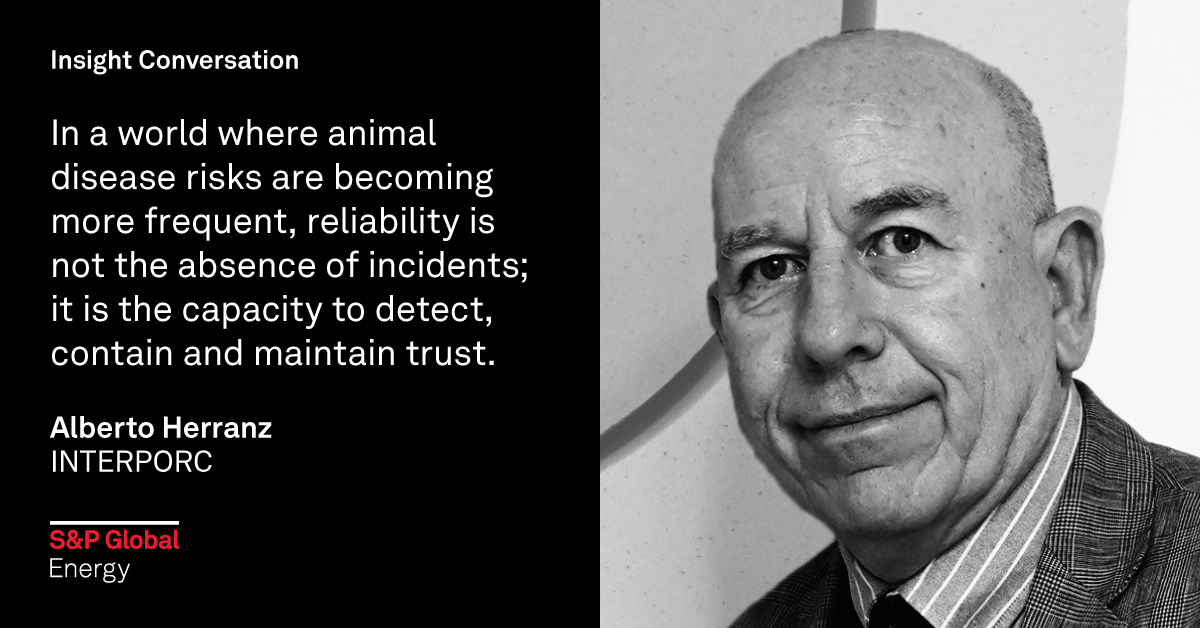
The tools behind the model are concrete: official export certification, traceability of origin, veterinary supervision, zoning protocols and complementary attestations, all in line with EU regulations. The key message is that ASF is not a food safety issue for consumers and does not pose a risk to humans. The challenge is sanitary and commercial, and the response must be based on science, proportionality and trust. In a world where animal disease risks are becoming more frequent, reliability is not the absence of incidents; it is the capacity to detect, contain, communicate and maintain trust.
With rising feed, energy, and logistics costs in 2026, partly driven by the war in the Middle East, how is Spain's pork industry maintaining its international competitiveness?
The Spanish pork sector has faced this type of volatility for many years and has developed a strong capacity for adaptation. Animal health crises, inflationary periods and market disruptions have forced continuous evolution, and that accumulated experience is a genuine asset.
Yes, the sector must comply with European regulations, among the most demanding in the world, which entail higher production costs than those of competitors outside the EU. But the sector has managed to turn part of these obligations into a differentiation opportunity. Quality, food safety and trust are now among the main values recognized by consumers and importing countries alike.
Vertical integration across producers, feed companies, slaughterhouses and processing industries has been central to managing cost volatility. It optimizes resources, improves planning and distributes risk more effectively across the chain. Investment in digitalization, automation and sustainability has also contributed meaningfully to reducing unit production costs over time.
How does Spain use its sustainability and ESG standards to improve market access and set itself apart from competitors?
Spain operates under the world's most demanding standards in environmental sustainability, animal welfare and food safety through both European regulations and additional national requirements. In this context, INTERPORC promotes the B+ Animal Welfare Commitment certification, which goes further than existing regulations. It covers animal welfare, animal health, food safety, traceability and environmental protection, and requires independent audits and controls.
The Barcelona incident illustrated this in commercial terms: one of our most demanding markets limited export restrictions to the affected area precisely because of the trust built over years of cooperation. Countries in Asia, Latin America and other regions increasingly recognize the reliability of Spain's control and certification systems, which enable diversification into premium markets closed to other producers. Sustainability is not a new concept for us. It is a principle we have worked on for decades, and it now translates directly into market access.
From blockchain traceability to AI-driven biosecurity monitoring, how far has digitalization advanced in the Spanish pork supply chain, and how does it support market access arguments in importing countries?
Technological transformation has been a major driver of evolution in the Spanish pork sector. AI, blockchain, big data and process automation are now essential parts of daily operations, not aspirational tools.
Blockchain strengthens traceability and transparency throughout the food chain, enabling complete product tracking from origin to final consumer and rapid verification of sanitary controls and quality certifications. AI and data analysis improve predictive capabilities across market trends, logistics and early disease detection. These are not only efficiency gains but also trust-building mechanisms with importing nations.
International markets increasingly require the ability to guarantee safe, sustainable and traceable products. Technological innovation is no longer optional. It is an essential strategic element for the present and future of the Spanish pork sector.
What is your overall outlook for the Spanish pork trade in the next 12 to 18 months?
The near-term outlook depends on several variables.
We are encouraged by recent developments, such as the reopening of the Philippine market to Spanish pork, and we are optimistic that Japan may follow a similar path. The evolution of China's import policy and the broader trajectory of antidumping measures will continue to require close attention. And the macroeconomic environment, particularly volatility in input costs and global energy markets, will continue to put pressure on margins.
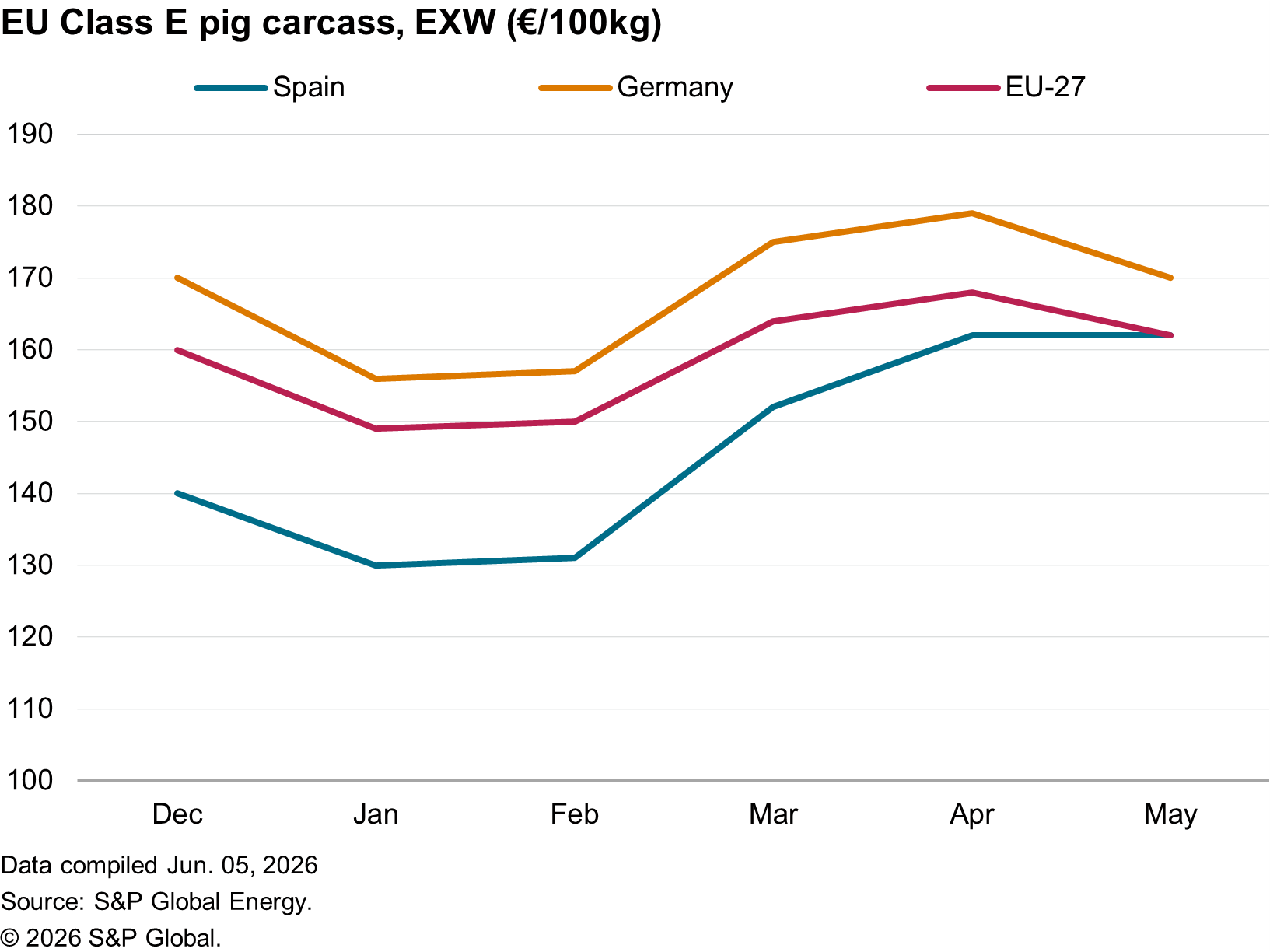
Despite these headwinds, the fundamentals of the Spanish pork sector remain strong. Our export base is diversified, our biosecurity model has proven itself under real-world conditions, and our sustainability credentials are increasingly recognized as a competitive advantage rather than just a compliance burden.
The opening of Mercosur under the EU-Mercosur agreement, the deepening of Spain's agreements with China on processed pork products, and the continued expansion into Southeast Asia all represent genuine growth opportunities. The key is to pursue these while maintaining the reliability and technical rigor that have been Spain's most consistent competitive advantage.
This interview has been edited for clarity and length.
