Maritime & Shipping, Refined Products, Wet Freight, Fuel Oil, Bunker Fuel
August 08, 2025
Electronic interference in Red Sea, Hormuz as Houthis renew threats to shipping

By Max Lin
HIGHLIGHTS
'Localized’ disruptions in Hormuz, Port Sudan: UKMTO
Red Sea traffic down over 10% from H1 2025
Houthis threaten 64 shipowners for trading in Israel
Electronic interference has posed threats to navigational safety in certain areas of Middle Eastern waters, the UK Maritime Trade Operations said Aug. 8, as persistent Houthi threats keep Red Sea traffic far below normal levels.
Industry officials reported a larger number of ships experienced jamming of their Global Position System in the region in June, when Iran and Israel were engaged in a 12-day military conflict.
The overall interference level has significantly decreased since July but remains "sporadic across the wider region," and there were "localised reports of strong interference disrupting navigation in the Strait of Hormuz and off Port Sudan," the UK government agency said on its website.
Aside from some isolated cases where specific ships were targeted, security analysts said GPS interference incidents tend to occur near conflict zones, as ship operations would be affected by military jammers as a side effect.
Cargo flows have not been affected at Hormuz as Iran refrained from shutting the key waterway with over 18 million b/d oil transits, but Yemen-based Houthi militants' threats have driven many ships away from the Red Sea in recent quarters.
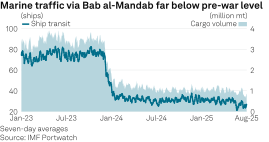
Latest IMF PortWatch data showed the average daily ship transits via the Bab al-Mandab Strait stood at 26 in the week ended Aug. 3, having stayed above 30 for most of the first half of this year.
Before the Iran-backed Houthis started to attack merchant ships after the war between Israel and Hamas broke out in October 2023, more than 70 ships passed through the chokepoint on a daily basis.
Total cargo volumes via Bab al-Mandab amounted to 837,115 mt in the week, down from the year-ago level of 1.1 million mt, according to IMF PortWatch.
Most ship operators have opted to reroute around the Cape of Good Hope in recent quarters, adding about two weeks to Asia-Europe voyages and sharply raising shipping costs.
Marine fuel sales at African ports have also increased due to the diversions, with a Platts Bunkerworld survey showing bunker deliveries at Mauritius' Port Louis jumping to about 1 million mt in 2024 from 500,000 mt in 2023.
Lingering risks
Shipping companies will likely continue to avoid the Red Sea in the coming months due to security worries, according to industry participants, as the Houthis resumed their attacks on merchant shipping in July following a seven-month hiatus.
The Houthis shot missiles, drones and grenades at two Greek bulk carriers in the southern Red Sea, sinking both ships. Four of the crew on one of the ships, the Handysize Eternity C, were presumed dead during the attacks; 10 were rescued, while the remaining 11 were kept by the Houthis.
The militants have warned that all shipping companies with ships calling at Israeli ports would be targeted. On Aug. 6, the Houthis said it had sent warning letters to 64 shipowners for trading in Israel without naming them.
All of those owners' "ships are hereby prohibited from transiting the Red Sea, Bab al-Mandab Strait, the Gulf of Aden, and the Arabian Sea, and will be subject to targeting wherever they fall within the reach of the Yemeni Armed Forces," the Houthis said in an emailed statement.