


Agriculture, Chemicals, Coal, Metals & Mining Theme, Refined Products, Energy Transition, Dairy, Biofuel, Grains, Solvents & Intermediates, Metallurgical Coal, Ferrous, Non-Ferrous, Gasoline, Jet Fuel, Renewables
July 30, 2025
Trump slaps 25% tariffs plus ‘Russia penalty’ on India, citing trade barriers, military ties

HIGHLIGHTS
India exported $87.4 bil of goods to US in 2024
Trump says India’s tariffs among highest in the world
The US is set to impose a 25% tariff plus an additional "penalty" on imports from India starting Aug. 1, citing high trade barriers and continued energy and defense ties with Russia, President Donald Trump said on a Truth Social post July 30.
While the 25% tariff is confirmed, details of the additional "penalty" or how it will be structured -- what products it hits or how much more it adds -- are not fully public; official statements indicate this is tied to India's Russia policy but haven't yet made the specific calculation fully clear.
There is, however, a clear threat of additional or sector-specific punitive rates.
India exported $87.4 billion worth of goods to the US in 2024, including steel inputs, ferroalloys, textiles, petroleum products, electronics and gems, according to S&P Global Market Intelligence.
Of this, the US imported nearly 75,000 mt of ferroalloys -- critical feedstock for American steelmaking -- worth $108.1 million.
Trump said India's tariffs are "among the highest in the world."
He labelled the country's non-tariff barriers "obnoxious."
Trump also criticized India's military and oil imports from Russia, citing Moscow's war on Ukraine. Trump said India would face also face the additional "penalty" for its relations with Russia and "massive trade deficit".
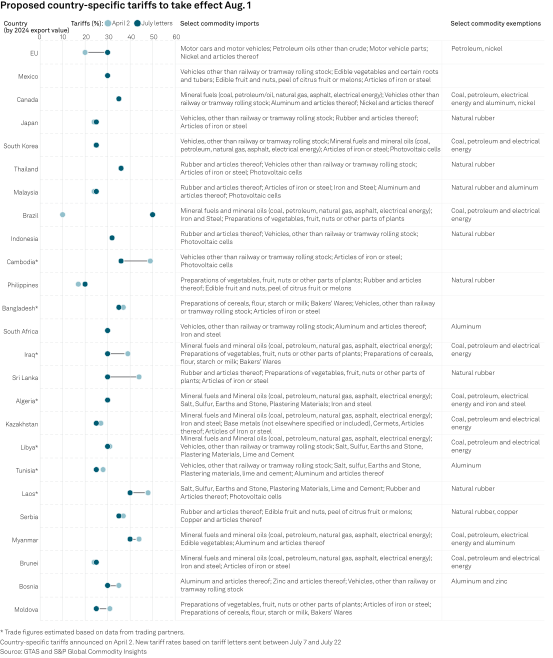
The latest move comes after Washington issued letters to multiple trading partners, including India, with an Aug. 1 deadline to resolve pending trade disputes or face punitive duties.
A prior 26% tariff announced in April marked a sharp escalation in US-India trade tensions.
India, for its part, has been pushing the US to ease tariffs on labor-intensive exports such as leather, textiles and jewelry.
Analysts suggest any new trade barriers could rattle India's manufacturing supply chains and weigh on sectors such as metal inputs and finished agricultural goods.
The move by the US to impose sharply higher tariffs on Indian exports threatens to disrupt one of the world's fastest-growing trade corridors.
In 2024, India emerged as the world's second-largest refined petroleum exporter, shipping $70.2 billion globally.
The US stood out as India's second-largest market, snapping up about $38 billion worth of products, ranging from high sulfur diesel and biofuels to kerosene and light naphtha.
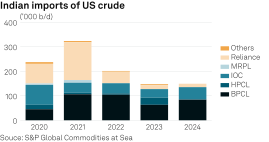
In 2023, India supplied $5.15 billion of refined fuels to the US, making it the fifth-largest supplier, according to the US Energy Information Administration.
The US also shipped $12.6 billion worth of mineral fuels and oils to India in 2024, including gasoline, distillate fuel oil, jet fuel and crude oil, highlighting a high-stakes, high-volume energy exchange
Agriculture and processing: barriers both ways
Although agricultural exports make up a modest share of the overall trade basket, they are highly sensitive to tariff and non-tariff measures.
Indian rice, shrimps, processed foods and spices have faced a mix of US market access.

In turn, India has maintained high tariffs for imports of various commodities such as grain, ethanol and dairy from the US, as one of the specific policies cited by Trump in explaining the new rates.
India's export portfolio to the US is broad, spanning high-value sectors such as electronics, pharmaceuticals, gems and jewelry, textiles and a range of commodities critical to US industry.
In 2024, electronics led as the largest export segment at $12 billion-$14 billion.
In pharmaceuticals and medical products, the country is a major global supplier of both generic drugs and active pharmaceutical ingredients. Gems, precious stones and jewelry also feature prominently, with shipments valued at over $10 billion in 2024.
While textiles and apparel exports are smaller at approximately $3 billion, they remain strategically important to India.
The metals and mining sector, particularly iron and steel, accounts for $4 billion-$5 billion in exports and has drawn special attention due to its critical role in US industrial supply chains and its heightened vulnerability to tariff actions.
Surge and slowdown
Fearing looming tariff hikes, Indian exporters rushed shipments to the US in early 2025, with volumes jumping more than 30% year over year, according to the Federation of Indian Export Organisations.
But the surge may be short-lived. The FIEO has warned that India risks losing at least $5 billion annually if elevated tariffs stick, with engineering goods, steel and minerals hit hardest.

The fallout could disrupt electronics and precision sectors reliant on tightly linked supply chains.
While New Delhi has yet to issue a formal statement, officials privately admit the Trump administration's move could complicate efforts to diversify energy imports, secure US defense tech, and close a bilateral trade pact.
Analysts say India may pivot trade toward Europe, the Gulf and East Asia while expanding export subsidies for stressed sectors.
"We've already committed to buying over $4 billion in US commodities and were committed to a breakthrough," a senior Indian trade official said.
India lifted tariffs last year on US apples, lentils, walnuts and almonds, but remains firm on duties for grain, dairy, corn and ethanol, citing domestic smallholder farmer interest protection.
Meanwhile, Washington continues to flag India's non-tariff barriers, such as testing and labeling, as key obstacles to deeper reciprocity.

Editor: