


Refined Products, Chemicals, Agriculture, Gasoline, LPG, Biofuel
July 29, 2025
COMMODITY TRACKER: 5 charts to watch this week

By Staff
The EU has committed to purchasing $750 billion in energy from the US, focusing on LNG, oil, and nuclear fuels. However, it was unable to secure relief from 50% US tariffs on EU aluminum and steel imports. The Aug. 1 tariff deadline looms for countries yet to ink trade agreements with the US.
1. EU and US in massive energy trade deal...
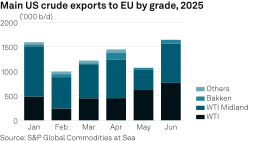
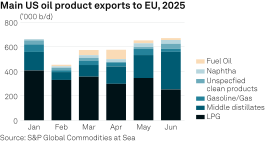
What's happening? The EU has committed to purchasing $750 billion worth of energy from the US, focusing on LNG, oil, and nuclear fuels. This deal underscores the EU's strategic move to enhance energy security amid ongoing geopolitical tensions by diversifying supply sources and reducing dependence on Russian energy.
What's next? An EU official told Platts, part of S&P Global Energy, that the formal text on the deal is expected to be published Aug. 1. However, energy experts do not expect the deal to dramatically change the EU's energy imports, particularly in the oil market. An agreement to purchase $250 billion/year of US energy would represent triple the value of current EU imports, based on Eurostat data, of which crude accounts for roughly 55% and refined products an additional 14%.
2. ... but EU is unable to secure tariff relief from trade talks
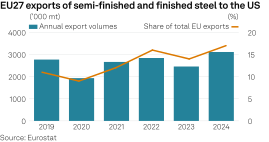
What's happening? While the EU has secured some tariff respite for its automotive, aerospace and pharmaceutical sectors, it could not secure relief from the 50% import tariffs on EU aluminum and steel, implemented by the US on June 4.
What's next? The European Steel Association, or Eurofer, warned on July 28 that the 50% tariff on steel imports to the US would have a dramatic impact on European steel producers. Alongside the adverse effects of increased US tariffs, the European steel industry is also grappling with intense import competition and soaring energy prices.
Related infographic: Trump's country-specific tariff threats to upend global markets
3. US ethanol margins hit highest level of the year
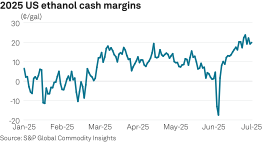
What's happening? Since hitting multimonth lows in late June, the Chicago Argo ethanol benchmark has jumped nearly 10% and reached its highest level -$1.7930/gal- of the summer driving season on July 18. Flat production and increased driving demand drew total stocks below 24 million barrels during the first half of July, which helped swing US ethanol prices to multimonth highs. Along with the rise in ethanol, corn markets have continued to lag on lofty harvest expectations and favorable weather, which has driven cash margins to their highest level since November 2024, according to Platts data.
What's next? For 2025, the US Department of Agriculture projects corn harvest to reach a record yield of 181 bushels/acre with the third highest planted area for the crop since 1944. With July and August being critical growing months, market participants are closely monitoring weather forecasts as any abnormal events could have significant implications on harvest and prices.
4. Japan's ethanol imports from US set to rise under trade deal

What's happening? A July 22 US-Japan trade deal has reduced planned tariffs on Japanese goods from 25% to 15%, averting a trade standoff and expanding US export access. Japan, a top market for US corn-based ethanol via ETBE blends, imported about 200 million gallons in 2023, worth $200–$300 million. The agreement improves the competitiveness of US ethanol just as Japan targets a 10% ethanol blending rate by 2030, up from 1.8% currently.
What's next? US ethanol exports to Japan are projected to rise by 10-15% in 2025, potentially reaching $220 million-$345 million. However, Brazil remains a key competitor, especially after earlier tariff shifts in its favor. Traders are also watching whether Japan's expanded access includes infrastructure or clean fuel investment provisions that could further deepen bilateral ethanol trade.
5. Headwinds persist in global nylon market amid oversupply
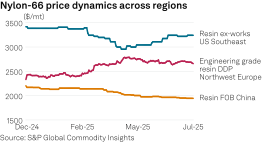
What's happening? The global nylon market continues to grapple with weak demand and oversupply. The US market is affected by declining automotive sales, while China faces worsening oversupply due to new capacities. In Europe, demand remains flat, particularly in the automotive and construction sectors. Although there are pockets of growth in specialized applications, such as connectors for 5G and artificial intelligence equipment, usage in the region only amounts to around 5% of the engineering resins, according to data from Energy Analytics. Platts last assessed nylon-66 engineering grade resin DDP Northwest Europe at Eur2,250/mt, down Eur 25/mt week over week amid decreasing demand.
What's next? The market faces challenging weeks ahead with no significant recovery anticipated until the end of the summer slowdown in September. However, should geopolitical developments catalyze rebuilding efforts in Ukraine and the Middle East, this could significantly boost the construction industry, and support demand for engineering plastics.
Reporting and analysis by Max Lin, Kelly Norways, Euan Sadden, Melvin Lee, Samyak Pandey, Nate Zhang
