
Walking the risk-opportunity tightrope
S&P Global Sustainability Quarterly Fourth-Quarter 2025 Edition
Research in this edition of S&P Global's sustainability research journal explores topics that present risks and opportunities alike in 2026.
Published: Dec. 22, 2025
Welcome to the Fourth-Quarter 2025 S&P Global Sustainability Quarterly, the flagship sustainability research journal from S&P Global. In this edition, we explore sustainability topics that present dual risks and opportunities for business strategies in 2026.
We explore how companies depend on natural capital even as corporate pledges to protect nature remain rare — and how nature loss could become a major obstacle to economic growth. Nature was a focus during COP30, the UN climate change conference that Brazil hosted in November, and the intersection of nature loss and climate change will continue to be in the spotlight in the run-up to the UN’s COP17 biodiversity conference in October 2026 and climate-focused COP31 in November 2026.
The potential impacts of carbon policies on international trade also emerged as a key point of debate at COP30, particularly for emerging markets with the EU’s Carbon Border Adjustment Mechanism (CBAM) due to enter its definitive phase in January 2026. CBAM will place new costs on EU-based importers of certain goods, and S&P Global scenario analysis indicates CBAM could add $15 billion-$25 billion annually to these goods' import values over the next decade.
While COP30 did not reach consensus on the energy transition, negotiators did establish a just transition mechanism, and a coalition of more than 80 countries endorsed a road map to transition away from fossil fuels. To understand the pace of the energy transition in the private sector, research in this edition delves into decarbonization progress in one high-emitting sector: automakers.
The transportation sector contributes approximately 15% to global greenhouse gas emissions, and road transport accounts for most of that figure. Our research indicates that over the next five years, automobile manufacturers will make moderate to significant progress toward a low-carbon, climate-resilient future.
Many companies see AI as a transformative tool to help drive progress on these big sustainability challenges. Research in this edition finds that companies are using AI to help improve areas such as energy efficiency, resource management and product quality. At the same time, only 36% of companies in our analysis have a policy governing AI use. Even fewer quantify the impact of their AI initiatives on sustainability goals — suggesting that AI presents both opportunities and risks for companies’ sustainability strategies.
This will be a growing area of focus in 2026 as the AI boom leads to more data centers and more power demand. Our research examines the shifting approach to power procurement in the US market, where hyperscalers face a balancing act of securing the energy their data centers need and achieving their sustainability goals.
We hope the data and research that follow will spark constructive conversations about key sustainability topics that will drive corporate decision-making in 2026.

S&P Global Sustainable1
Lindsey Hall
Co-Head, S&P Global Sustainability Research Lab
Lindsey Hall is Head of ESG Thought Leadership at S&P Global Horizons, where she co-hosts the ESG Insider podcast and is a steering member of S&P Global's Diversity Research Lab.
She got her start in financial journalism writing for various Financial Times publications in London before joining SNL Financial in 2010, where she spent a decade covering financial news and regulation as a reporter and editor. Lindsey holds a Masters from the London School of Economics.

S&P Global Ratings
Harald Francke Lund
Co-Head, S&P Global Sustainability Research Lab
Project Leads & Contributors
S&P Global Sustainable1
Lindsey Hall
Co-Head, S&P Global Sustainability Research Lab
Lindsey Hall is Head of ESG Thought Leadership at S&P Global Horizons, where she co-hosts the ESG Insider podcast and is a steering member of S&P Global's Diversity Research Lab.
She got her start in financial journalism writing for various Financial Times publications in London before joining SNL Financial in 2010, where she spent a decade covering financial news and regulation as a reporter and editor. Lindsey holds a Masters from the London School of Economics.
S&P Global Ratings
Harald Francke Lund
Global Head of Sustainability Methodology & Research
Harald Francke Lund is Global Head of Sustainability Methodology and Research within S&P Global Ratings Research & Development. He is the former Chief Executive Officer and co-founder of Shades of Green, a global leader in independent opinions for green bonds, which is now a part of S&P Global. Prior to joining Shades of Green, he led the Norwegian contribution to the UNSG's AGF report on long-term climate finance in 2010 and has held the positions of Deputy Chief Negotiator for Norway, Head of Emissions Trading Section at the Norwegian Environment Agency, and Advisor to the UNSG’s Special Envoy on Climate Change Jens Stoltenberg. Harald has a law degree from University of Oslo.

S&P Global Energy
Matt Macfarland
Senior Editor, Sustainability
Matt MacFarland is the senior editor for sustainability research and content publication at S&P Global Energy Horizons. This includes working with stakeholders and datasets across the Sustainable1 organization, such as climate physical risk and the Corporate Sustainability Assessment, to produce data-driven insights that illustrate how Sustainable1 data informs business decision-making and risk management from a climate and sustainability perspective.
Previously Matt was the industry editor for nonbank financial services news at S&P Global Market Intelligence, covering investment banking, asset management, financial technology and capital markets.
S&P Global Energy
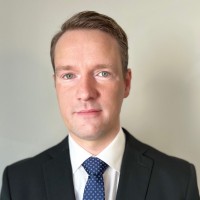
Anders Almtoft
Manager, Sustainability Research
Manager, Sustainability Research

S&P Global Ratings
Michael Ferguson
Analytical Manager
Michael Ferguson is the Americas Team Leader for the Sustainable Finance group at S&P Global Ratings in New York City. He recently has been involved in the development and roll-out of our ESG Evaluation tool, and is responsible for the inclusion of ESG risks into our credit ratings. He also supports our Green Evaluation efforts, and manages the North American and Lat Am Analysts. He further is responsible for knowledge development on ESG throughout S&P Global Ratings. Much of his thought leadership research revolves around environmental regulation and energy policy.
Michael joined S&P Global Ratings in December 2011and was in the Energy Infrastructure practice as a credit analyst for approximately seven years. Previously, he worked as a forensic accounting consultant with FTI Consulting in Washington, DC. He worked on a wide array of cases, ranging from stock option backdating and revenue recognition to embezzlement and ponzi schemes. Michael also worked in the Financial Services Assurance practice at Ernst & Young LLP; he audited hedge funds, insurers, and banks, as well as government agencies.
Michael is a member of the American Institute of Certified Public Accountants, the Certified Financial Analyst Institute, and the Association of Certified Fraud Examiners. He has contributed several articles on indicators of fraud to the Journal of Accountancy and Fraud Magazine.
Michael graduated from the University of Notre Dame in 2005 with a bachelor of business administration degree in Finance and a bachelor of arts degree in Political Science. He also received an International Business Certificate. He received a master of science degree in Accountancy from the University of Virginia in 2006 and a master of business administration degree from Duke University in 2011. Michael is a Chartered Financial Analyst, a Certified Public Accountant (DC and VA), a Chartered Alternative Investment Analyst, and a Certified Fraud Examiner

S&P Global Energy
Kelly Morgan
Research Director, Data Center Services & Infrastructure, 451 Research
Kelly Morgan is a research director in the 451 Research technology research group at S&P Global Energy. She is responsible for the Datacenter Services & Infrastructure team as well as the M&A practice. Her research includes analysis of datacenter providers, market size, supply/demand, new technology and datacenter industry trends, as well as M&A activity.
Before joining S&P Global Market Intelligence in 2019 via acquisition, Kelly spent more than 18 years covering datacenters and telecommunications at both 451 Research and in private equity. She also worked for several years in Paris at the Organization for Economic Cooperation and Development, managing the organization’s budget process.
Kelly holds a BA degree with honors from Wesleyan University and an MA from Tufts, where she studied international business and economics.

S&P Global Ratings
Marion Amiot
Head of Climate Economics
Marion Amiot is Head of Climate Economics & European Economist at S&P Global Ratings, based in London. In this position, she develops the Eurozone economic forecasts, provides insight into the economic outlook and conducts in-depth research on key macroeconomic developments and policies.

S&P Global Ratings
Vittoria Ferraris
Sector Lead, EMEA Automotive

S&P Global Sustainable1
Lokesh Raikwar
Associate Director

S&P Global Ratings
Stefan Bauerschafer
Lead, Equity Research/Fixed Income

S&P Global Ratings
Alán Bonilla
Lead Analyst, Sustainable Finance
S&P Global Sustainable1
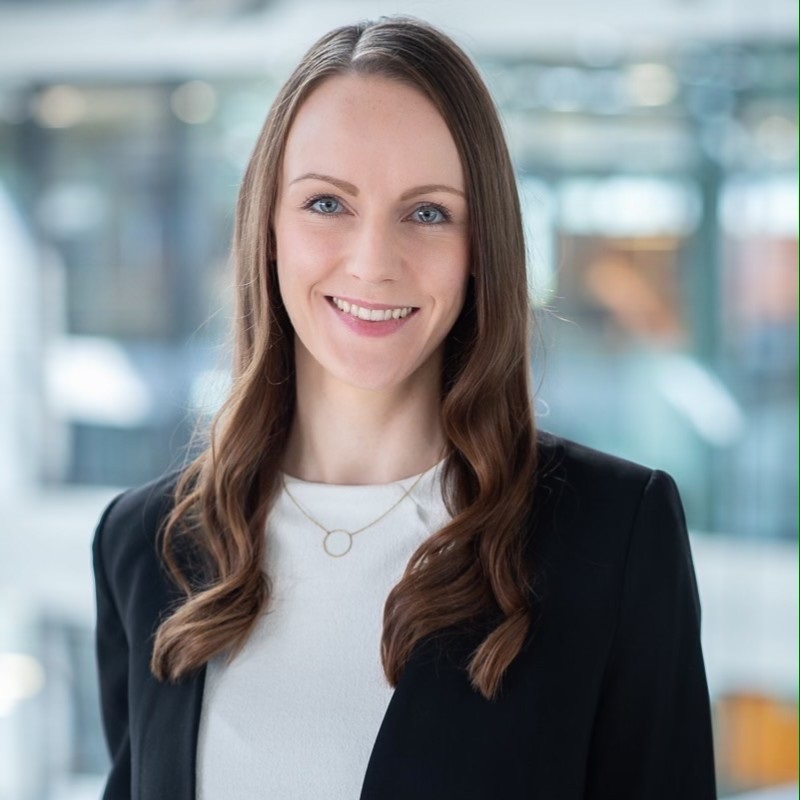
Svenja Husing
Senior Manager – Research, Sustainable1
Senior Manager – Research, Sustainable1

S&P Global Sustainable1
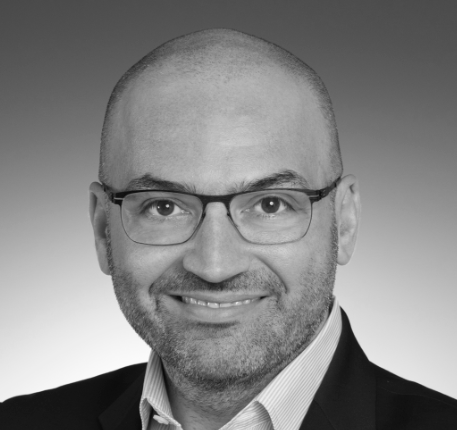
Joerg Rueedi
Principal Analyst, Sustainability Research
S&P Global Energy
Bruno Brunetti
Head of Renewables Revenue Streams
Bruno Brunetti has led efforts to expand Platts' power analysis across the globe and deepen the focus on renewables, technology and policy. Bruno spent over 15 years at PIRA Energy Group, now part of S&P Global Platts, where he launched and managed the PIRA’s European Electricity Service, focused on European power generation, demand, cross-border trading, and prices. He previously held roles at Caminus and Cedigaz.

S&P Global Energy
Conway Irwin
Senior Director

S&P Global Sustainable1
Esther Whieldon
Senior Writer, Sustainability Thought Leadership
Esther Whieldon is a Senior Writer on the S&P Global Horizons Thought Leadership Team and co-host of the S&P Global podcast ESG Insider. Esther has worked at S&P Global for 14 years and was previously a Senior Reporter in the S&P Global Market Intelligence newsroom where she wrote about climate change, ESG and energy issues. Prior, Esther worked two years as a reporter at Politico and spent several years before that in the S&P Global Platts energy newsroom in Washington, D.C. Esther earned a bachelor’s degree in journalism from Washington Adventist University in Takoma Park, Maryland.
S&P Global Ratings
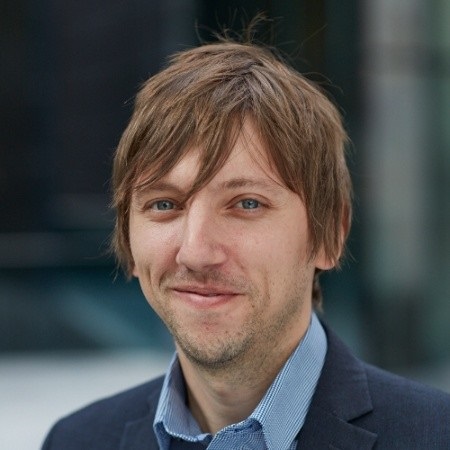
Terry Ellis
Global Climate Transition Specialist
S&P Global Energy
Justin Jacobs
Director

S&P Global Ratings
Natalie Wu
Analyst, Sustainable Finance

S&P Global Ratings
Thomas Englerth
Associate Director, Sustainable Finance
S&P Global Ratings
Victor Laudisio
Global Nature Specialist

S&P Global Sustainable1
Shirley Yap
Senior Data Scientist
Thank you to all our colleagues across S&P Global who contributed to the design, production and publication of the S&P Global Sustainability Quarterly: Rameez Ali, Lauren Capolupo, Ila Negi, Stephanie Oxford, Priya Suvarna, Cat VanVliet.