
FIRST-QUARTER 2023 EDITION: THE ROAD TO CLIMATE RESILIENCE
Sustainability Quarterly
Accelerating progress in the world with essential sustainability intelligence.
Published: March 20, 2023
Welcome to the latest edition of the S&P Global Sustainability Quarterly, our first of 2023. The physical hazards of climate change are rising in severity and frequency, and countries and companies around the globe are setting net-zero targets in a bid to meet the goals of the Paris Agreement and limit the damage from climate change. But some impact will be unavoidable, and it will not be evenly distributed. An S&P Global Ratings analysis of data from 190 countries shows that a one-time, 1-degree C annual average temperature increase is more damaging for emerging markets and developing economies than for advanced economies.
Mitigation is only one piece of the solution to the climate change puzzle. The World Economic Forum’s Global Risks Report for 2023 lists failure to mitigate and failure to adapt to climate change as the top two risks over the next decade. But research from S&P Global Sustainable1 shows that many large companies are not engaging in climate adaptation efforts.
Adaptation financing also remains a challenge, lagging far behind money going toward mitigation. Issuance of green, social, sustainability and sustainability-linked bonds could contribute to addressing that gap. As analysts from S&P Global Ratings write in our annual sustainable bond outlook, the focus on adaptation and resilience is likely to increase. This demand could be a source of growth for the sustainable bond asset class in 2023 and beyond.
The urgency is clear. The physical impacts from climate change are increasing, and the window of opportunity for building resilience and adapting at lower costs is rapidly closing. The physical risks caused by climate change are driving calls for faster preparation and for adaptation finance to be mobilized to pay for it.
Contributors

S&P Global Ratings
Marion Amiot
Head of Climate Economics
Marion Amiot is Head of Climate Economics & European Economist at S&P Global Ratings, based in London.
Marion Amiot is Head of Climate Economics & European Economist at S&P Global Ratings, based in London. In this position, she develops the Eurozone economic forecasts, provides insight into the economic outlook and conducts in-depth research on key macroeconomic developments and policies.

S&P Global Sustainable1
Francesca Jaworska
Associate Research Analyst

S&P Global Ratings
Satyam Panday
Chief U.S. Economist
Satyam Panday is a US Chief Economist for S&P Global Ratings, based in New York. In this position, he develops U.S. economic forecasts for ratings, provides insight into U.S. macroeconomic outlook, and develops thought pieces on economic policy actions. Before joining S&P Global Ratings in July of 2013, Satyam taught undergraduate and graduate economics courses at Boston College and Brandeis University from 2011 to 2013. Previously, he had been a research fellow in the macroeconomic analysis division at the Congressional Budget Office in Washington D.C. Earlier in his career, he spent several years at MassMutual Financial Group as an actuarial analyst in their mortality research and quantitative modeling team. Satyam holds a Ph.D. in International Economics and Finance from Brandeis University. He specialized in macroeconomics, development economics and applied econometrics. He has an undergraduate degree in Mathematics from St. Olaf College in Minnesota and received his MBA from the University of Massachusetts at Amherst’s Isenberg School of Management. Dr. Panday is a member of American Economic Association, National Association of Business Economists, and ECOMOD Global Economic Modeling Network. He is originally from Nepal.

S&P Global Sustainable1
Hana Beckwith
Associate Sustainability Analyst, Regulatory Methodologies
Hana Beckwith serves as an associate analyst on the Regulatory Methodologies team at Horizons.
Hana Beckwith serves as an associate analyst on the Regulatory Methodologies team at Horizons. With expertise in various sustainability regulations, including the CSRD and ISSB, she specializes in climate-related disclosures. Hana brings over six years of experience in climate risk and sustainability research and consulting, and she holds a BSc in Physical Geography from the University of Reading.

S&P Global Sustainable1
Jennifer Laidlaw
Senior Writer
Jennifer Laidlaw is a Senior Writer on the S&P Global Horizons Thought Leadership Team and a frequent contributor to the S&P Global podcast ESG Insider.
Jennifer Laidlaw is a Senior Writer on the S&P Global Horizons Thought Leadership Team and a frequent contributor to the S&P Global podcast ESG Insider. Her career as a globe-trotting business and finance reporter included roles as a reporter in London and Warsaw for Dow Jones, in New York as a technology and advertising reporter for Reuters and a banking and retail correspondent for the same newswire in Brussels. She moved to Paris where she worked as an international news stringer for Radio France Internationale before joining S&P Global Market Intelligence in the French capital as a European banking correspondent.
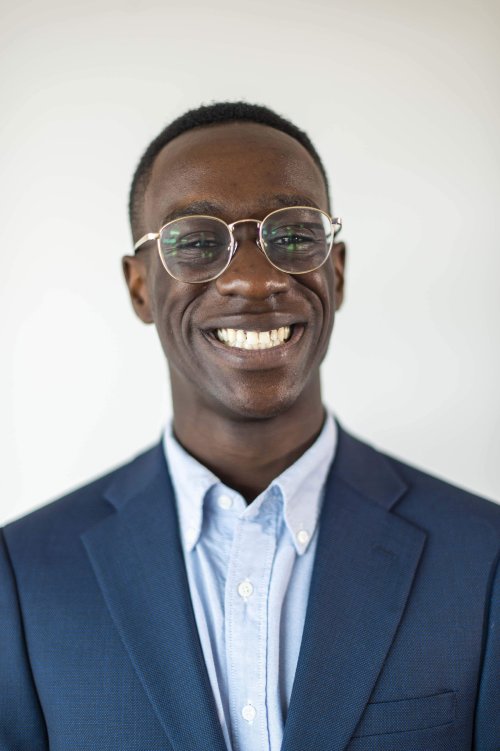
S&P Global Ratings
Bryan Popoola
Associate Director, Sustainable Finance

S&P Global Sustainable1
Stuart Bowles
ESG Analyist

S&P Global Ratings
Lai Ly
Global Head of Sustainability Research
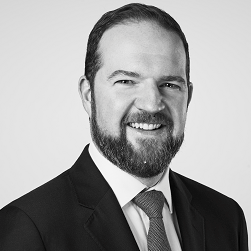
Dennis Sugrue
Senior Director and Insurance Sector Lead, Financial Services Group EMEA
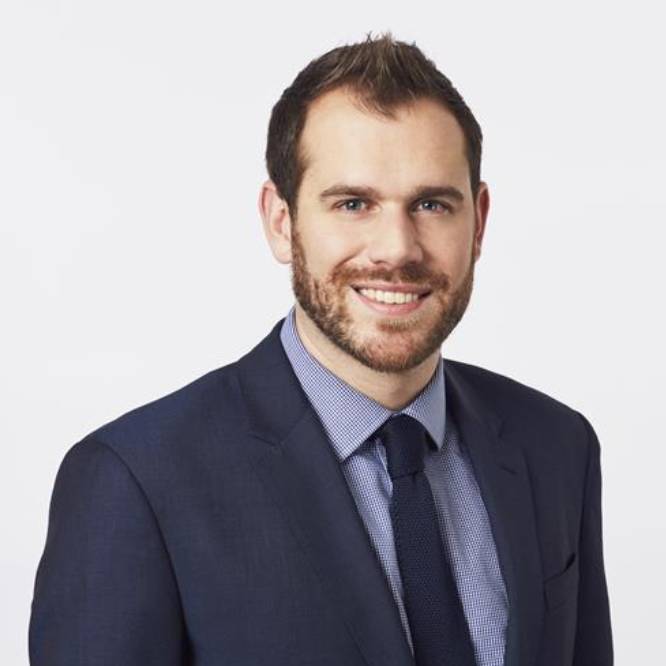
S&P Global Sustainable1
Steven Bullock
Managing Director, Global Head of ESG Innovation and Solutions
Steven Bullock leads the ESG Innovation and Solutions Team at S&P Global Horizons.
Steven Bullock leads the ESG Innovation and Solutions Team at S&P Global Horizons. As head of this group, Steve has successfully led the development of Trucost's suite of climate and impact analytics products, including Carbon Earnings at Risk, Paris Alignment, Physical Risk and SDG Analytics. Steve has played a leading role on the world’s first public environmental profit and loss “EP&L” account for PUMA and supported GPIF, the world's largest asset owner, on their inaugural TCFD-aligned reporting.
Steve has also contributed to the technical development of the S&P Global Ratings Green Evaluation Tool and the recent S&P Paris-Aligned & Climate Transition (PACT) Indices.
Prior to joining S&P Global Trucost back in 2008, Steve worked as an analyst for a performance management consultancy. He holds a BA 1:1 with honors in Geography and a MSc with Distinction in Sustainable Development from the University of Exeter.

James McMahon
CEO & Co-founder
James McMahon founded The Climate Service with the vision that every economic decision on Earth should incorporate climate change. The company’s risk analytics software as a service gives investors and corporate managers the financial information they need to incorporate climate-related risk into their decisions.
James McMahon founded The Climate Service with the vision that every economic decision on Earth should incorporate climate change. The company’s risk analytics software as a service gives investors and corporate managers the financial information they need to incorporate climate-related risk into their decisions.
McMahon began his career in global change by studying physics at Harvard University, and atmospheric chemistry at MIT under the guidance of Nobel Laureate Mario Molina.
McMahon went on to accumulate 10 years’ experience inside a multinational corporation, including managing Coca-Cola’s consumer marketing technology group. He then led three small technology firms as COO and CEO. He served for 6 years as Senior Advisor to the Director of NOAA’s National Centers for Environmental Information. He was CEO of The Collider – a groundbreaking nonprofit innovation center for climate solutions.
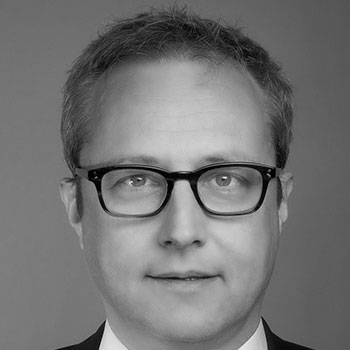
S&P Global Ratings
Emmanuel Volland
Managing Director, Global Analytics
Managing Director, Global Analytics
Florence Devevey

S&P Global Ratings
Paul Munday, Ph.D.
Director, Global Climate Adaptation and Resilience Specialist
Paul Munday is a Director, Global Climate Adaptation & Resilience Specialist at S&P Global Ratings, where he leads and coordinates S&P Global Ratings’ research and application of climate adaptation and resilience analytics. He works at the interface between data and research, leveraging his expertise to help improve clarity of the credit impacts from climate risks.
Paul Munday is a Director, Global Climate Adaptation & Resilience Specialist at S&P Global Ratings, where he leads and coordinates S&P Global Ratings’ research and application of climate adaptation and resilience analytics. He works at the interface between data and research, leveraging his expertise to help improve clarity of the credit impacts from climate risks.
Paul has over 10 years of experience in both the UK and abroad, providing advice to private and public sector clients across multiple sectors to help mainstream consideration of climate resilience into projects and programmes. Prior to joining S&P Global Ratings, Paul worked in climate risk consultancy.
He is a Chartered Scientist, Chartered Water and Environment Manager and certified expert in climate adaptation finance by the Frankfurt School of Finance & Management.

S&P Global Ratings
Nora Wittstruck
Chief Analytical Officer for Governments

S&P Global
Giulia Hallqvist
ESG Specialist
Giulia is an ESG Specialist within Horizons’s ESG Research team. She works on assessing Banks and Diversified Financials through the CSA, but also focuses her research on topics pertaining to sustainable finance, corporate governance, and tax strategy, among others. Before working at S&P Global, Giulia worked at Robeco, a global asset manager, where she supported the ESG Engagement team with several projects across the Food Products, Healthcare, IT Services, and other industries. Giulia's academic background is in Economics, and she also holds a master's degree in Environment and Sustainable Development from the University College London (UCL).
Wera von der Osten