Element
Deep well analysis. Maximum scalability.
IMPORTANT UPDATE
Upstream Software Portfolio Transition to SLB
We are pleased to announce that our Upstream Software business has transitioned to SLB as part of a recent acquisition. Visit the SLB product page for the latest information and to request a follow-up. Please note that you are sharing your information directly with SLB, who will contact you regarding your inquiry.
This is Element
More than a new tool—a better way to execute reservoir engineering workflows.
Reservoir engineers are expected to evaluate well performance, test development scenarios, and maintain consistent analysis across growing well inventories. But in practice, that work is slowed by repeated setup, disconnected data, and workflows that don’t scale across wells or teams.
Element brings engineering workflows into a unified, cloud-based environment, where data, calculations, and scenarios stay connected. Routine setup and recalculation are automated, so engineers can move directly into interpretation, iterate faster, and maintain consistent analysis across wells and projects.

Built for the Reality of Reservoir Engineering
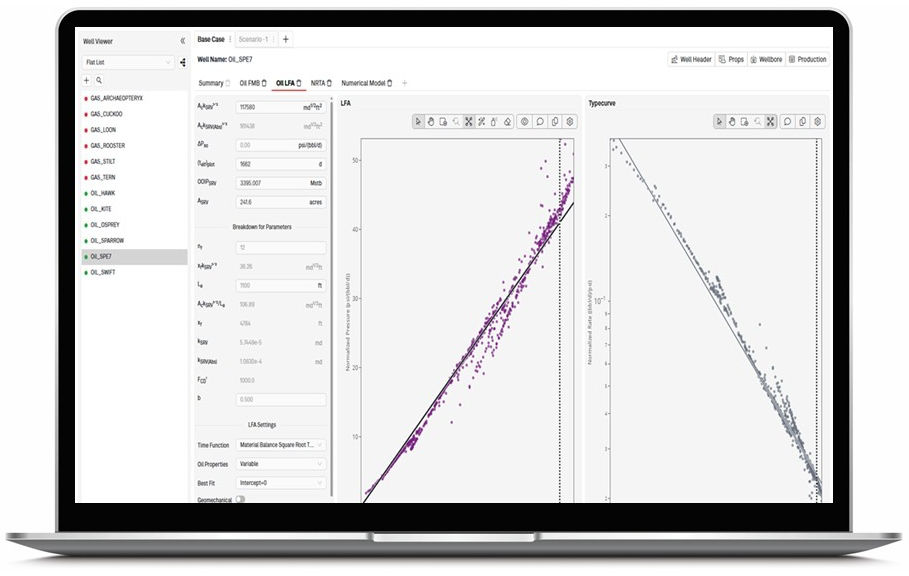
Analyze multiple wells at scale, without rebuilding workflows
Run consistent reservoir engineering workflows across wells in a single project environment.
Element enables engineers to analyze multiple wells side-by-side within the same workspace, without duplicating setups, switching files, or reconfiguring analyses for each well.
Instead of isolating wells in separate files, datasets, interpretations, and outputs remain connected, supporting continuous comparison and iteration as new data is introduced. This makes it easier to evaluate production behavior, identify outliers, and maintain context across the asset.
- Analyze multiple wells within a single project and visualization context
- Compare well performance and interpretations without switching files or views
- Maintain continuity as wells, data, and scenarios evolve
Why it matters: Engineers responsible for 100–200+ wells can evaluate performance across the full dataset, not in fragmented slices.
Eliminate repeated setup for multiple wells
Remove the effort required to rebuild and rerun standard analyses.
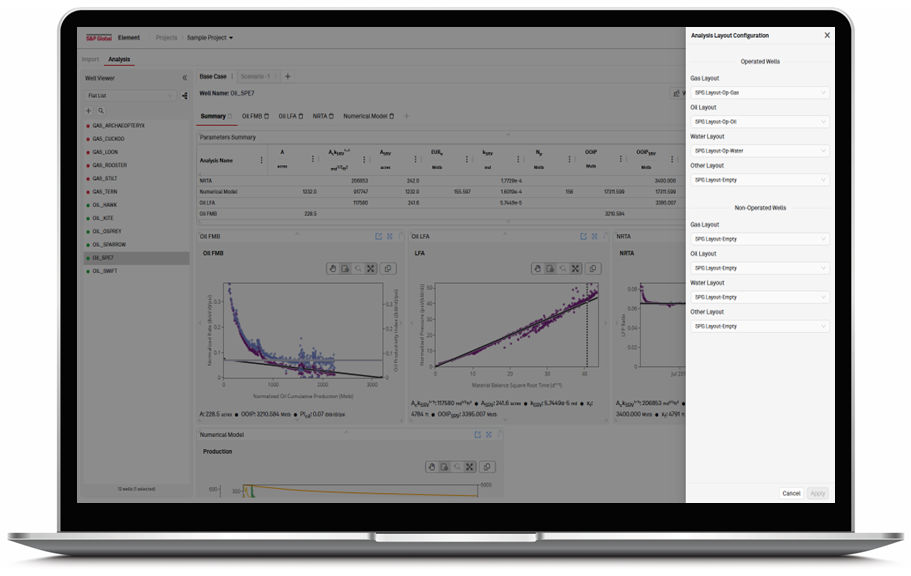
Element automates the repetitive steps that typically slow down reservoir engineering workflows, initial setup, applying standard layouts, and recalculating when inputs change.
Default configurations generate starting interpretations automatically, while built-in calculations, such as key production metrics, update continuously as new data is introduced. Instead of rerunning workflows across each well or scenario, updates apply across the entire analysis.
- Automatically apply standard layouts and initial interpretations to new wells
- Eliminate manual recalculation across wells and scenarios
- Keep calculations and outputs current as inputs change
Why it matters: Reduces hours of setup and reruns, freeing time for interpretation, curve fitting, and decision-making.
Keep analysis consistent across wells and scenarios
Maintain alignment so results remain comparable across wells, cases, and sensitivities.
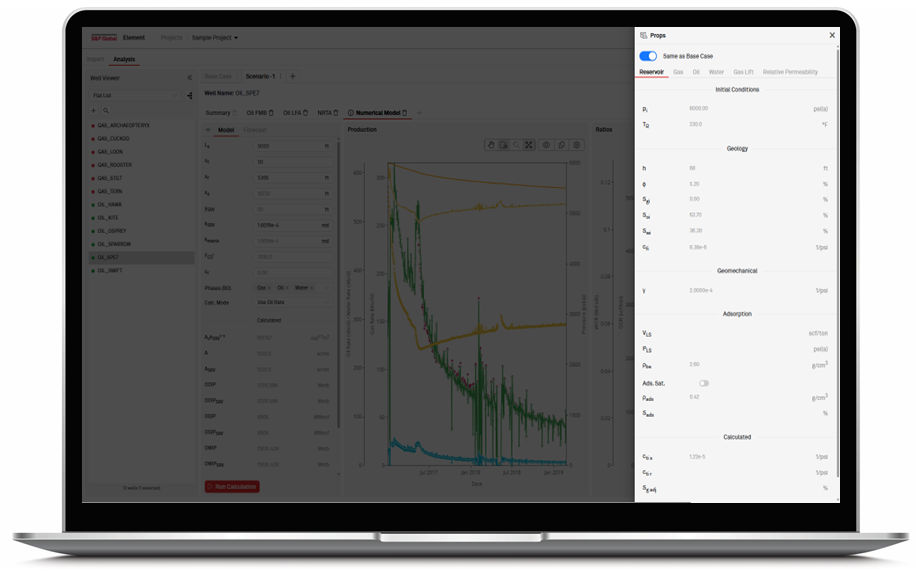
Element links base cases and scenarios so that changes propagate automatically, ensuring that sensitivities remain aligned with the underlying assumptions.
This eliminates scenario drift and removes the need to manually update each case, making it easier to test alternative interpretations and run what-if analyses with confidence that outputs remain comparable.
- Link scenarios directly to base cases for automatic updates
- Maintain consistent assumptions across sensitivities
- Standardize outputs to support reliable comparison
Why it matters: Comparability across wells and scenarios is critical for development decisions, type curves, and forecasting.
Work in a single engineering environment
Unify data, workflows, and analysis within one connected system.
Element centralizes well data, interpretations, and workflows in a shared project environment, eliminating fragmented workflows across spreadsheets, files, and disconnected tools.
Engineers can access production data, reservoir properties, and analysis outputs in one place, while working privately or publishing results when ready. This removes manual merge-back processes and ensures that analysis stays aligned with the project context.
- Access governed, centralized data across wells and projects
- Execute analysis within a shared environment without duplication
- Publish workflows and results without manual integration steps
Why it matters: Reduces data inconsistency and ensures engineering work stays connected to the broader asset context.
Scale with your well count and analysis demand
Support high-volume analysis without performance constraints.
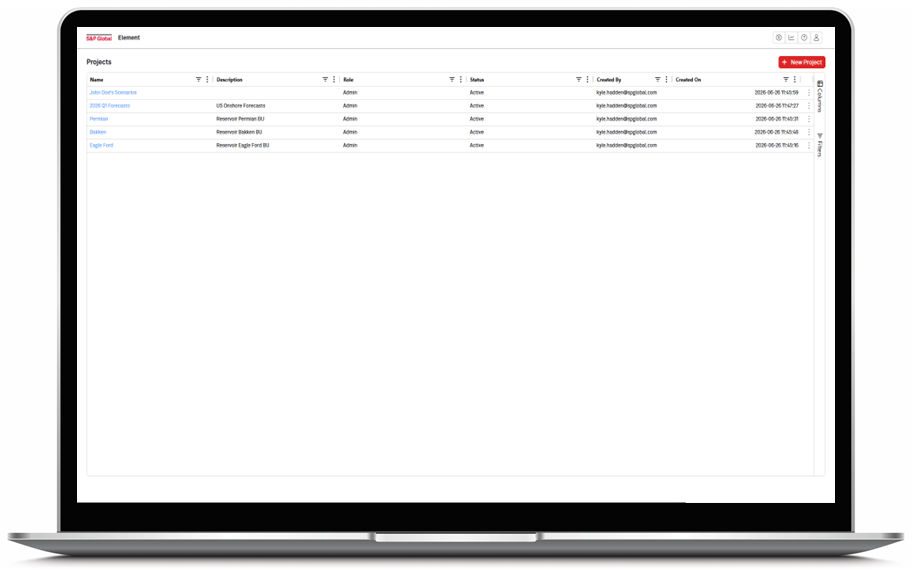
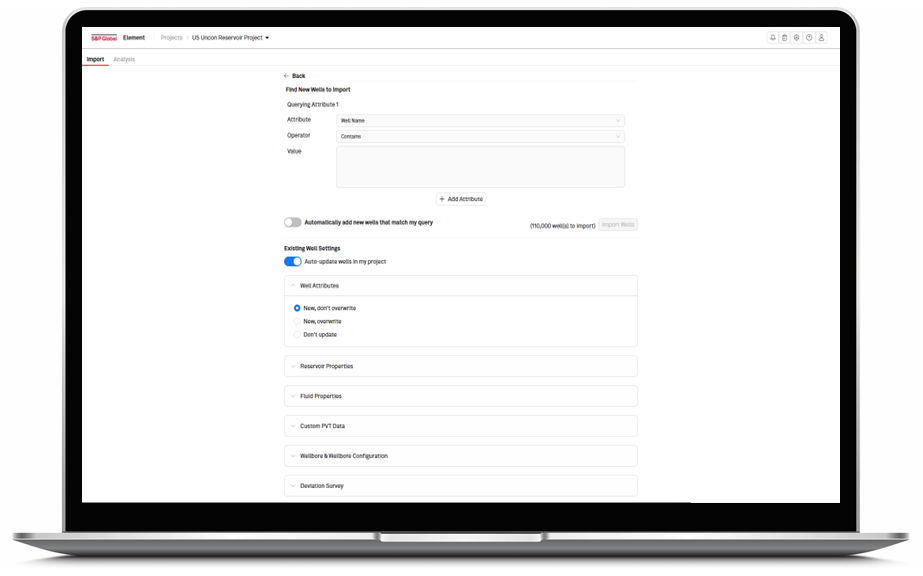
Element’s cloud-based architecture moves processing off local machines, enabling engineers to work with large well datasets and run multi-well analyses without degradation in performance.
As assets grow and analysis demands increase, engineers can continue to iterate quickly, running scenarios, updating interpretations, and handling larger datasets without simplifying workflows due to system limitations.
- Handle large datasets across hundreds of wells
- Maintain performance during high-frequency updates and scenario runs
- Scale workflows without reliance on local hardware or IT setup
Why it matters: Enables deeper, continuous analysis instead of breaking projects into smaller, disconnected tasks due to system limits.
See How Element Works
Understand how analysis of multiple wells, automated workflows, and scenario alignment come together in a single environment.
