Agriculture, Refined Products, Energy Transition, Biofuels, Vegetable Oils, Gasoline, Renewables, Diesel-Gasoil
October 20, 2026
IBC 2026: SAF bankability hinges on feedstock security, long-term offtake amid cost pressure

By Jenson Ong
Editor:
HIGHLIGHTS
Predictable policy, demand considerations key to unlock project finance
SAF economics need to withstand shifts in policy support
Asia biomass offers potential; aggregation and eligibility remain hurdles
Bankability of sustainable aviation fuel projects will depend on secure feedstock supply, long-term offtake agreements and competitive production economics to attract financing, with policy mandates alone unlikely to provide sufficient investment certainty, panel speakers said at the 2026 International Bioenergy Conference in Singapore Oct. 20.
Panelists discussing project bankability said feedstock availability and supply security remain central considerations, particularly for hydroprocessed esters and fatty acids, or HEFA, projects, while developers also need greater certainty over future demand, pricing and the certification eligibility of fuels produced.
Capital allocation for SAF projects is complex as investors must navigate a longer runway for returns on investment, speakers said, increasing the importance of securing buyer commitment early in project development.
Global SAF production is forecasted to be only about 0.8% of total annual aviation fuel consumption in 2026 despite mandates, according to an International Air Transport Association report published in June.
Platts, part of S&P Global Energy, assessed SAF HEFA-SPK basis FOB Straits in Asia, reflecting CORSIA-certified cargoes, at $2,180/metric ton on Oct. 19, down $175/mt from the week before.
The SAF FOB Straits premium was assessed at $840.75/mt over Platts Jet Kero FOB Singapore forward curve (MOPS) on Oct. 19, Platts data showed.
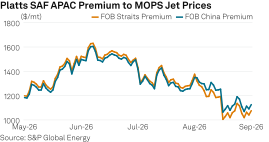
"Long-term offtake agreements could give lenders greater confidence in future demand and expected revenues," said Edmund Siau, vice president in the strategy and development group at the Singaporean investment platform company GenZero.
However, speakers cautioned against assessing project economics solely around announced policy, as changes to mandates, incentives or other support could undermine investment assumptions.
Predictable policy, therefore, remains important, and developers should consider whether projects could remain commercially viable if mandates or other forms of policy support were to be revised, said Goh Tat Chuan, head of APAC business development at next-generation climate technology company Aether Fuels.
Investors also need to consider the wider ecosystem supporting a project, including feedstock suppliers, technology providers, financiers, fuel suppliers and potential offtakers.
Feedstock supply security key to bankability
Feedstock availability and supply security remain central to SAF bankability, particularly for HEFA projects, where feedstock accounts for a major component of production costs.
Developers need visibility across the supply chain, including the availability, price and duration of feedstock supply, while ensuring the fuel is eligible under regulations in the market where the finished product will be sold.
Southeast Asia was identified as having considerable potential from agricultural residues, rice straw, palm-related materials, palm oil mill effluent and other biological wastes.
The region's relatively diverse resource base could support multiple biofuel production pathways, allowing producers to match technologies with locally available feedstocks, said Gillian Goh, scientist and principal investigator at Singapore's lead public sector R&D agency A*STAR.
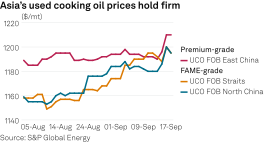
But availability does not necessarily translate into equivalent bankable supply.
Aggregation networks for agricultural and biological wastes remain underdeveloped in parts of Southeast Asia, while transport costs, competing uses and differing sustainability requirements can reduce the amount of economically accessible feedstock.
Multiple production pathways needed
HEFA currently dominates commercial SAF production, but panelists said a wider portfolio of technologies will ultimately be needed as demand expands and sub-mandates for non-HEFA SAF approach.
Alcohol-to-jet and gas-to-liquid production pathways were among the alternatives discussed, with the appropriate technology depending heavily on local feedstock availability and market conditions.
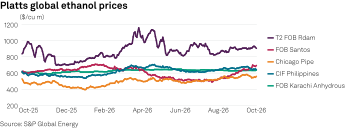
Professor Rafael Luque from ECOTEC University of Ecuador said gas-to-liquid biofuel production technologies require careful optimization for commercial development, while the appropriate emerging SAF pathway would vary between countries.
Brazil has considerable potential for alcohol-to-jet because of its established ethanol industry as a feedstock for land transport fuels, said Professor Arnaldo Walter from the State University of Campinas (UNICAMP), Brazil.
Asia's diverse biomass base could provide an advantage as SAF production expands, but developers will still need to turn feedstock availability into reliable supply chains while securing long-term buyers and maintaining competitive production costs.
