Crude Oil, Agriculture, Refined Products, Biofuels, Diesel-Gasoil, Jet Fuel, Gasoline
September 22, 2026
European countries urge for joint policy action to tackle soaring oil prices
Editor:
HIGHLIGHTS
France's Macron calls on EU for joint policy action
Slovakia appeals for special EU summit to tackle crisis
Proposals include relaxing specifications, higher bio-blends
European leaders have called for joint policy action, including relaxed fuel quality standards and revised biofuels regulations, to help bring fuel costs down from record highs ahead of the peak winter demand season.
Since the latest flare-up in the Middle East conflict, Europe has seen fuel costs set fresh record highs, sparking concerns over affordability in the months when supplies are typically compressed by a shift to winter fuel specifications.
In a statement on Sept. 22, a spokesperson for the European Commission confirmed that Commission President Ursula von der Leyen had received a letter from France's President, Emmanuel Macron, regarding potential responses to the crisis.
The spokesperson said that the commission would "reply in due course," without providing further detail on the content of the letter.
Calls for tougher policy action were echoed by Slovakian Prime Minister Robert Fico, who criticized the bloc for its failure to address "astronomic" fuel prices and called for a special EU summit on coordinated action.
Speaking at a press conference in Bratislava, Fico blamed a lack of joint EU measures for impacting the welfare of European citizens through the crisis, and urged Brussels to come up with new measures to help manage the economic impact.
Regional governments have already introduced a patchwork of emergency measures to try and limit price hikes and prioritize the domestic market.
Concerned about "diesel tourism," from neighboring countries, Slovakia banned diesel exports and set higher prices for foreign motorists earlier in the year. On Sept. 21, the Czech government announced it would reintroduce diesel and gasoline price caps in the retail sector, and joined Poland in announcing special taxes on refinery profits.
After the US-Iran conflict erupted in late February, the International Energy Agency cautioned that emergency fiscal measures can prove costly for governments and challenging to phase out, and emphasized demand-side measures such as lower speed limits and work-from-home directives as ways to slash fuel use.
As members of the IEA, which includes most EU countries, nations are expected to devise emergency action plans to address supply disruptions, potentially including fuel rationing and the relaxation of fuel quality standards.
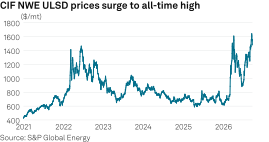
France delays winter spec change
In an example of unilateral action, France announced in its official government journal on Sept. 22 that it would authorize the domestic sale of summer-specification diesel until Nov. 15, two weeks later than its usual Nov. 1 deadline, citing supply difficulties due to the Middle East crisis.
Among his recommendations to the European Commission, Macron called for wider revisions to diesel and jet fuel specifications across the bloc, French media reported, citing expectations the pivot could boost output of the two fuels by up to 20%.
Additionally, the letter was reported to have suggested measures to increase the quantity of biofuel that can be blended into diesel for automotive use, potentially lifting blending constraints from the current 7% (B7) threshold.
Representatives for the French Presidency did not respond to a request for comment.
Xavier Noyon, Secretary General of the European Biodiesel Board, welcomed the potential measure, and reiterated calls for a higher 10% limit in the passenger vehicle sector.
"Fewer restriction[s] will mean faster decarbonization, and the European biofuel sector is ready to deliver," he said.
Should the proposal move ahead, higher blending limits could prove supportive of Europe's growing biodiesel market, which has become increasingly economical compared to gasoil. According to assessments from Platts, part of S&P Global Energy, European FAME 0 biodiesel commanded a $310/mt premium to ICE Low Sulfur Gasoil futures on Sept. 21, down from $553/mt before the conflict began.
France currently holds the G7 presidency, and Macron told a Paris press conference Sept. 18 that he would call a meeting among its member states to discuss further oil stock releases. The bloc backed a 400 million barrel stock release coordinated by the International Energy Agency, which was announced in March and was 75% complete as of Sept. 18.
