Natural Gas, LNG
October 08, 2026
Europe's gas system can meet winter needs, but weather poses risks: ENTSOG

By Matt Hoisch
Editor:
HIGHLIGHTS
Cold, disruptions may require lower consumption
Urges more filling, robust LNG imports amid ‘historically low’ storage
Warns of filling constraints next summer under tight LNG market
Europe's natural gas infrastructure remains capable of meeting demand this winter, although the system risks supply limits and bottlenecks if particularly strenuous conditions emerge over the coming months, gas grid operator group ENTSOG said Oct. 8.
"Foremost, adequate supply needs to be secured," ENTSOG stressed in its annual winter supply outlook.
The group underscored that the EU entered October with "historically low" gas storage levels. Stocks across the EU were filled to 73% as of Oct. 6, according to the latest figures from Gas Infrastructure Europe. At the same time last year, stores across the bloc had reached 82.9% full.
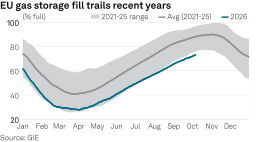
In several scenarios modeled in the new report, Europe can weather a reference winter without demand reductions to cope with constrained supply.
However, if the season proves particularly cold, the ENTSOG scenarios indicate that Europe may need to reduce winter gas demand by up to 15%. This acute scenario, though, also assumes a disruption to the remaining Russian gas flows into Europe and a tight LNG market.
"Cold winter conditions and potential disruptions could significantly increase pressure on the European gas system," ENTSOG explained.
If winter proves cold without disruptions to Russian supplies and LNG availability is high, ENTSOG sees no need for demand-side responses.
Looking even further ahead, ENTSOG assessed that Europe's network should be capable of filling gas storage to 90% by the end of September 2027, if LNG supplies are optimal. However, if LNG volumes prove tight, supplies would be insufficient to reach 90% full, with European storage reaching only 65% by the end of September 2027.
Another key question will be where storage levels land come April.
"Depleting storage [stocks] too deeply over the winter may constrain the ability to refill them during the following summer," ENTSOG said.
Further stocking, strong LNG imports
The ENTSOG analysis aligns with recent views from many market watchers, who have stressed that weather remains a key uncertainty for Europe as it heads into winter with gas storage levels lagging.
Storage met about 26% of overall EU gas consumption last winter and about 30% the winter before, according to the Oct. 8 report.
While ENTSOG explained that Europe's LNG regasification capacity of about 145 billion cubic meters of gas/ winter season allows it to "partially compensate" for the continent's lower fill levels, the group also urged further storage injections as well as robust LNG deliveries to bolster flexibility across the coming months.
"Continued storage injections at the beginning of the winter, together with strong LNG deliveries, are encouraged to preserve storage inventories and maintain system flexibility later in the season," ENTSOG said.
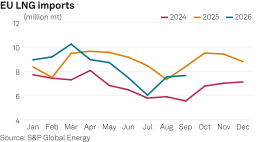
EU LNG imports have trailed last year's levels amid the sustained supply disruptions linked to the war in the Middle East. Overall, EU imports from January through September 2026 were about 4% below the trade seen over the same period last year, according to S&P Global Energy CERA data.
The EU's Gas Coordination Group — a gathering of experts from across Europe led by the European Commission — has repeatedly affirmed across recent months that European gas supplies remain secure. The EC echoed the ENTSOG report findings in a statement published after another meeting of the group on Oct. 8.
"While gas storage levels are below historical levels, the report confirms that the EU gas system is sufficiently flexible to meet demand this winter," the EC said in the statement.
It subsequently added: "The volumes of LNG imports into the EU will mainly depend on winter temperatures and their impact on demand for gas. The decision whether to import LNG or withdraw gas from storage ultimately lies with the market."
The next Gas Coordination Group meeting in-person is slated for Nov. 20, though the group can also convene ad hoc meeting on shorter notice online, according to a source with knowledge of the matter.
High prices remain a concern for Europe as winter approaches. The European Commission has urged member states to take steps, where possible, to curb gas demand amid upward pricing pressure from the fighting in the Middle East.
Platts, part of S&P Global Energy, assessed the DES Northwest Europe LNG marker at $25.30/million British thermal unit Oct. 7, up 3.7% day over day. The index is about 135% higher than the same time last year.
