Agriculture, Natural Gas, Electric Power, Energy Transition, Biofuels, Renewables, Emissions
August 13, 2026
German biofuel, biomethane future curves backwardated on gas prices, THG carryover
By Irina Breilean and Rebecca Li
Editor:
HIGHLIGHTS
Germany front-year manure GOs at discounted values
Backwardated gas curve fuels 2027 discounts
THG carryover expectations amplify effects
The markets for German biofuel tickets and biomethane GOs have felt the effects of a backwardated gas forward curve, with expectations of additional THG supply further pressuring 2027 discounts.
The natural gas forward curve has been consistently backwardated since the outbreak of the war between the US and Iran, with Q4 2026 prices trading at a premium to Q1 2027 delivery for both the Dutch TTF and German THE.
This comes amid supply curtailments with the European injection season in full swing as the effective closure of the Strait of Hormuz continues. Storage levels across Europe stood at 59.32% as of Aug. 12, according to Gas Infrastructure Europe. This is 12.99 percentage points lower compared to the same time last year.
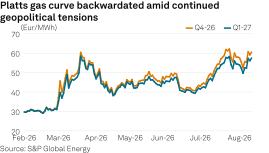
A backwardated curve typically offers fewer incentives for traders to purchase volume to fill stores.
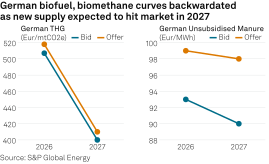
This has had knock-on effects on the German biomethane market, with bid and offer levels for 2026 unsubsidized manure GOs heard at a premium to bid-offers for 2027 production.
"Gas is circa 3-4 euros higher in 2026," a biomethane trader said. "The market is not as deep in calendar 2026 as in calendar 2027, as we are already in middle of August."
Biomethane GOs are typically traded alongside the gas value. Prices for the underlying certificate leg of the transaction can drop when fossil gas rises, driven by a mix of factors, including demand destruction as buyers switch to more efficient fuels, shifts in portfolio strategies, and a weakening appetite for green derivatives if there are no compliance requirements.
A second trader also attributed the backwardated German biomethane curve to gas prices, adding that expectations of an increase in biofuel ticket supply in 2027 were further exacerbating the situation.
The greenhouse gas reduction quota, known as THG, requires fossil suppliers in Germany to reduce emissions against a pre-established reference value.
The recently Bundestag-approved Second Act to Further Develop the GHG Quota is set to increase obligations from 2027 onwards, requiring counterparties to reduce emissions by 65% by 2040.
Additionally, an estimated 11 million metric tonnes of frozen THGs are scheduled to flood back into the compliance market following the expiration of the regulatory ban that suspended quota carryovers from the 2024 and 2025 compliance years.
Despite this impending influx of carryover tickets, the market expects these volumes to be absorbed well beyond 2027, with several obligated parties already rolling their 2024 surpluses out into 2028.
This has pressured forward biofuel ticket prices for the German quota, with Platts hearing bid-offers for 2027 production about 20-21% lower compared to 2026 tickets.
The effect has also been felt in the biomethane market, albeit less stridently, with biomethane GOs for German unsubsidized manure heard bid and offered 1-3% lower for 2027 delivery compared to 2026 equivalents.
This is because biomethane can be used to generate compliance tickets under the THG quota.
Platts, part of S&P Global Energy, last assessed THG-Other current year at €525.00/mtCO2e on Aug. 13, a record high since assessments began in November 2025.
Platts also assesses a wide range of biomethane GOs, including certificates generated from Dutch and Danish manure. These were last assessed at €149.9750/MWh and €95.025/MWh, respectively, on Aug. 13.
