Metals & Mining, Electric Power, Energy Transition, Non-Ferrous, Ferrous, Hydrogen
October 16, 2026
LME Week: Metals industry weighs copper squeeze, tariffs, export controls

By Euan Sadden
Editor:
HIGHLIGHTS
Copper supply tightens amid mine disruptions
US aluminum prices surge 60% above China levels
El Niño threatens mining operations until 2027
The annual LME Week kicks off in London on Oct. 19, bringing together leading stakeholders from the metals and mining industry, including company executives, government officials, traders and financiers.
Over the course of the week, delegates will discuss the myriad of challenges and opportunities facing global metals markets. Among the topics expected to feature heavily at this year's conference are the copper supply shortfall and the impact of the EU Carbon Border Adjustment Mechanism and the El Niño weather system on metals flows.
Copper market tightens
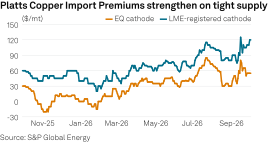
Copper prices remain near record highs as mine disruptions, declining ore grades and lengthy project development timelines constrain supply, while electrification, power grid investment and artificial intelligence infrastructure drive demand.
Over the past 18 months, disruptions at several big operations have highlighted the market's vulnerability to unexpected outages. Meanwhile, new production is coming primarily from brownfield expansions rather than entirely new mines.
Demand, on the other hand, remains resilient, supported by electrification, grid investment and the expansion of AI infrastructure.
Copper concentrate supply is under particularly intense pressure in China, where rapid growth in refining capacity has increased competition for limited feedstock. Falling treatment and refining charges reflect this competition and signal mounting stress across the supply chain.
Meanwhile, traders have also moved large volumes of copper into the US ahead of potential tariffs, boosting Comex inventories while reducing availability in other regions. This geographic concentration of stocks has further tightened supply outside the US and increased the market's sensitivity to changes in trade flows and tariff policy.
Aluminum markets fragmented
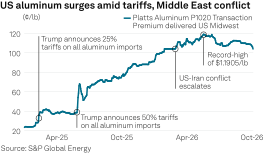
Global aluminum markets are becoming increasingly fragmented as tariffs, geopolitical disruption and uneven regional supply widen the price gap between China and Western markets. By mid-2026, US aluminum prices exceeded $6,200/metric ton — approximately 60% above Chinese prices —raising input costs for Western automakers.
The divergence was driven in part by a 50% US tariff introduced in 2025 and by disruptions to Gulf production following the closure of the Strait of Hormuz. Global primary aluminum output subsequently declined, with production in the Gulf Cooperation Council suffering a particularly sharp drop.
In response, producers are accelerating investment in alternative capacity, including new smelters, expansions and the restart of idled facilities in North America, Europe and Indonesia. Recycling capacity is also expanding, especially in China, as manufacturers seek to reduce their reliance on primary metal. However, competition for scrap is expected to intensify as demand grows and proposed EU restrictions on non-OECD metal-waste exports take effect in 2027.
These developments could further reshape regional supply chains and pricing structures.
Critical mineral limits
The growing use of export restrictions to protect strategic resources, encourage domestic processing and strengthen diplomatic bargaining power is raising concerns about the global supply of critical minerals and rare earth elements.
In recent years, China has imposed controls on several critical minerals and related products, including gallium, germanium, graphite and rare-earth materials. Zimbabwe has restricted exports of unprocessed lithium, while the Democratic Republic of Congo has introduced measures affecting cobalt, including restrictions aimed at promoting domestic value addition and addressing oversupply.
These policies do not necessarily reduce physical supply, but they can limit the volume of material available to international buyers and disrupt established supply chains. The resulting uncertainty encourages stockpiling, increases prices and intensifies competition for remaining freely traded material.
In response, developed economies are seeking to diversify their critical-mineral supply chains by investing in alternative sources, strengthening international cooperation and expanding domestic production and recycling.
EU CBAM impact
The introduction of the EU Carbon Border Adjustment Mechanism is being closely monitored by metals producers, traders and downstream manufacturers, as it could reshape trade flows, production economics and investment decisions across the European market.
CBAM entered its definitive phase in January, applying carbon costs to imports of steel, aluminum, cement, fertilizers, electricity and hydrogen based on their embedded emissions. The mechanism currently covers primary and semi-finished materials, including crude steel and unwrought aluminum. Finished products made from these materials are generally excluded because their embedded emissions are more complex to calculate.
Producers remain concerned that compliance costs, complex emissions-reporting requirements and regulatory uncertainty could increase import costs, redirect trade flows and delay investment in new capacity and supporting infrastructure.
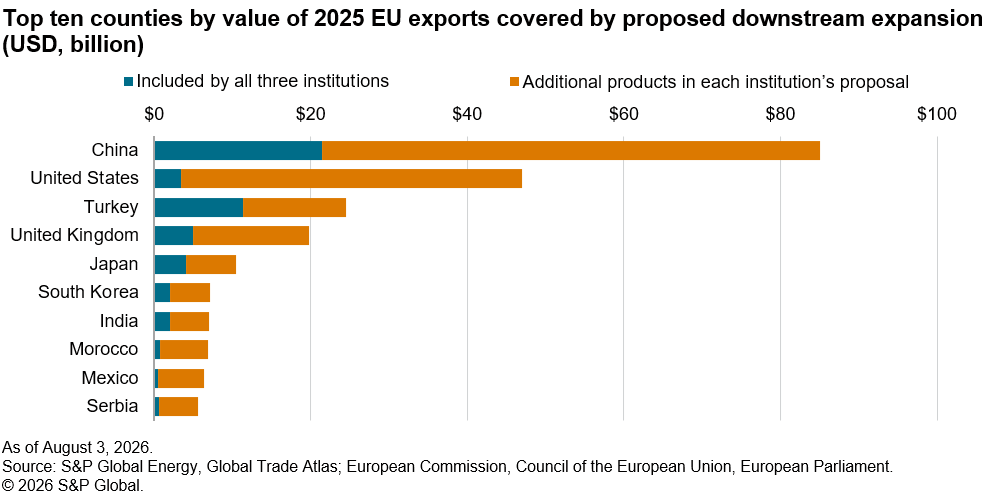
Nevertheless, EU policymakers have recently proposed expanding CBAM to include certain finished goods from 2028. The proposed extension aims to prevent companies from circumventing the mechanism by importing finished products rather than the CBAM-covered materials used to manufacture them. The potential expansion would cover a substantial volume of trade. According to S&P Global Market Intelligence's Global Trade Atlas, products under consideration accounted for more than $255 billion of EU imports in 2025 — approximately 2.5 times the $103 billion covered by CBAM's initial scope.
El Niño disruption
Expectations of an exceptionally strong El Niño event are adding uncertainty to the near-term outlook for global metals markets. The World Meteorological Organization reinforced these concerns in September, presenting data indicating that the event could be the strongest in more than 70 years and persist until at least February 2027.
A powerful El Niño could disrupt metal supply by affecting mining, refining and transportation in vulnerable regions. Drought conditions may reduce water availability for copper, lithium and nickel operations, while lower hydropower generation could constrain smelter output and increase electricity costs. Conversely, heavier rainfall and flooding could damage infrastructure, restrict access to mines and delay shipments.
Latin America, Southeast Asia and Australia are particularly exposed, although the effects are likely to vary by region and commodity. Any resulting disruptions could further tighten already constrained markets, increase price volatility and encourage precautionary stockpiling.
