LNG, Natural Gas, Electric Power
August 14, 2026
Latin America LNG imports hit year high on Argentina demand

Editor:
HIGHLIGHTS
Argentina leads region with 16.06 Bcf demand
Honduras becomes new LNG importer in July
LNG imports to Latin America and the Caribbean reached their highest level in a year in July, driven by seasonal demand in Argentina and Honduras joining the list of regional LNG importers, S&P Global Energy CERA data showed Aug. 14.
Overall, the region imported 80.38 Bcf of LNG in July, up around 15% from 69.94 Bcf in June and the highest monthly import level since July 2025, the data showed.
July imports were less than 1% lower than the 80.80 Bcf imported in July of last year, but nearly 29% higher than the 62.47 Bcf imported in July 2024.
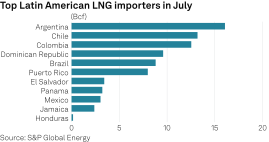
Argentina was the region's top importer at 16.06 Bcf, down 8% from 18.10 Bcf in June, which had been its highest level in two years.
Argentina typically imports LNG only during the Southern Hemisphere's winter months, when domestic natural gas production is insufficient to meet increased heating demand.
The July volumes were more than 4% lower than the 17.36 Bcf imported in July 2025 and nearly 11% lower than the 18.58 Bcf imported in July 2024.
Argentina's July imports arrived on eight cargoes to the Escobar LNG terminal in Buenos Aires, the country's sole operating LNG import facility, down from nine the previous month. Enarsa, the country's sole LNG importer, had originally bought 10 cargoes in a tender that closed May 26, sources previously said. Nine cargoes were awarded to BP, while the remaining one was awarded to PetroChina, according to the sources.
Two cargoes were cancelled due to lower demand from higher-than-expected temperatures, including the one awarded to PetroChina, a source close to the situation said.
Neither Enarsa nor PetroChina responded to separate requests for comment on the reported cancellations.
Enarsa typically buys LNG cargoes of 2.1 trillion Btu due to draft restrictions at the port where Escobar is located, sources previously said.
Chile ranked as the region's second-largest LNG importer in July at 13.19 Bcf, up from 6.94 Bcf in June and its highest monthly import level since April last year. The volumes arrived on four cargoes, three delivered to the Quintero terminal in Valparaiso and one to the Mejillones facility in northern Chile.
At least one cargo imported to Quintero was procured on the spot due to unexpected demand from low rainfall and higher power demand, which was short-lived, a source familiar with the situation said.
Colombia ranked third at 12.53 Bcf, up 10% from 9.93 Bcf in June and its highest level since October 2024. The volumes were delivered on five cargoes to the SPEC LNG terminal, the country's sole LNG importing facility.
The Dominican Republic was the fourth-largest regional importer at 9.59 Bcf, down from 10.60 Bcf in May. The volumes were delivered on four cargoes to the Andres LNG terminal in Santo Domingo.
Brazil ranked fifth at 8.50 Bcf, while the US territory of Puerto Rico was sixth at 7.98 Bcf.
Other importers included El Salvador (3.42 Bcf), Panama (3.22 Bcf), Mexico (3.03 Bcf), Jamaica (2.39 Bcf), and Honduras (160 MMcf).
These were the first LNG volumes ever imported to Honduras and were used to commission the country's first LNG terminal in Puerto Cortes, terminal operator Genesis Energias previously said.
Eleven countries in the region imported LNG in July, up from eight the previous month.
The US supplied 52.7 Bcf of the volumes imported to the region in July, while 20.82 Bcf were sourced from Trinidad and Tobago.
Indonesia supplied 3.03 Bcf, and Mexico 2.71 Bcf. The remaining 1.10 Bcf was reexported from Jamaica.
Platts, part of S&P Global Energy, assessed the DES Brazil for LNG deliveries 15-45 days forward at $20.348/MMBtu on Aug.14.
