Energy Transition, Electric Power, Hydrogen, Renewables
September 30, 2026
Denmark eases hydrogen pipeline rules to derisk producer commitment

Editor:
HIGHLIGHTS
State support raised to 16.5B Danish kroner
Energinet extends capacity booking window
Booking threshold cut to 100 MW from 500 MW
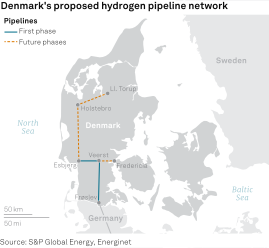
Denmark has overhauled key terms governing capacity bookings for its planned hydrogen pipeline backbone, easing financial commitments on producers and sharply increasing state operating support, in a move designed to unblock a project critical to connecting Danish green hydrogen output with German and broader European demand.
The Danish Ministry of Climate, Energy and Utilities revised the original deal on the country's hydrogen infrastructure after producers flagged heavy financial obligations ahead of a final investment decision on the pipeline.
Under the revised terms, the initial 500 megawatt booking requirement as of Dec. 1, 2026, is retained, but bookings will no longer be binding at that stage.
Producers now have until Nov. 1, 2027 — nearly a year longer than under the original schedule — to formally book capacity in the hydrogen pipeline. A binding guarantee of at least 100 MW must be in place by Dec. 31, 2027, for the project to proceed.
The state's operating support for the hydrogen pipeline has been increased by 5.6 billion Danish kroner ($851 million), bringing the total to 16.5 billion kroner, Energinet said.
State coverage of Energinet's potential stranded costs has also been raised from 417.4 million kroner to 2.1 billion kroner through Jan. 1, 2028, providing a financial buffer that allows Energinet to continue project development even as final booking certainty is pushed back.
The agreement addresses concerns raised by the market, Energinet said in a statement on Sept. 29.
Energinet said the project continues to target commissioning by end-2030, though it acknowledged that significant project activities remain outstanding and that financial estimates will be refined as milestones are achieved and tenders for critical components and construction work are completed.
Producers will also retain the right to terminate their capacity contracts until Dec. 31, 2027, if project conditions no longer align with their individual circumstances.
The postponement of the termination date remains subject to final approval from the Danish Utility Regulator, expected in early October.
Denmark's hydrogen backbone is intended to serve as a physical link between domestic renewable hydrogen producers and industrial consumers and importers in Germany, Europe's largest anticipated hydrogen demand center.
Delays or uncertainty in capacity commitments risked stalling investment decisions across the hydrogen supply chain, including projects seeking co-financing from the EU's Connecting Europe Facility.
Energinet said it was working with Gasunie Deutschland to submit a joint application to the Connecting Europe Facility, which could help finance the project.
Platts, part of S&P Global Energy, assessed the cost of RFNBO-compliant hydrogen production via alkaline electrolysis in Germany, backed by renewable power purchase agreements, at €12.30/kg on Sept. 29.