Crude Oil, Energy Transition, Metals & Mining, Electric Power, Natural Gas, Hydrogen, Ferrous
August 21, 2026
China targets 1,200-km hydrogen pipeline, underground storage in 5-year plan
Editor:
HIGHLIGHTS
Connecting Inner Mongolia with Beijing-Tianjin-Hebei
To integrate H2 into fossil energy infrastructure
Plan calls for pure-hydrogen transport standards
China plans to accelerate the development of hydrogen production, pipeline transportation, and storage infrastructure, including a 1,200-km hydrogen pipeline connecting Inner Mongolia's Ulanqab region with the Beijing-Tianjin-Hebei region, while exploring underground hydrogen storage as part of efforts to integrate the fuel into its fossil energy infrastructure, according to the country's newly released oil and gas development plan for 2026-2030.
The Ulanqab-Beijing-Tianjin-Hebei pipeline will have a transport capacity of 500,000 mt/year. The plan also calls for developing technical standards and specifications for pure-hydrogen pipeline transport, the plan said.
The document does not specify a completion date for the pipeline or indicate that it will carry only renewable hydrogen. However, it identifies the project as one of the priority cross-provincial pipelines planned for 2026-2030.
The plan calls for accelerated build-out of hydrogen production facilities, pipeline networks, and centralized storage systems in key regions, alongside existing oil and gas infrastructure. This integration strategy aims to coordinate hydrogen infrastructure development with existing oil and gas infrastructure.
Nearby consumption for hydrogen
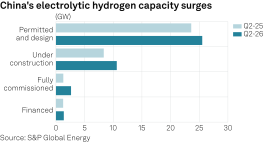
The plan says China will promote the development of the green hydrogen industry and build a hydrogen supply system centered on local consumption, supplemented by cross-regional transportation and international trade.
China will also support pilot projects blending hydrogen into natural gas pipelines to test the technical and commercial viability of using existing infrastructure for hydrogen transport.
The plan also calls for research into high-pressure pure-hydrogen pipeline materials, large-scale hydrogen blending and conversion of existing pipelines to transport hydrogen.
The plan calls for exploring underground hydrogen storage options to provide supply flexibility. It also calls for research into hydrogen storage in deep underground spaces and for developing related technical standards, including those for hydrogen storage in depleted oil and gas reservoirs.
Diversification of fuels
The push for hydrogen infrastructure is part of China's broader energy transition goals outlined in its 15th Five-Year Plan. The country seeks to reduce carbon emissions while maintaining energy security by diversifying fuel sources.
Industry observers noted that the Ulanqab region's selection reflects its renewable energy resources, particularly wind and solar capacity suitable for producing renewable hydrogen via electrolysis.
The pipeline route targets major demand centers in northern China's industrial heartland, where hydrogen could support steel production, chemical manufacturing, and transportation, industry observers said.
