Energy Transition, Electric Power, Emissions, Hydrogen
July 27, 2026
Xpansiv expands nuclear-backed certificates trading amid data center demand
By Felipe Peroni and Jose Del angel
Editor:
HIGHLIGHTS
PJM EFECs trading totals 675 GWh on Xpansiv platform
Policy support could grow compliance, voluntary markets
Xpansiv has been increasing its footprint in nuclear-based emission-free energy certificates, amid emergent voluntary markets in the US and growing energy demand from data centers.
Xpansiv CBL launched trading of the so-called emission-free energy certificates, or EFECs, from the New England Power Pool on July 15, six months after launching the same certificates from the PJM Interconnection power pool.
"Demand is coming not only from hyperscalers, but from the entire data center ecosystem," said Russell Karas, senior vice president at Xpansiv.
EFECs represent the environmental attributes of electricity generated by power plants without relevant carbon emissions. Similar to zero-emission certificates, or ZECs, they are usually related to nuclear power, although renewable sources are also allowed to issue these certificates.
Interest in these certificates has been growing, especially as technology companies seek to match rising electricity demand with clean-energy purchases, amid limited available volume from renewable sources.
"Firms are looking creatively to all available means to assess their power demand and meet their sustainability targets," Karas said.
Since the launch in December 2025, a total of 675,000 PJM EFECs have traded to date on the Xpansiv platform.
"There is definitely growing interest in nuclear-derived ZECs/EFECs, especially in voluntary markets," industry expert Parag Nathaney said.
Price differential
One factor that could boost demand for EFECs is the price differential between these certificates and the more widely traded Renewable Energy Certificates.
On July 24, 82,000 vintage 2026 NEPOOL EFECs were offered at $2.00/MWh at the CBL exchange.
The NEPOOL EFEC listing has prompted renewed interest in PJM EFECs, with a new offer of 50,000 certificates, vintage 2025, at $1.05 posted to the CBL screen by July 24.
Partly, the difference between prices in NEPOOL and PJM is due to the higher supply of nuclear energy in the latter. "We are in a price discovery period, with market participants still probing the market," Karas said.
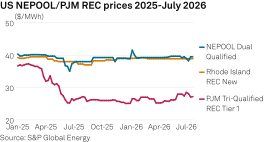
But both prices are still far off from RECs. As a comparison, Platts' assessment of NEPOOL DualQualified 2026 vintage REC prices fell to $39.45/MWh on July 23, down from $39.50/MWh on July 17.
With RECs increasingly used in state renewable goals, the price difference could persist, but EFECs are emerging as an attractive alternative, especially for voluntary targets.
Voluntary demand
The movement is part of a gradual shift of these certificates, from over-the-counter markets to exchange platforms, where they are likely to enjoy more liquidity and easier trading procedures.
"Once you start trading in an exchange, you benefit from instant liquidity, contracts get a lot easier, so you expand the market," Karas said.
These launches come as corporate buyers, particularly technology companies, face growing pressure to procure clean energy to match expanding electricity demand from artificial intelligence and data centers.
"The demand from most technology companies for clean energy matching is at an annual level and not hourly level," Nathaney said.
This means many buyers may not require clean energy certificates to come from new generation sources or from the same geography as their load. Still, additional nuclear certificate supply could help companies demonstrate progress toward clean energy goals as their power demand grows.
"Additional supply of nuclear to the pool of eligible compliance certificates would see interest from companies that are expanding their energy footprint due to AI load growth," Nathaney added.
New England's comparatively limited renewable footprint could also support demand for nuclear-backed certificates in the region, particularly from buyers seeking local clean energy attributes.
"New England does not have a significant renewable footprint beyond some existing hydro, and incremental supply of ZECs from nuclear in the region should be beneficial to buyers," Nathaney said.
Compliance
Discussions to include nuclear power among clean energy sources in emissions-reduction policies have been advancing gradually and steadily.
Earlier this year, Rhode Island decided that nuclear energy and large-scale hydro facilities can count toward the state's renewable energy goals, up to a percentage.
In New Jersey, the government signed a bill on July 13 to launch a procurement process for additional nuclear power in the state.
Shifts in regulation, combined with rising energy costs, could expand the market for such certificates.
One parallel is the ZEC program in New York state. On Jan. 22, 2026, the New York Public Services Commission unanimously voted to extend until 2049 the Zero Emissions Credit program, which it deemed essential to secure the financial viability of the state's four nuclear reactors.
With the strong compliance goals and state involvement, the price of New York ZEC prices have ranged from $15- $25 per MWh since the start of the program in 2017.
