Refined Products, Coal, Energy Transition, Electric Power, Crude Oil, Natural Gas, Gasoline, Renewables, Emissions
August 04, 2026
FACTBOX: Energy affordability dominates US midterm contests as climate takes backseat
Editor:
HIGHLIGHTS
Energy costs dominate 2026 midterm races
Data centers spark voter backlash over rates
Democrats shift from climate to affordability
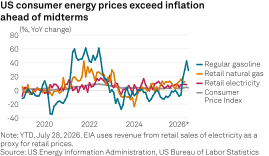
Rising energy costs have taken a central spot in US 2026 midterm campaigns, with candidates prioritizing consumer affordability.
Democrats have linked gasoline price increases to President Donald Trump's foreign policy decisions, while electricity rate hikes emerge as a key voter concern. Data center expansion has sparked debate over grid costs and consumer rate impacts, forcing candidates to address infrastructure investment tradeoffs.
"This climate-versus-fossil fuels framing of past cycles has given way to affordability [and] electricity price framing for both parties," said Scott Segal, head of Bracewell's Policy Resolution Group.
The increased focus on affordability does not necessarily mean that progressive Democrats are lining up to bring natural gas-fired power plants to their states. "But it does mean there's a growing recognition that very strict environmentalist or climate change messages are not being proffered by most Democratic politicians, at least in the runup to this midterm election," Segal said.
Rate increases drive voter concerns
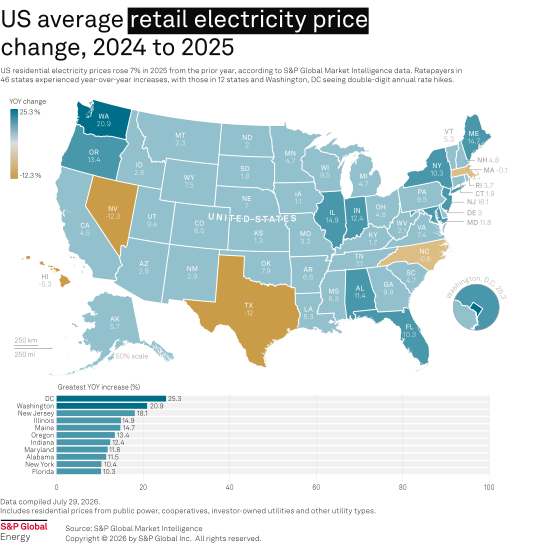
US residential electricity prices rose 7% in 2025 from the prior year, according to S&P Global Market Intelligence data. Ratepayers in 46 states experienced year-over-year increases, with those in 12 states and Washington, DC, seeing double-digit annual rate hikes. Over one-third of high-increase states are in the data center-heavy PJM Interconnection footprint, while the rest are bracing for demand growth from planned data-center operations.
Races to watch
Michigan US Senate
- Utilities seeking residential rate increases of nearly 10%
- Democrats: Link higher energy prices to Trump foreign policy and Republicans' clean energy rollbacks
- Republicans: Blame federal/state clean energy policies for price increases; support expansion of domestic conventional fuel production
Wisconsin governor
- Residential rates among the highest in the Midwest as utilities seek increases
- Democrats: Endorse 100% "bring your own clean energy" approach for data centers
- Republican: Prioritize new baseload power and delaying coal plant retirements
Data center blowback
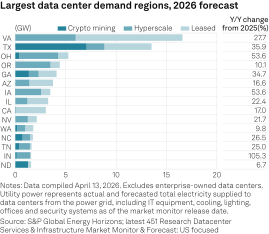
Voters across the country appear poised to respond to unprecedented US data-center growth. In local, state and federal campaigns, candidates' positions on data-center development — including proposed moratoriums in some cases — could directly impact their chances of electoral success.
Races to watch
Texas governor
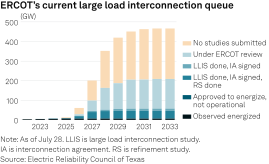
- 56% of voters oppose data-center construction, according to the Texas Politics Project poll, yet the state has 32 proposed gas-fired projects to power data centers
- Incumbent Republican: Open to rescinding tax breaks for data centers
- Democratic challenger: Promises to block permits for "unfair" data-center projects
Box Elder County, Utah, Commission (two seats)
- Governor requires new transparency framework and renewable power requirements for data centers
- Incumbent Republicans: Ousted in primary after approving Stratos data center
- No Democratic challengers; one seat is unopposed, the other will face an unaffiliated candidate
Florida governor
- Frontrunners agree that data-center development requires stricter regulation
- Democrat: Supports a one-year development moratorium; wants new rules to cap utility costs and regulate power generation for data centers
- Republican: Opposes moratorium; wants tighter oversight and data-centers power sourced from private providers instead of the grid
Maryland local races
- Frederick and Prince George's counties imposed data-center construction moratoriums
- Democrats: Support and want to see more moratoriums across the state
- Republicans: Focus on gas and nuclear power expansion to power data centers
Energy mix pragmatism emerges
Incumbent Democratic governors are embracing diverse fuel sources amid rising demand, with an all-of-the-above approach that includes natural gas alongside nuclear and renewable power.
"Democrats who once pledged that we're going to totally phase out all fossil fuels are now framing natural gas as part of the broader energy mix," former Virginia Governor Terry McAuliffe, a Democrat, said. McAuliffe now co-chairs the pro-gas group Natural Allies for a Clean Energy Future.
This trend, however, is not consistent across the entire country. Incumbent Democrats in some states, such as Colorado, drew strong pushback in their primaries for being more open to fossil fuels, said Collin Rees, US program manager at anti-fossil fuels Oil Change International. He noted Senator John Hickenlooper's primary in Colorado, in which he beat the Democratic challenger by a closer-than-expected six percentage points.
Races to watch
Connecticut governor
- Fourth-highest retail electricity rates nationally in first quarter of 2026
- Incumbent Democrat: Sees natural gas as state's dominant fuel source for foreseeable future
- Republican challenger: Blames carbon-free policies for cost increases
California governor
- 60% of voters unwilling to pay more for renewables; 96% cite cost of energy as a problem, with 63% calling it a "big problem"
- Democrat: Emphasizes affordability over climate goals; declined to commit to phaseout of gasoline-powered cars by 2035
- Republican: Seeks to end the state's renewable portfolio standard and renewable energy credits; says gas, nuclear and rooftop solar should compete on a level playing field
| Highest average US residential electric prices (¢/kWh), Q1 2026 | |
| Hawaii | 43.91 |
| California | 36.15 |
| New York | 32.63 |
| Connecticut | 29.47 |
| New Hampshire | 28.65 |
| Massachusetts | 27.25 |
| Maine | 26.33 |
| New Jersey | 25.52 |
| Vermont | 23.73 |
| DC | 21.48 |
| US average | 18.70 |
| Data compiled July 28, 2026. Based on best available results for US regulated investor-owned utilities, public power and cooperative energy companies' average Q1 2026 price for retail electric sales by state. Source: S&P Global Market Intelligence | |
Oil price politics
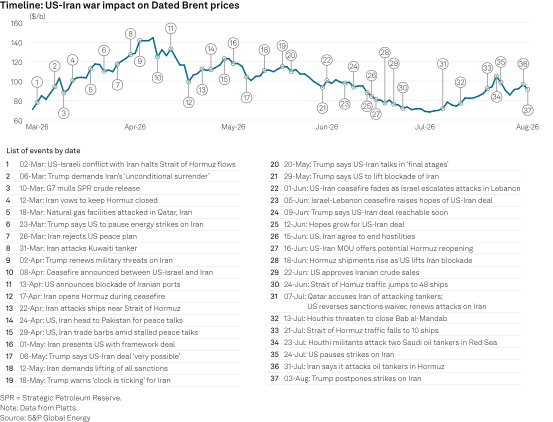
US-Iran tensions have driven gasoline costs and campaign messaging. Gasoline prices are almost $1/gallon more nationwide than a year ago, according to AAA. Platts Dated Brent peaked at $144.42/b on April 7 but closed at $85.735/b on July 28 after a recent pause in US strikes on Iran.
Race to watch
Alaska US Senate
- Gasoline as of July 28 averaged $4.727/gallon, the fourth-highest state average
- Incumbent Republican: Wants an increase in domestic oil production to counter price impacts of war; voted against limiting US action in Iran
- Democratic challenger: Says war drives higher costs: "We're an oil-producing state. We should be benefiting from that at the pump, not footing the bill for endless wars."
Party positioning for November
Republican strategy
- Address headwinds as party in power during period of high energy prices
- Emphasize baseload, dispatchable fossil fuels for reducing costs
- Remove regulatory barriers to fossil fuel production and delivery
- Blame Democrats' pro-renewables policies for driving up costs
- Highlight permitting reform legislation
Democratic strategy
- Tailor approaches by district to regain control of Congress
- Lean on affordability message and how to bring prices down
- Expand clean energy production and rebuild transmission infrastructure
- Simplify permitting processes with added certainty
- Require data centers "pay fair share" and strengthen consumer protections
